Bristlemouth
A bristlemouth (family Gonostomatidae) is any of approximately 33 species of deep-sea fishes found in tropical regions of the major oceans. Often referred to…
What is bristlemouth?
A bristlemouth (family Gonostomatidae) is any of approximately 33 species of deep-sea fishes found in tropical regions of the major oceans. Often referred to as lightfishes, they are considered the most numerous vertebrate on the planet, likely exceeding all other fish genera in both total numbers and biomass.12
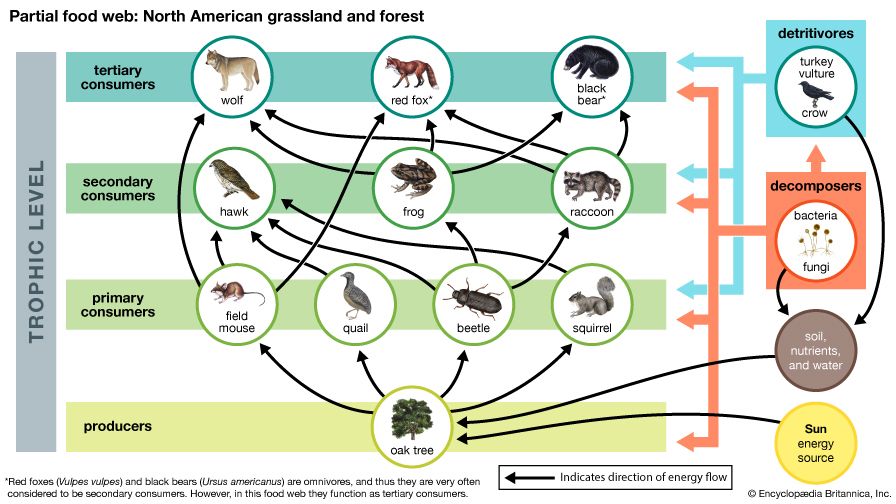
These small creatures, typically measuring about 6 cm (2.5 inches), are adapted to the deep sea and possess rows of light-emitting organs called photophores along their sides to navigate their pitch-black environment. While they are a critical component of the ocean food web, they are physically fragile; their delicate skin is easily damaged by pressure changes and abrasions when brought to the surface by deep-sea trawling. The genus Cyclothone is particularly notable for its immense population, which many ichthyologists believe surpasses that of any other fish genus in the world.12
What are photophores and how do they help deep-sea fish survive?
Photophores are specialized, glandular light-emitting organs found in various bioluminescent animals, including many deep-sea fishes. These organs produce light through a chemical reaction and often feature complex internal structures such as lenses, filters, and reflecting layers to focus or modify the light.34
In the extreme darkness of the deep ocean, photophores are essential for survival and are used in several strategic ways:
- Counter-illumination: By placing photophores on their ventral and lateral surfaces, many fish emit light downward to match the intensity of sunlight filtering from above. This effectively conceals the fish’s silhouette, preventing them from casting a shadow that would reveal their presence to predators lurking below.3
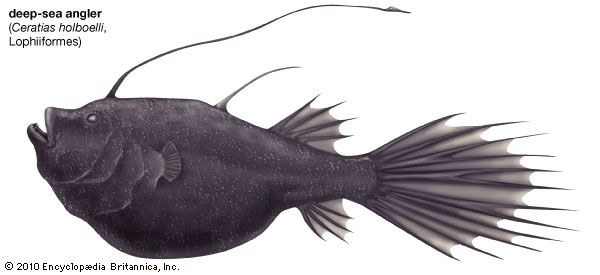
- Predation: Some species, such as anglerfishes, use luminous lures to attract unsuspecting prey directly into their jaws.3
- Communication and Recognition: Distinct patterns of light organs allow individuals to identify members of their own species and signal potential mates.3
- Defense: Light can be used to startle or frighten potential predators, providing the fish with a chance to escape.3
What other types of creatures live in the deep-sea environment?
The deep-sea environment hosts a remarkable diversity of life, ranging from specialized fish to various invertebrates, all adapted to extreme pressure, cold, and darkness.56
Deep-Sea Fish
Deep-sea fish are categorized by their habitat and physical traits:
- Mid-water species: These often possess huge mouths, enlarged eyes, and photophores. Notable groups include anglerfishes, which use bioluminescent lures; viperfishes, known for their fanglike teeth; and bristlemouths, which are among the most abundant vertebrates on Earth.5
- Benthic (bottom-dwelling) forms: These typically have smaller eyes and mouths and often lack luminous organs. Examples include grenadiers, batfishes, and cusk eels.5
Invertebrates and Other Life
The deep sea is home to representatives of all major marine invertebrate phyla.6
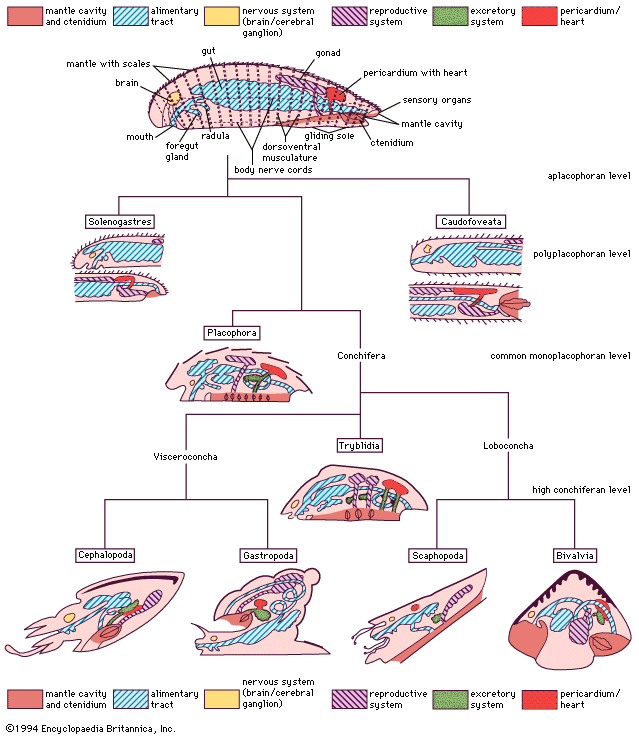
- Mollusks: These exhibit significant ecological diversity, with species found as deep as 10,500 meters. They include burrowing caudofoveates, various bivalves, and cephalopods that can dwell at extreme depths.7
- Hydrothermal Vent Communities: In areas of tectonic activity, unique ecosystems thrive around hydrothermal vents. These communities are supported by chemoautotrophic bacteria and include mussels, large bivalve clams, vestimentiferan worms, and various crabs.8
How do scientists estimate the population of animals in the ocean?
Estimating animal populations in the ocean is a complex and challenging task due to the vast, remote nature of marine environments and the difficulty of observing organisms that may only be visible for brief moments at the surface. Scientists employ a variety of specialized techniques to gather data:10
Biological Sampling
Researchers use physical collection devices to capture organisms for study. Common tools include:
- Plankton Nets: Used to sieve organisms from the water. Quantitative versions, such as the Clark-Bumpus sampler, include flow meters to measure the volume of water filtered, allowing scientists to calculate the concentration of organisms in a specific area.11
- Midwater Trawls: These are designed for rapid collection at depth. They are towed at speeds sufficient to capture fast-swimming fish that might otherwise escape.11
Acoustic and Remote Sensing
Because physical sampling can be difficult, non-invasive methods are increasingly important:
- Acoustics: Scientists use sound to track and chart the distribution of marine life. Many organisms, including large mammals and schools of fish, reflect or scatter sound waves. By analyzing these acoustic signals, researchers can estimate the presence and behavior of various species.11
- Remote Sensing: Satellites and aircraft are used to monitor surface life-forms and biological activity, such as tracking chlorophyll concentrations to estimate primary productivity across large areas of the ocean.11
In Situ Observation
Direct observation remains a vital, though difficult, method for gathering representative data. As technology advances, researchers are increasingly relying on in situ observations to study animals in their natural environment, helping to overcome the limitations of traditional sampling techniques.11
Sources
- bristlemouth — Encyclopædia Britannica
- Abundant Animals: The Most Numerous Organisms in the World — Encyclopædia Britannica
- Bioluminescence - The role of bioluminescence in behavior — Encyclopædia Britannica
- photophore — Encyclopædia Britannica
- deep-sea fish — Encyclopædia Britannica
- abyssal zone — Encyclopædia Britannica
- Marine ecosystem - Geography, oceanography, and topography — Encyclopædia Britannica
- Marine ecosystem - Organisms of the deep-sea vents — Encyclopædia Britannica
- mollusk - Habitats, feeding habits, and associations — Encyclopædia Britannica
- undersea exploration - Collection of biological samples — Encyclopædia Britannica
- cetacean - Abundance — Encyclopædia Britannica
- commercial fishing - Dragged gear — Encyclopædia Britannica
Published on · 4 min read