Bull Snake
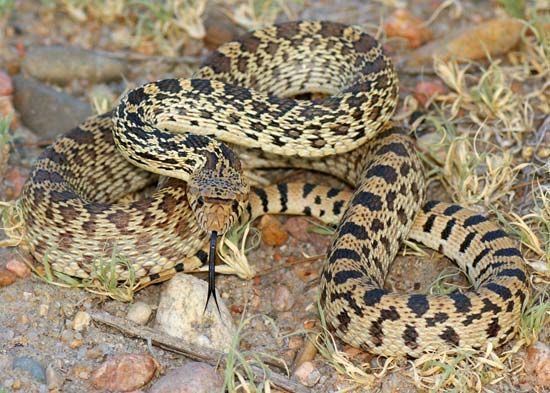
The bull snake (Pituophis catenifer) is a North American constrictor characterized by several distinct physical features:
What are the distinguishing physical characteristics of bull snakes?
The bull snake (Pituophis catenifer) is a North American constrictor characterized by several distinct physical features:
- Body Shape: They possess a heavy-bodied form and can reach lengths of up to 2.5 meters (8 feet).1
- Head and Nose: They have a relatively small head and are distinguished by an enlarged nose shield, which is an adaptation for digging.1
- Coloration: Their typical appearance consists of a yellowish-brown or cream-colored base marked with dark blotches.1
Because these snakes hiss loudly and vibrate their tails when threatened, they are frequently mistaken for rattlesnakes, despite being nonvenomous.1
How do bull snakes differ from other species in the Pituophis genus?
The bull snake (Pituophis catenifer) is a member of the genus Pituophis, a group of colubrid snakes primarily known for their rodent-eating habits. While the term “bull snake” is often used to describe the species P. catenifer, it is closely related to other members of the genus, specifically the pine snake (P. melanoleucus) and the Mexican bull snake (P. deppei).12
Distinctions between these species are primarily geographic and taxonomic rather than based on drastic physical differences, as all members of the genus share similar characteristics like the enlarged nose shield used for burrowing. The bull snake is distinguished by its extensive range across western North America, stretching from British Columbia to northern Mexico, whereas the pine snake is native to the eastern and southern United States, and the Mexican bull snake is found in north-central and western Mexico.1
Because the provided search results do not detail specific morphological variations between these species, I cannot provide a comprehensive comparison of their physical differences beyond their shared genus traits.1
What role do bull snakes play in their ecosystem and how do they interact with humans?
Bull snakes (Pituophis catenifer) play a vital role in their ecosystems primarily as predators. By hunting rodents, as well as birds and lizards, they help regulate prey populations within their habitats, which range from sandy open country to pine barrens.1
Their interaction with humans is often characterized by misunderstanding. Because bull snakes hiss loudly, thrash, and vibrate their tails when threatened, they are frequently mistaken for rattlesnakes. Despite this defensive behavior and their potential to bite, they are nonvenomous and generally pose no threat to humans.1
Human activity has a significant impact on these snakes; while the species is currently classified as of least concern by the International Union for Conservation of Nature, local populations have declined due to the transformation of their natural environments through agriculture and urban development.1
What are some common misconceptions about bull snakes?
Common misconceptions about the bull snake (Pituophis catenifer) often stem from its defensive behaviors, which can lead people to misidentify it as a dangerous animal.
- Mistaken Identity as a Rattlesnake: When threatened, bull snakes hiss loudly, thrash, and vibrate their tails. Because of these defensive displays, they are frequently mistaken for rattlesnakes. Despite this mimicry, bull snakes are nonvenomous and do not possess the venomous bite of a rattlesnake.1
- Aggression: While they may bite if provoked, bull snakes are not inherently aggressive toward humans. Their defensive posturing is a survival mechanism intended to deter predators rather than an indication of a predatory threat to people.1
- Naming Confusion: There is often confusion regarding their identity due to regional naming conventions. While widely known as bull snakes, they are frequently called gopher snakes in the western United States, leading some to believe they are entirely different species.1
Sources
- bull snake — Encyclopædia Britannica
- Pituophis — Merriam-Webster
Published on · 3 min read