Bulrush
The term "bulrush" generally refers to any of the annual or perennial grasslike plants in the genus Scirpus, which belongs to the sedge family. These plants…
What is Bulrush?
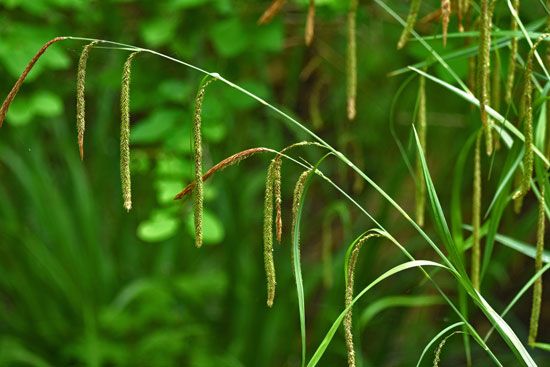
The term “bulrush” generally refers to any of the annual or perennial grasslike plants in the genus Scirpus, which belongs to the sedge family. These plants typically grow in wet environments such as ponds, marshes, and lakes, where they can help reduce water pollution by filtering out toxic microorganisms and poisonous metals. Their strong, fibrous stems are frequently utilized for weaving items like baskets, mats, and chair seats.1
It is important to note that the common name can be ambiguous: in Britain, the term “bulrush” is often used to refer to cattails (Typha latifolia and T. angustifolia). Additionally, in the context of the biblical story of the infant Moses, the “bulrushes” mentioned are widely considered to be papyrus (Cyperus papyrus), a plant historically used in ancient Egypt for making paper and constructing boats.12
How do bulrushes help filter water in wetlands?
Bulrushes (Scirpus) contribute to water purification through a natural process known as phytoremediation. In this process, the plants act as biological filters by absorbing toxic substances directly from their environment.14
Specifically, bulrushes are capable of taking up poisonous metals and neutralizing toxic microorganisms present in the water of ponds, marshes, and lakes. By removing, degrading, or stabilizing these undesirable pollutants, the plants play a vital role in reducing water pollution and maintaining the health of wetland ecosystems.14
What are the main differences between sedges, rushes, and grasses?
While grasses, sedges, and rushes are often confused due to their similar appearance, they belong to distinct botanical families and possess unique structural characteristics. A common mnemonic to help distinguish them is: “Sedges have edges, rushes are round, and grasses have knees (nodes) that bend to the ground.”
Key Differences
Feature
Grasses (
Poaceae
)
Sedges (
Cyperaceae
)
Rushes (
Juncaceae
)
Stem Shape
Round and usually hollow between nodes.
Often triangular (though some are round).
Generally round and solid.
Leaf Arrangement
Alternate, in two ranks (distichous).
Three-ranked (tristichous).
Often basal or alternate.
Leaf Sheath
Margins overlap.
Margins are fused.
Open or closed.
Flowers
Subtended by two scales.
Subtended by a single scale.
Small, greenish, and bisexual.
Structural and Ecological Distinctions
- Grasses: True grasses are the most economically significant, providing grains like rice, corn, and wheat. They are characterized by hollow stems with distinct joints (nodes) and leaves that arise in two vertical rows.352
- Sedges: These are often found in wetlands and are known for their triangular stems and three-ranked leaves. While they are not major crop plants, they are vital for primary productivity and soil stabilization.62
- Rushes: Closely related to sedges, rushes are typically found in moist or marshy habitats. They are known for their round, solid stems and are frequently used in weaving materials like mats and baskets.32
Why are wetlands considered important for the environment?
Wetlands are vital components of the Earth’s biosphere, often described as the “kidneys of the landscape” due to their essential role in maintaining environmental health. Their importance stems from several key functions:7
- Biodiversity Support: As transition zones between terrestrial and aquatic systems, wetlands provide critical habitats for a diverse array of plants, animals, and waterfowl. They often serve as the final refuge for rare and endangered species.7
- Water Management: Wetlands naturally collect, store, and release water. This capacity helps mitigate flooding in developed areas, protects shorelines, and recharges groundwater [aquifers].7
- Water Purification: They act as biological filters, cleansing polluted waters and serving as sinks for inorganic nutrients.7
- Climate Regulation: Wetlands are significant carbon sinks, storing 15–30 percent of the world’s soil carbon. Their preservation is a key strategy in mitigating global warming and addressing [water scarcity].789
Because of these services, protecting and restoring wetlands is considered a fundamental aspect of sustainable development and natural resource management.79
Sources
- Bulrush — Encyclopædia Britannica
- Cyperaceae - Economic and ecological importance — Encyclopædia Britannica
- Poales — Encyclopædia Britannica
- phytoremediation — Merriam-Webster
- grass — Encyclopædia Britannica
- Cyperaceae - Characteristic morphological features — Encyclopædia Britannica
- Wetland - Wetland functions and ecosystem benefits — Encyclopædia Britannica
- Global warming - Carbon cycle feedbacks — Encyclopædia Britannica
- Wetland - Effects of climate change — Encyclopædia Britannica
- Wetland - Wetland management — Encyclopædia Britannica
Published on · 3 min read