Cardoon
The cardoon (Cynara cardunculus) is a thistlelike perennial herb belonging to the Asteraceae family. Native to southern Europe and North Africa, it is widely…
What is Cardoon?
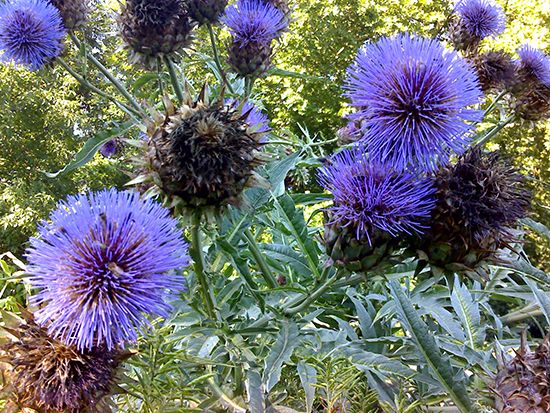
The cardoon (Cynara cardunculus) is a thistlelike perennial herb belonging to the Asteraceae family. Native to southern Europe and North Africa, it is widely considered the wild ancestor of the artichoke.12
Unlike the artichoke, which is primarily cultivated for its edible flower buds, the cardoon is grown for its thick main roots and its blanched inner leaves and stalks, often referred to as the chard. These parts are typically boiled, seasoned, and served chilled in salads. Several varieties exist, including the common, Spanish, red-stemmed, and the particularly tender Paris cardoon.123
Following its introduction to South America, the plant successfully naturalized and spread across vast areas of the pampas.1
How is the cardoon related to the globe artichoke?
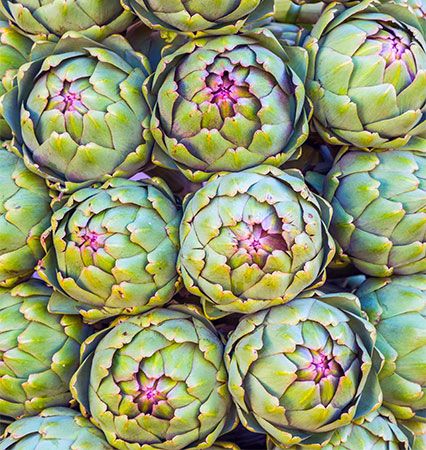
The globe artichoke (Cynara cardunculus, variety scolymus) and the cardoon (Cynara cardunculus) are closely related members of the Asteraceae family. In fact, the cardoon is widely considered to be the wild ancestor of the artichoke.
While they share a common lineage, they are sometimes classified differently by botanists. Some experts identify the globe artichoke as a distinct species (C. scolymus), while others categorize it as a specific variety of the cardoon (C. cardunculus). Their primary difference lies in their culinary use: the artichoke is cultivated specifically for its edible, immature flower buds, whereas the cardoon is grown for its thick roots and blanched inner leaves and stalks.2
What does it mean to blanch a vegetable like the cardoon?
Blanching is a vegetable processing technique that involves heating vegetables in hot water (typically 88 °C or 190 °F) for two to five minutes, or using steam at 100 °C (212 °F) for a shorter duration.
This process serves several critical functions:
- Enzyme Inactivation: It stops natural enzymes that would otherwise lead to discoloration and the development of off-flavors or aromas.
- Microbial Reduction: It lowers the number of microorganisms present on the vegetable.
- Texture and Flavor: It renders the vegetables limp, which facilitates easier packing, and helps remove harsh flavors found in certain plants.
For a cardoon, blanching is essential to prepare its inner leaves and stalks—often called the chard—for consumption. Following the heating process, the vegetable must undergo rapid cooling in cold water or air to ensure quality retention before it is boiled, seasoned, and served.
What are some other common plants in the Asteraceae family?
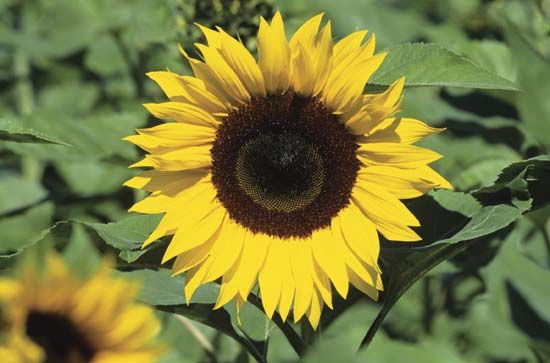
The Asteraceae family, also known as the aster, daisy, or composite family, is one of the largest plant families, containing over 25,000 species. These plants are widely distributed and are economically significant as ornamentals, food crops, and sources of chemical products.567
Common plants within this family include:
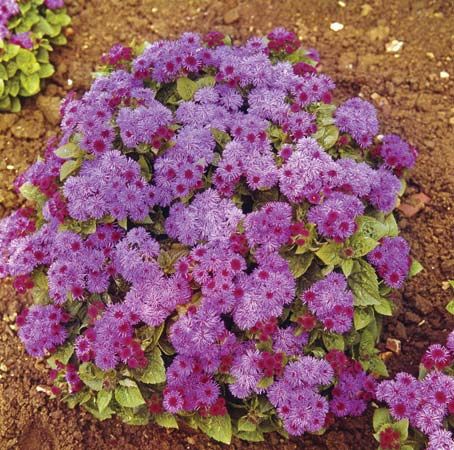
- Garden Ornamentals: Ageratums, asters, chrysanthemums, cosmos, dahlias, marigolds, and zinnias.68
- Food Crops: Lettuce, endive, salsify, sunflowers, and Jerusalem artichokes.67
- Herbs and Flavorings: Tarragon, chamomile, stevia, and wormwood.67
- Wildflowers and Weeds: Burdock, dandelion, ragweed, and various species of thistle.68
These plants are characterized by their composite flower heads, which are composed of many small florets, and their one-seeded achene fruits.98
Sources
- Cardoon — Encyclopædia Britannica
- Artichoke — Encyclopædia Britannica
- cardoon — Merriam-Webster
- vegetable processing - Blanching — Encyclopædia Britannica
- Asteraceae - Economic importance — Encyclopædia Britannica
- Asteraceae — Encyclopædia Britannica
- Asteraceae - Physical characteristics — Encyclopædia Britannica
- list of plants in the family Asteraceae — Encyclopædia Britannica
- list of economically important members of the family Asteraceae — Encyclopædia Britannica
- Asterales — Encyclopædia Britannica
Published on · 2 min read