Chigger
Chiggers are the larval stage of approximately 10,000 species of mites belonging to the suborder Prostigmata. They are members of the invertebrate subclass…
What exactly are chiggers and how are they related to other arachnids?
Chiggers are the larval stage of approximately 10,000 species of mites belonging to the suborder Prostigmata. They are members of the invertebrate subclass Acari, which also includes ticks. It is important to note that the name “chigger” is sometimes incorrectly applied to the chigoe flea, which is an insect, not an arachnid.12
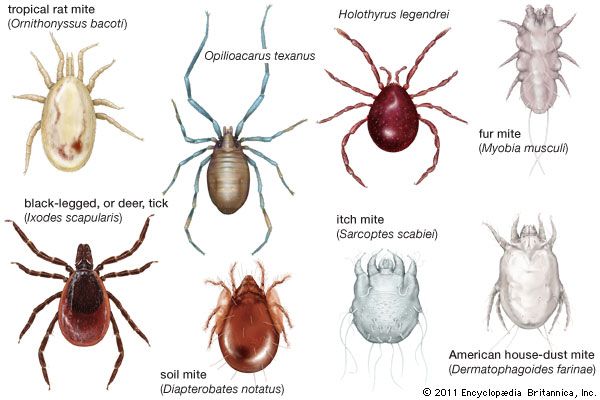
As arachnids, chiggers share fundamental characteristics with other members of the class, such as having jointed appendages and an exoskeleton. However, they are distinct from many other arachnids in that their bodies are not divided into a cephalothorax and an abdomen; instead, their entire body forms a single region. While most adult arachnids possess four pairs of legs, larval chiggers typically have only three pairs.342
Chiggers are unique in their life cycle: only the larval stage is parasitic on vertebrates, often causing intense itching by injecting digestive fluids into the skin. Once they mature into nymphs and adults, they transition to feeding on plant materials or other small arthropods.1
What is the life cycle of a chigger, and at what stage do they typically affect humans?
The life cycle of a chigger begins when eggs are laid singly on the ground or on the leaves and stems of low-growing plants. From these eggs emerges a hexapod larva, which is the only stage of the chigger’s life cycle that is parasitic on vertebrates.15
It is during this larval stage that chiggers typically affect humans. After the larva finds a host, it attaches to the skin and injects a fluid that digests tissue, causing severe itching and the formation of a hardened tube in the surrounding skin. Once the larva has finished feeding, it drops to the ground and sheds its external skeleton to transition into a nymph and eventually an adult.1
Unlike the larvae, nymphs and adults are not parasitic on vertebrates; instead, they feed on plant materials and potentially other small arthropods. While the primitive life cycle of many acarids involves multiple nymphal stages, the development of chiggers can vary, with some species exhibiting deviations from this standard progression.15
How do chiggers feed, and what causes the itchy reaction in humans?
Chiggers feed by attaching themselves to the skin of a host, where they inject a specialized fluid into the site of attachment. This fluid contains enzymes that digest the host’s skin tissue, allowing the larva to consume the liquefied cells. As the larva feeds, the host’s surrounding tissue reacts by hardening, which creates a tube-like structure in the skin.1
The intense, persistent itching associated with chigger bites is a direct result of this digestive process. The body’s inflammatory response to the injected digestive enzymes and the resulting tissue damage causes the characteristic dermatitis that humans experience. Contrary to common misconceptions, chiggers do not burrow into the skin or feed on blood; they remain on the surface to consume the liquefied tissue before eventually dropping off to continue their life cycle.1
How do chiggers differ from ticks, another common arachnid pest?
While both chiggers and ticks belong to the subclass Acari, they differ significantly in their classification, feeding habits, and life stages.
Classification and Morphology
- Chiggers: These are the larval stage of mites within the suborder Prostigmata. They are generally minute, ranging from 0.1 to 16 mm, and are weakly sclerotized (having a thin, soft external skeleton).16
- Ticks: These belong to the order Ixodida within the superorder Parasitiformes. They are the largest members of the Acari, with adults measuring 2 to 30 mm, and are typically heavily sclerotized.6
Feeding Habits
- Chiggers: Only the larval stage is parasitic on vertebrates. They do not feed on blood; instead, they inject digestive enzymes into the skin to liquefy tissue, which they then consume. Nymphs and adults are free-living and feed on plant materials or other small arthropods.1
- Ticks: Most active stages of ticks are external parasites that feed primarily on the blood of vertebrates. They possess specialized mouthparts, including a backward-toothed hypostome, to anchor themselves firmly to the host.6
Disease Transmission
Both groups are significant disease vectors. Ticks are among the most prolific transmitters of human disease, including Lyme disease and Rocky Mountain spotted fever. Chiggers are primarily known for causing intense dermatitis, though certain species are vectors for scrub typhus.21
Sources
- chigger — Encyclopædia Britannica
- acarid - Annotated classification — Encyclopædia Britannica
- acarid - External features — Encyclopædia Britannica
- arachnid - Body and appendages — Encyclopædia Britannica
- acarid - Reproduction and life cycle — Encyclopædia Britannica
- acarid - Importance — Encyclopædia Britannica
- heteropteran - Feeding — Encyclopædia Britannica
Published on · 3 min read