Chihuahuan Desert
The Chihuahuan Desert is the largest desert in North America, covering approximately 200,000 square miles (520,000 square kilometers) across the United…
What is Chihuahuan Desert?
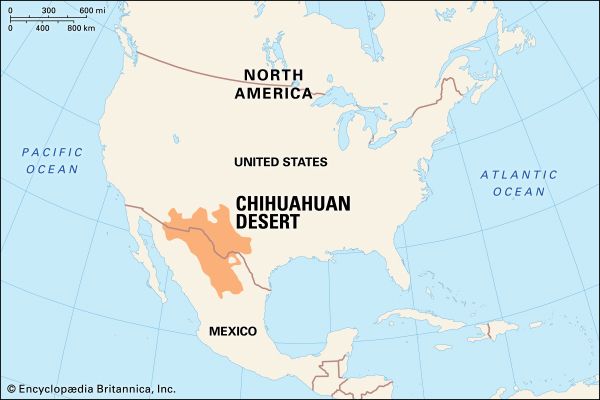
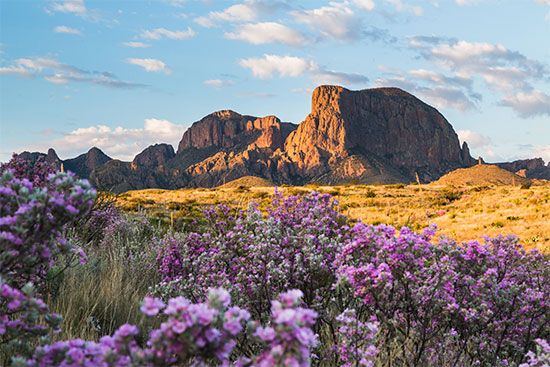
The Chihuahuan Desert is the largest desert in North America, covering approximately 200,000 square miles (520,000 square kilometers) across the United States and Mexico. Situated between the Sierra Madre Occidental and Oriental ranges, it functions as a rain-shadow desert, resulting in an arid climate with limited precipitation.12
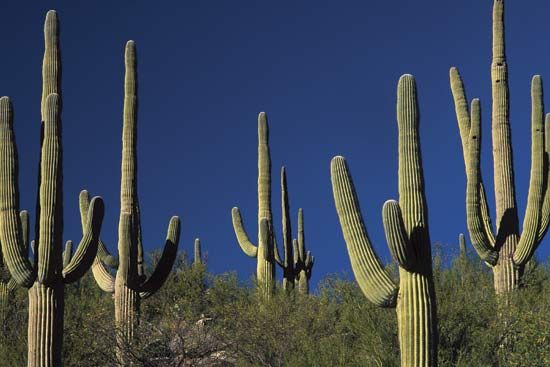
Despite its harsh conditions, the region is remarkably biodiverse, hosting over 3,500 plant species—including nearly one-fourth of the world’s cacti—and a wide array of wildlife, such as the Mexican gray wolf and black-tailed prairie dog. The Rio Grande serves as a vital water source for both the ecosystem and the millions of people living in nearby urban centers like El Paso and Ciudad JuárezEl-Paso-Texas) and Ciudad Juárez. Current conservation efforts are focused on addressing the environmental pressures caused by urban sprawl and water scarcity to protect this fragile habitat.2
How does a rain-shadow effect create a desert?
A rain shadow creates a desert by acting as a barrier to moisture-laden air, significantly reducing precipitation on the leeward side of a mountain range.34
The process occurs in the following stages:
- Ascent and Precipitation: As moist air encounters a mountain barrier, it is forced to rise. As the air rises, it cools, which reduces its moisture-bearing capacity. This leads to the formation of clouds and heavy precipitation on the windward side of the mountains.5
- Descent and Warming: Once the air passes over the crest and begins to descend on the leeward side, it undergoes compression and warming. This process increases the air’s moisture-bearing capacity, effectively “drying out” the air.5
- Arid Conditions: Because the air has already lost most of its moisture on the windward side and becomes warmer and drier as it descends, the leeward region receives very little rainfall. Over time, this lack of moisture results in the formation of semiarid or desert terrain.56
What are some ways animals adapt to survive in extreme desert heat?
Animals have developed a variety of morphological, physiological, and behavioral adaptations to survive the extreme heat and water scarcity of desert environments.
Behavioral Adaptations
Many desert animals are nocturnal, remaining underground or in shaded burrows during the heat of the day to avoid direct solar radiation and high temperatures. Others, such as certain birds, are nomadic, allowing them to relocate to areas where recent rainfall has provided temporary food and water sources. When conditions become too severe, some animals enter estivation, a state of dormancy triggered by high heat and water shortages.8910
Physiological and Morphological Adaptations
- Water Retention: Desert animals often have skin that is relatively impervious to water. Many species, including reptiles and small mammals, derive necessary moisture directly from their food, such as plants, insects, or spiders, making them largely independent of standing water.118
- Thermal Regulation: Animals like camels utilize specialized physiology, such as oval-shaped blood cells that allow them to consume large amounts of water at once and maintain blood flow when water is scarce. Their humps store fatty tissue, which serves as a nutrient reserve and helps minimize heat insulation across the rest of the body during the day.12
- Respiratory Cooling: Some animals, such as gazelles, use their nasal passages to cool blood before it reaches the brain. By exhaling air that is cooler than their body temperature, they also allow water vapor to condense in the nose, which is then reabsorbed rather than lost to the environment.11
Why is the Rio Grande so important to the Chihuahuan Desert’s ecosystem?
The Rio Grande is vital to the Chihuahuan Desert because it serves as a primary source of water in an otherwise arid environment. By providing essential moisture, the river sustains the desert’s diverse plant and animal life, contributing to its status as one of the most biologically diverse deserts in North America.14
The river’s importance to the ecosystem includes:
- Supporting Biodiversity: The water provided by the Rio Grande supports a wide variety of species, including mammals, birds, and an unexpectedly high diversity of freshwater fish, many of which are endemic to the region.14
- Sustaining Habitats: The river acts as a lifeline for various habitats, helping to maintain the ecological balance across the desert’s diverse landscape of mountains, valleys, and plateaus.14
- Human and Ecological Balance: While the river is crucial for urban development, agriculture, and livestock in the region, this demand for water often places significant pressure on the desert’s fragile natural systems. Consequently, conservation efforts are increasingly focused on protecting these water sources to ensure the long-term health of the desert’s ecosystems and the survival of endangered species.14
Sources
- Chihuahuan Desert: Top Questions — Encyclopædia Britannica
- Chihuahuan Desert — Encyclopædia Britannica
- Rain shadow — Encyclopædia Britannica
- Highland climate — Encyclopædia Britannica
- India - The southwest monsoon — Encyclopædia Britannica
- world’s largest deserts — Encyclopædia Britannica
- How Do Deserts Form? — Encyclopædia Britannica
- Biosphere - Humidity — Encyclopædia Britannica
- North American Desert - Animal life — Encyclopædia Britannica
- Do Camels Store Water in Their Humps? — Encyclopædia Britannica
- climatic adaptation — Encyclopædia Britannica
- Desert - Fauna — Encyclopædia Britannica
- Biosphere - Temperature — Encyclopædia Britannica
- Rio Grande - Physical features — Encyclopædia Britannica
- Rio Grande - The economy — Encyclopædia Britannica
Published on · 4 min read