Native Cat
"Native cats," more commonly known as quolls, are not true cats but are marsupial mammals belonging to the family Dasyuridae. While they may share ecological…
What are the main characteristics that distinguish marsupial native cats from other mammals?
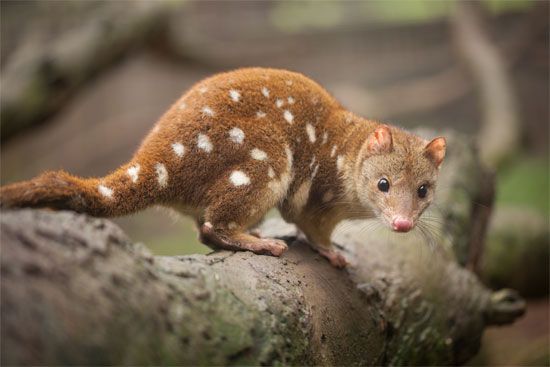
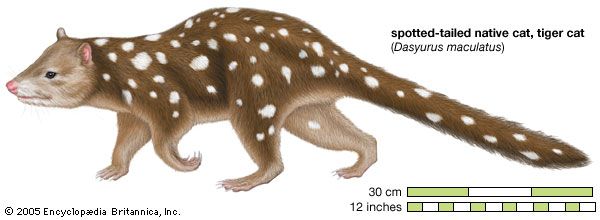
“Native cats,” more commonly known as quolls, are not true cats but are marsupial mammals belonging to the family Dasyuridae. While they may share ecological roles with placental cats, they are distinguished by fundamental biological differences:
- Reproductive Strategy: Like all marsupials, native cats give birth to young in a highly vulnerable, embryonic state. These young must then migrate to the mother’s teats to continue their development, often within a pouch or a skin fold. Unlike placental mammals, the uterine wall of a native cat is not specialized for complex embryo implantation.12
- Brain Structure: Native cats possess simpler brains compared to placental mammals. Notably, their brains lack a corpus callosum, the structure that connects the two cerebral hemispheres in placental mammals, and they have less brain tissue relative to their body size.1
- Physical Traits: Native cats are characterized by bushy tails and white-spotted fur. As members of the genus Dasyurus, they are predaceous carnivores that hunt primarily at night.34
Are there any cultural or Indigenous stories associated with native cats in Australia?
The term “quoll,” which is the common name for the native cat, originates from je-quoll, a derivative of the word dhigul from the Guugu Yimidhirr language, an Indigenous Australian language of northern Queensland.7
While specific cultural narratives or Dreaming stories regarding the quoll are often held as sacred knowledge by specific clan proprietors—similar to the designs found on tjurunga boards or within totemic ritual settings—these stories are generally not public domain. In many Indigenous Australian cultures, the relationship between a design, an animal, and its associated myth is revealed only during specific initiation rituals or to those with the appropriate cultural authority.8
How do native cats hunt and what is their typical diet?
Native cats, known as quolls, are carnivorous marsupials that function as predators within their ecosystems. While the provided search results confirm that they are predators that hunt primarily at night, they do not offer specific details regarding their precise hunting techniques or the specific composition of their diet beyond the general classification of being carnivorous.73
It is important to clarify that native cats are distinct from the placental feline family. While placental cats are known for specific hunting behaviors—such as stalking prey on padded feet, using sensitive whiskers to navigate, and dispatching prey with a bite to the neck—these behaviors are not necessarily applicable to the marsupial quoll. Because the available data does not detail the specific dietary habits or hunting mechanics of the genus Dasyurus, I cannot provide further information on those particular aspects.93
Are there any conservation concerns for native cat species, and what efforts are being made to protect them?
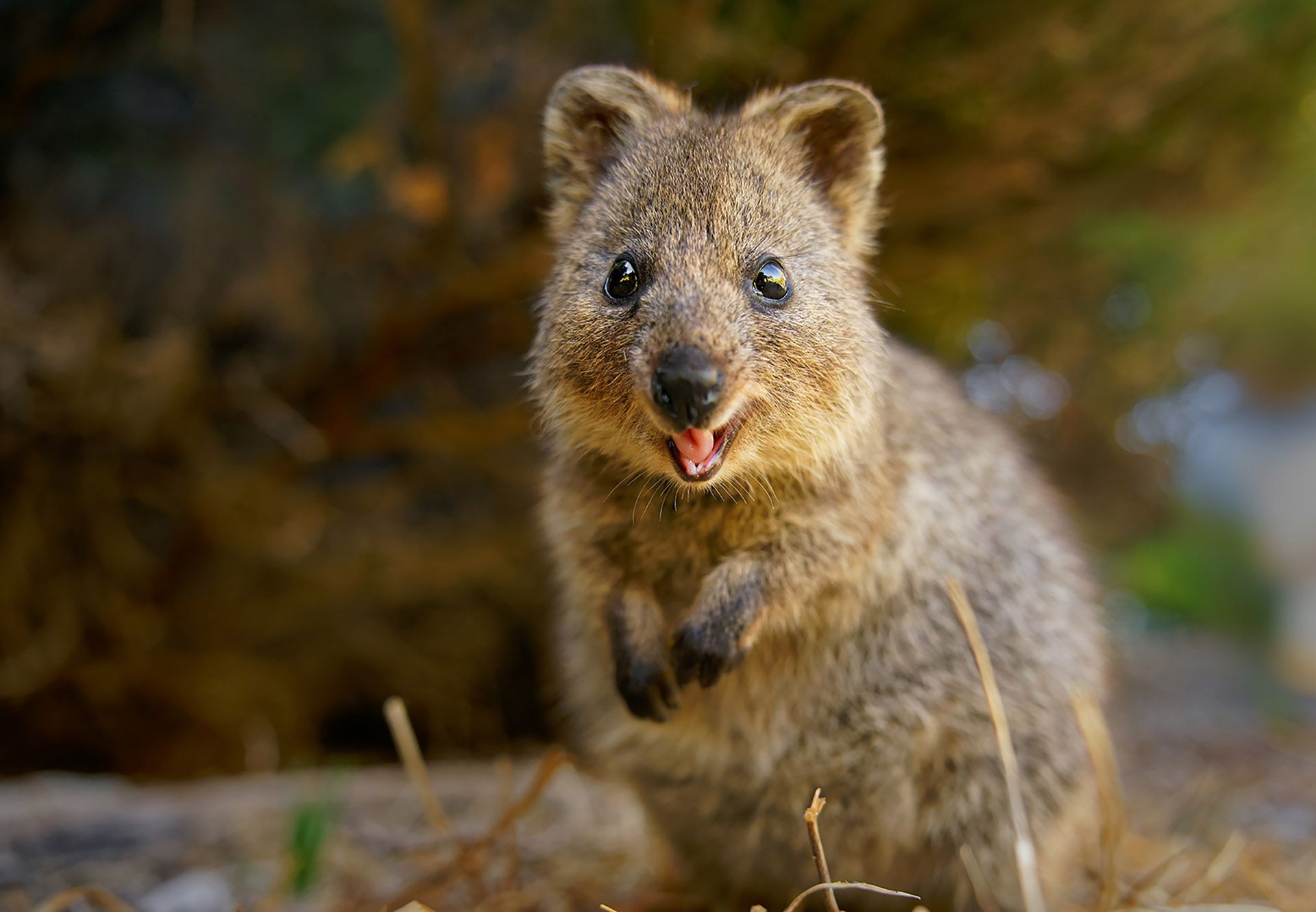
It is important to clarify that the quokka is a small macropod marsupial and is not a “native cat.” The term “native cat” refers to the quoll, which is a distinct carnivorous marsupial. The provided search results do not contain information regarding the conservation status or protection efforts for quoll species.
Regarding the quokka, which is often confused with other small Australian mammals, its populations face significant threats from habitat fragmentation, climate change, and invasive species. Specifically, the introduction of feral cats, foxes, and pigs has been a primary driver of their decline on the Australian mainland.10
Sources
- marsupial — Encyclopædia Britannica
- mammal - Estrus and other cycles — Encyclopædia Britannica
- native cat — Encyclopædia Britannica
- dasyurid — Encyclopædia Britannica
- native cat — Merriam-Webster
- Dasyuridae — Merriam-Webster
- quoll — Merriam-Webster
- Oceanic art and architecture - The central desert — Encyclopædia Britannica
- feline - Natural history — Encyclopædia Britannica
- quokka: Top Questions — Encyclopædia Britannica
Published on · 2 min read