Do Sunflowers Really Follow the Sun?
Yes, young sunflowers do track the Sun across the sky, a behavior known as heliotropism. During the day, the stems of young plants bend westward to follow…
Do sunflowers really follow the Sun?
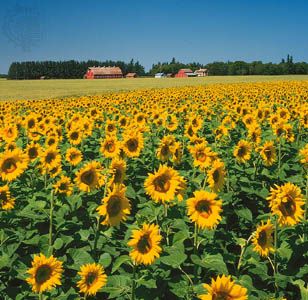
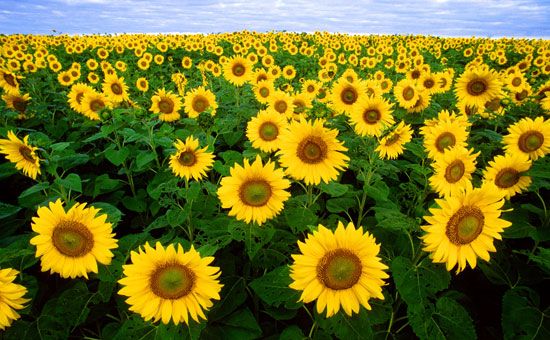
Yes, young sunflowers do track the Sun across the sky, a behavior known as heliotropism. During the day, the stems of young plants bend westward to follow the Sun, and at night, they reset to face east. This movement is regulated by the plant’s internal circadian clock, which coordinates differential growth on either side of the stem to facilitate the bending motion.1
This tracking behavior is beneficial for young plants, as it maximizes light exposure for photosynthesis and promotes vigorous growth. However, this process is temporary. As the plant matures and begins to flower, the daily movement ceases, and the flower heads become fixed in an eastward-facing position.1
This stationary orientation provides distinct advantages: east-facing flowers warm up faster in the morning, which attracts more pollinating insects and encourages earlier pollen release. Research suggests this orientation may even improve reproductive success by resulting in larger, heavier seeds in larger, heavier seeds.1
What is the role of the circadian clock in plants?
The circadian clock in plants serves as an internal timing mechanism that coordinates essential physiological and developmental processes with recurring environmental cycles, such as the daily rotation of the Earth and seasonal changes in day length. By maintaining these internal rhythms, plants can anticipate environmental shifts, which significantly enhances their chances for successful growth and propagation.21
Key roles of the circadian clock include:
- Coordinating Growth and Movement: The clock regulates specific behaviors, such as heliotropism in young sunflowers. By controlling differential growth rates on opposite sides of a stem, the clock allows the plant to track the movement of the Sun across the sky, maximizing light exposure for photosynthesis and promoting vigor.1
- Regulating Developmental Timing: The clock helps govern the transition from vegetative growth to the reproductive phase. This timing is often synchronized with seasonal cues, such as changes in day length, a phenomenon known as photoperiodism. This ensures that critical events like flowering, fruiting, and seed dispersal occur at the most favorable times of the year.2
- Metabolic Synchronization: By aligning internal activities with the day-night cycle, the circadian clock helps the plant manage its energy balance and hormone production, which in turn influences various developmental responses beyond just flowering.2
How does photosynthesis help plants grow?
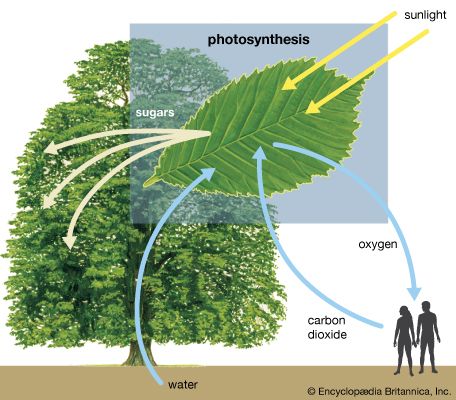
Photosynthesis is the fundamental process by which plants convert light energy into chemical energy, providing the essential fuel required for growth and development.6
During this process, plants absorb light and use it to transform water, carbon dioxide, and minerals into oxygen and energy-rich [organic compounds]. The primary products formed are carbohydrates, such as starch and the sugar sucrose. These compounds, particularly glucose, serve as the primary energy source for cell function as the primary energy source for cell function.6712
This energy powers the three core processes of plant growth:
- Cell division: The creation of new cells, primarily occurring in regions called meristems.6
- Cell enlargement: The expansion of individual cells, made possible by the elasticity of plant cell walls.6
- Cell differentiation: The specialization of cells into various tissues, such as fibers or tracheids, which form the different parts of the plant.6
By fueling these activities, photosynthesis allows plants to extend their roots and shoots, increase their girth, and develop from a seed into a mature organism.6
Why do pollinators prefer east-facing flowers?
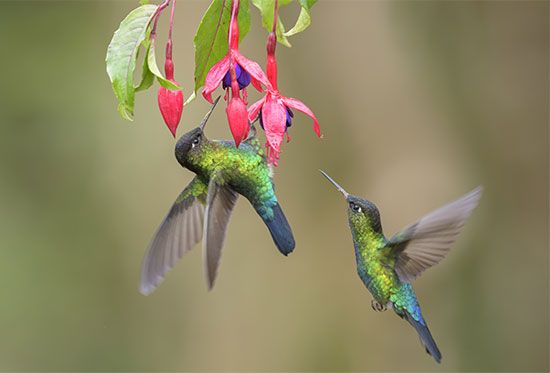
Pollinators are often attracted to east-facing flowers because of the thermal and temporal advantages these plants provide. Research indicates that east-facing flowers, such as mature sunflowers, warm up more rapidly in the morning sun compared to those facing other directions.1
This increased warmth serves as a significant attractant for pollinating insects, which are often more active during the warmer parts of the day. Furthermore, these flowers tend to release pollen earlier in the morning, aligning their availability with the peak activity periods of many pollinators. This strategic orientation not only enhances the likelihood of visitation but may also contribute to greater reproductive success, as east-facing flowers have been observed to produce larger and heavier seeds.1
Sources
- Do sunflowers really follow the Sun? — Encyclopædia Britannica
- Plant development - Environmental control of development — Encyclopædia Britannica
- Growth - Light — Encyclopædia Britannica
- Plant development - Seasonal adaptations — Encyclopædia Britannica
- radiation - Effects on development and biologic rhythms — Encyclopædia Britannica
- Photosynthesis - Overall reaction of photosynthesis — Encyclopædia Britannica
- photochemical reaction - Photochemical steps in photosynthesis — Encyclopædia Britannica
- Do Plants Emit Oxygen and Carbon Dioxide at Night? — Encyclopædia Britannica
- Plant - Basic mechanisms — Encyclopædia Britannica
- How do plants grow? — Encyclopædia Britannica
- Photosynthesis - Energy efficiency of photosynthesis — Encyclopædia Britannica
- Glucose: Top Questions — Encyclopædia Britannica
- Major types of pollinators - Bees — Encyclopædia Britannica
- Pollination - Evolution of insect pollination — Encyclopædia Britannica
- Chemoreception - Attraction — Encyclopædia Britannica
- Pollination - Beetles and flies — Encyclopædia Britannica
Published on · 3 min read