Stair-step Moss
Stair-step moss (Hylocomium splendens) is a species of moss belonging to the subclass Bryidae. It is commonly found carpeting the floors of coniferous…
What is Stair-step moss?
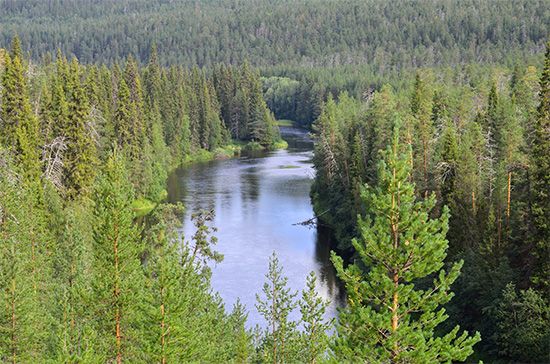
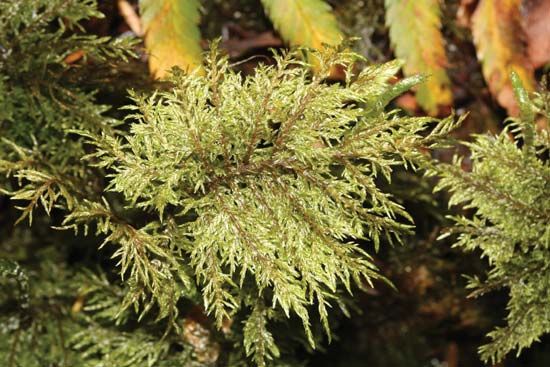
Stair-step moss (Hylocomium splendens) is a species of moss belonging to the subclass Bryidae. It is commonly found carpeting the floors of coniferous forests throughout the Northern Hemisphere, though it also thrives in habitats such as tundra, ledges, and dunes.1
The plant is characterized by its distinct, fernlike shoots that feature multiple branches. It possesses glossy, reddish stems known as caulids, which are covered in leaves (phyllids) measuring up to 3 mm (0.12 inch) in length. When the plant reproduces, the female specimens produce spore cases, or capsules, that are held aloft on stalks called setae, which typically reach about 2 cm (0.8 inch) in height.1
How does moss reproduce without seeds?
Mosses reproduce through a process known as alternation of generations, which involves two distinct phases: the sexual gametophyte generation and the asexual sporophyte generation.23
Sexual Reproduction
The leafy green moss plant is the gametophyte, which produces sex organs: antheridia (male) and archegonia (female). When moisture from rain or dew is present, sperm are released and travel to the archegonia to fertilize the eggs. This fertilization results in the development of a sporophyte, which grows attached to the gametophyte and relies on it for nutrients. The sporophyte eventually produces spores within a capsule. When these spores are released and land in favorable conditions, they germinate into a protonema—a branching, threadlike structure—which eventually develops into a new leafy gametophyte.435
Asexual Reproduction
Mosses can also reproduce vegetatively, bypassing the sexual cycle entirely. This occurs through:23
- Fragmentation: If a piece of the gametophyte breaks off, it has the potential to grow into a complete new plant.23
- Regeneration: New plants can develop from tiny pieces of photosynthetic tissue.3
- Gemmae: Some species produce specialized clusters of cells called gemmae that can detach and grow into new gametophytes.2
What role do mosses play in forest ecosystems?
Mosses play several critical roles in maintaining the health and structure of forest ecosystems:
- Soil Formation and Nutrient Cycling: Mosses are pioneer species that colonize bare rock, initiating soil formation as they break down substrates. By capturing limited precipitation and airborne minerals, they contribute significantly to the nutrient economy of the forest, often making these resources available to other plants.65
- Hydrological Regulation: By acting as a “gigantic sponge,” mosses—particularly those in the genus Sphagnum—absorb and retain vast quantities of water. This helps control the water table and the hydrology of the surrounding landscape.6
- Erosion Control: Mosses provide essential surface cover that protects the ground, helping to prevent soil erosion5.
- Vegetation Dynamics: The dense mats formed by mosses can impede moisture penetration to the roots of seed plants, which indirectly influences the composition of forest vegetation. Additionally, their presence can serve as an indicator species, as many mosses thrive in and signal the presence of acidic soil.67
What are the differences between mosses and ferns?
Mosses and ferns are both spore-bearing plants that require water for fertilization, but they differ significantly in their biological structure and life cycles.
Key Differences
Feature
Mosses (
Bryophyta
)
Ferns (
Polypodiopsida
)
Vascular Tissue
Absent (nonvascular)
Present (
xylem
and
phloem
)
Dominant Phase
Gametophyte
(leafy green plant)
Sporophyte
(large, leafy plant)
Sporophyte Status
Dependent on gametophyte
Independent (after early development)
True Structures
Lack true roots, stems, and leaves
Possess true roots, stems, and leaves
Structural and Reproductive Distinctions
The most fundamental difference is that ferns are vascular plants, meaning they possess specialized tissues to conduct water and nutrients, allowing them to grow much larger than mosses. Because mosses lack these tissues, they are generally small and restricted to moist environments where they can absorb water directly through their surfaces.92
In their life cycles, mosses maintain the gametophyte as the long-lived, conspicuous generation. Conversely, in ferns, the gametophyte is reduced to a small, ephemeral, heart-shaped structure called a prothallus, while the large, familiar fern plant is the sporophyte. While both groups produce spores, the fern sporophyte is a complex, free-living organism, whereas the moss sporophyte remains nutritionally dependent on the gametophyte throughout its life.21011
Sources
- stair-step moss — Encyclopædia Britannica
- bryophyte — Encyclopædia Britannica
- Plant reproductive system - Mosses — Encyclopædia Britannica
- bryophyte - Form and function — Encyclopædia Britannica
- moss — Encyclopædia Britannica
- bryophyte - Ecology and habitats — Encyclopædia Britannica
- indicator species — Encyclopædia Britannica
- Plant - Definition of the category — Encyclopædia Britannica
- Reproduction - Life cycles of plants — Encyclopædia Britannica
- Plant - Division Bryophyta — Encyclopædia Britannica
- Fern - Ecology — Encyclopædia Britannica
- Fern - Size range and habitat — Encyclopædia Britannica
- Plant - Subclass Polypodiidae — Encyclopædia Britannica
Published on · 3 min read