Filefish
Filefishes belong to the family Monacanthidae and are known for their compressed bodies, small mouths, and rough, sandpapery skin. While there are many…
What are some common species of filefish, and how do they differ?
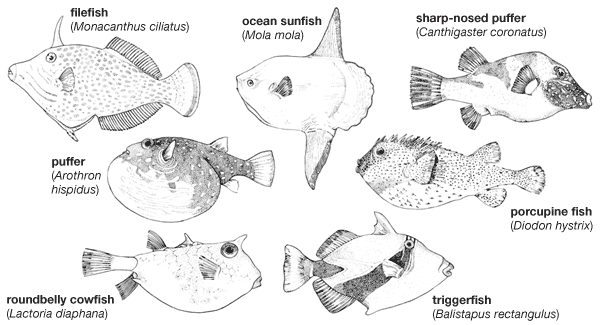
Filefishes belong to the family Monacanthidae and are known for their compressed bodies, small mouths, and rough, sandpapery skin. While there are many species within this family, they are generally characterized by their unique dorsal-fin spines, which can be locked into an upright position.12
Common genera include Aluterus, Cantherhines, and Monacanthus. Notable species include:2
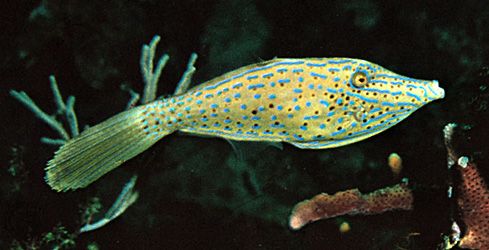
- Scrawled filefish (Aluterus scriptus): This species has a worldwide distribution and is significantly larger than most of its relatives, capable of reaching lengths of up to 100 cm (40 inches).1
- Mimic species: Some filefishes have evolved remarkable survival strategies, such as mimicking the body form and coloration of poisonous puffers to deter predators.3
While they share a family resemblance, species differ primarily in size, coloration, and their specific methods of predator avoidance, such as blending into coral reefs or sea grass beds. They typically feed by using their strong, incisor-like teeth to break off pieces of coral or chisel into mollusk shells.13
What are the distinguishing physical characteristics of filefish?
Filefishes, members of the family Monacanthidae, are distinguished by several specific physical characteristics:
- Body Shape: They have bodies that are flattened from side to side and are generally small-mouthed.1
- Dorsal Spines: A primary diagnostic feature is the presence of two dorsal-fin spines. The first spine is large and erectile, and it can be locked into an upright position by the smaller second spine.14
- Skin Texture: Their skin is covered in small scales with tiny spines, which give the fish a distinct velvety or sandpapery feel—the origin of the name “filefish”. In some species, these scale spines are enlarged on the tail base, particularly in males.1
- Dentition: Their small mouths contain a few strong, incisor-like teeth, which they use to break off pieces of coral or chisel into the shells of mollusks.1
- Jaw Structure: Compared to their close relatives, the triggerfishes, filefishes possess six or fewer outer teeth in each jaw.4
In which habitats are filefish commonly found?
Filefishes, which belong to the family Monacanthidae, are primarily shore-frequenting marine fishes. They are found in warm seas throughout the world, where they typically inhabit coastal environments.1
Because they are often associated with complex substrates like coral reefs, their body shape and swimming capabilities are adapted for navigating these environments rather than for high-speed, open-water travel.112
What role do filefish play in marine aquaculture and the aquarium trade?
The provided information does not contain details regarding the role of filefish in marine aquaculture or the aquarium trade. Consequently, I cannot provide information on these specific topics based on the available data.
Sources
- filefish — Encyclopædia Britannica
- filefish — Merriam-Webster
- tetraodontiform - Activity cycle — Encyclopædia Britannica
- tetraodontiform - Annotated classification — Encyclopædia Britannica
- perciform - Form and function — Encyclopædia Britannica
- ostariophysan - Teeth — Encyclopædia Britannica
- ostariophysan - Fin spines and adipose fin — Encyclopædia Britannica
- scorpaeniform - General features — Encyclopædia Britannica
- fish - The skin — Encyclopædia Britannica
- Integument - Fishes — Encyclopædia Britannica
- Did you know? — Merriam-Webster
- fish - Locomotion — Encyclopædia Britannica
Published on · 2 min read