Gir Range
The Gir Range is characterized by its extremely rugged terrain, featuring a steep slope that descends seaward to the south and a more gradual incline toward…
Are there any unique geological formations or features in the Gir Range?
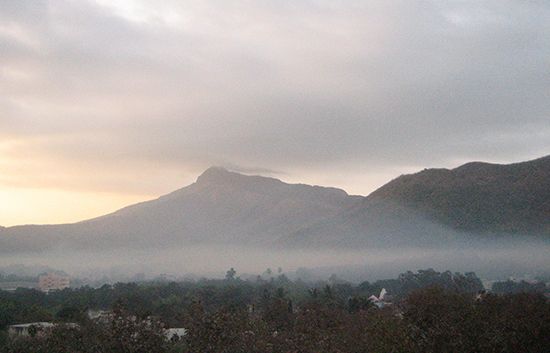
The Gir Range is characterized by its extremely rugged terrain, featuring a steep slope that descends seaward to the south and a more gradual incline toward the north.1
A notable geological feature associated with the region is the Girnar Hills, a broad mass located to the north of the main range. This area includes Gorakhnath, which rises to 3,665 feet (1,117 meters) and is believed to be an extinct volcano. The landscape is further defined by its drainage patterns, with rivers such as the Bhadar, Rohza, Shatarant, and Ghelo originating from the Girnar Hills and flowing both east and west. Additionally, the region contains the Tulsi-Shyam Springs, which are situated near a temple dedicated to the deity Krishna.12
How does the Gir Range compare to other mountain ranges in India in terms of size and biodiversity?
The Gir Range is a low, rugged mountain system located on the Kathiawar Peninsula in Gujarat, India. Compared to the massive, high-altitude ranges of India—such as the Himalayas—the Gir Range is significantly smaller in scale, with its highest point, Gorakhnath, reaching only 3,665 feet (1,117 meters).1
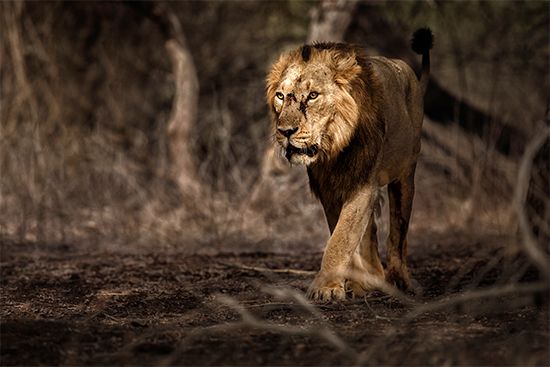
In terms of biodiversity, the region is ecologically distinct. While it may not possess the vast geographic expanse of other Indian mountain ranges, it is globally significant as the only remaining natural habitat for the Asiatic lion. The area supports a diverse ecosystem within its dry scrubland and thorn forests, hosting approximately 38 species of mammals—including leopards, nilgai, and chinkaras—and an estimated 300 species of birds. The provided search results do not contain comparative data regarding the total species richness of other Indian mountain ranges.2
What role does the Gir Range play in supporting the local economy?
The economy of the Gir Range region is primarily driven by subsistence agriculture, with local farmers cultivating crops such as cereal grains, peanuts (groundnuts), and cotton.2
Beyond farming, the region supports several industrial and artisanal activities:
- Manufacturing: There are large-scale industries focused on the production of textiles and iron and steel furniture.2
- Cottage Industries: Local craftsmanship plays a significant role, including carpentry, wood carving, lacquerware, wool weaving, and intricate embroidery, most notably the widely recognized Kathiawari pattern.2
- Tourism: The presence of Gir National Park serves as a major economic contributor. The park attracts visitors through guided tours, such as “lion shows” in protected vehicles, which provide opportunities to view the Asiatic lion in its natural habitat.12
Additionally, the region is home to the Maldhari people, a pastoral community whose traditional lifestyle remains an integral part of the area’s social and economic fabric.1
Where is the Gir Range located in India, and what are its geographical features?
The Gir Range is a low, rugged mountain system situated on the southern Kathiawar Peninsula in the state of Gujarat, west-central India.1
Geographical Features
The range is characterized by its extremely rugged terrain, featuring a steep slope that descends toward the sea in the south and a more gradual incline inland to the north. While much of the surrounding peninsula remains below 600 feet (180 meters) in elevation, the Gir Range reaches heights of up to 2,110 feet (643 meters).14
Associated with the range are the Girnar Hills, a broad mass that includes the peak of Gorakhnath, which rises to 3,665 feet (1,117 meters) and is believed to be an extinct volcano. The region is covered by forests, including dhak and sal trees, and serves as a watershed for several rivers, such as the Bhadar, Rohza, Shatarant, and Ghelo, which flow east and west from the Girnar Hills.1
Sources
- Gir Range — Encyclopædia Britannica
- Gir National Park — Encyclopædia Britannica
- Asiatic lion — Encyclopædia Britannica
- Kathiawar Peninsula — Encyclopædia Britannica
Published on · 3 min read