Nilgai
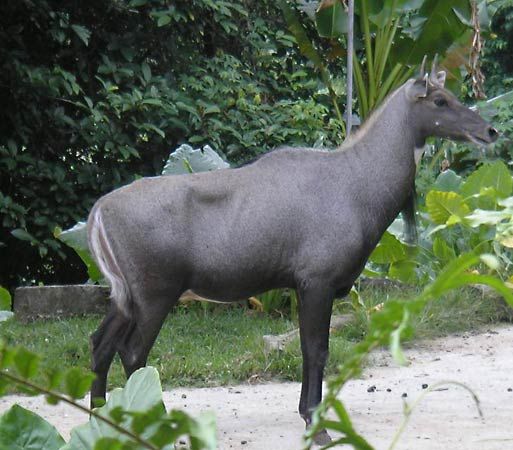
The nilgai, or "blue cow," exhibits significant sexual dimorphism in both color and size.
How does the nilgai’s appearance differ between males and females?
The nilgai, or “blue cow,” exhibits significant sexual dimorphism in both color and size.1
- Coloration: Adult bulls are characterized by a blue-gray coat that can darken to nearly black in prime males. In contrast, cows have an orange-brown coat.1
- Size and Build: Males are notably larger, reaching up to 1.5 meters (5 feet) in height and 300 kg (660 pounds), whereas cows typically weigh around 214 kg (471 pounds). Males also possess a thicker neck and a distinct tassel of black hair that borders their white throat bib.1
- Shared Traits: Despite these differences, both sexes share similar white markings, including cheek spots, ear tips, a large throat bib, a belly patch, and black-and-white banded lower legs. Both sexes also possess small, cowlike horns measuring 15–18 cm (6–7 inches) in length.1
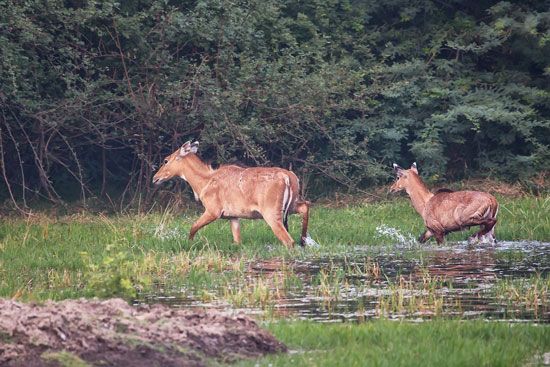
What is a nilgai and where is it primarily found?
The nilgai (Boselaphus tragocamelus), also known as the “blue cow,” is the largest antelope species found in Asia. Belonging to the family Bovidae, it is indigenous to the Indian subcontinent, where it is held in high regard by Hindus, similar to cattle.
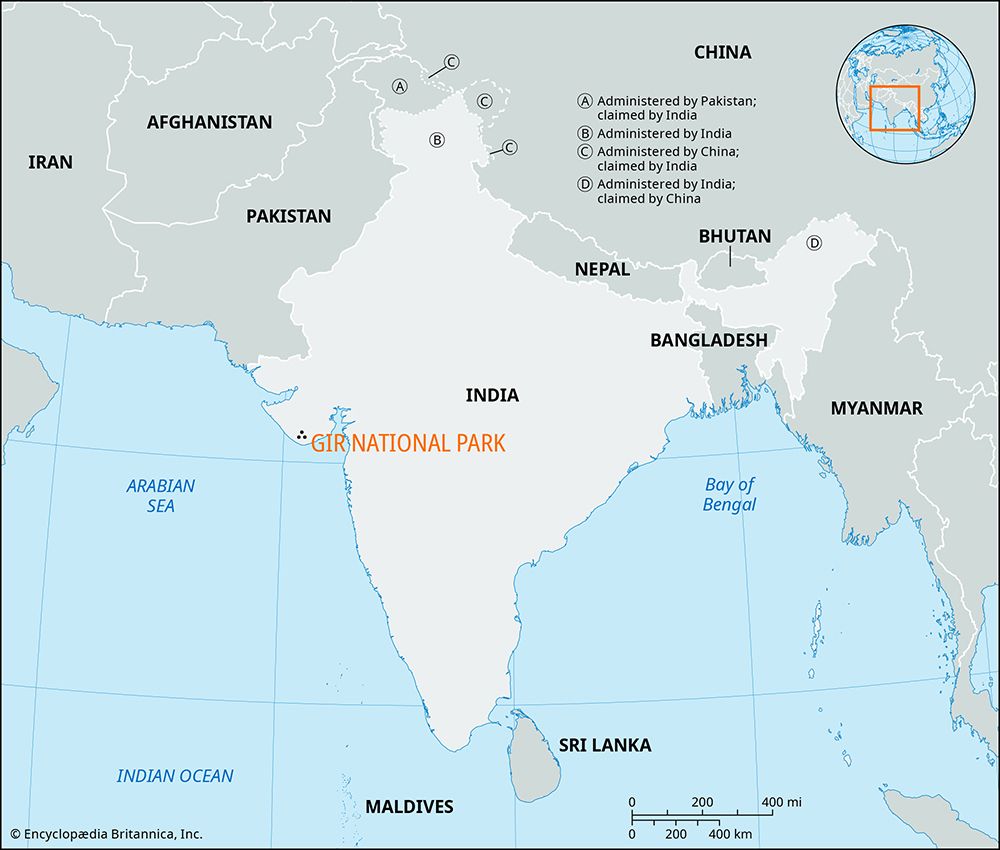
Regarding its distribution, the nilgai is primarily found in central and northwest India, where it inhabits flat and rolling dry savannas characterized by thin woodland and scrub. While it is native to India, a significant population of feral nilgais also exists in Texas, following their introduction to the region in the 1930s.
How has the nilgai’s population spread to other parts of the world, particularly in Texas, USA?
The nilgai is native to the Indian subcontinent, but it has established a significant presence outside its natural range, most notably in Texas, USA. The population in Texas originated from individuals introduced to the region during the 1930s.1
Following their introduction, these animals successfully adapted to the local environment, and today there are over 36,000 descendants of those original nilgais living in the state. The majority of these animals are now considered feral, meaning they exist in a wild state despite their domestic origins. Their ability to thrive in Texas is likely due to their flexible dietary habits as mixed feeders, which allow them to consume both grass and browse, as well as their capacity to endure varying environmental conditions.1
How have human activities affected nilgai populations and their habitats?
Human activities have had a complex impact on nilgai populations, primarily through cultural protection and agricultural competition.
In their native Indian subcontinent, nilgai populations remain abundant largely because Hindus accord them the same sacred status as cattle, which provides them with a level of cultural protection not afforded to other antelope species in the region.1
However, human land use and agricultural practices create significant pressures:
- Resource Competition: Overgrazing by domestic cattle often depletes the available food supply, forcing nilgais to compete for resources.1
- Crop Raiding: As a result of habitat degradation and food scarcity, nilgais frequently raid human crops to compensate for the lack of natural forage.1
- Intentional Introduction: In the United States, human activity led to the intentional introduction of nilgais to Texas in the 1930s. This has resulted in a thriving feral population of over 36,000 animals, demonstrating the species’ ability to adapt to human-altered landscapes.1
We could dive deeper into the specific management strategies used to mitigate human-wildlife conflict in agricultural areas.
Sources
- nilgai — Encyclopædia Britannica
Published on · 3 min read