Godavari River
The Godavari River is vital to agriculture in central and southeastern India, though its utility varies significantly by region. In its upper reaches, the…
How does the Godavari River impact agriculture and irrigation in the regions it flows through?
The Godavari River is vital to agriculture in central and southeastern India, though its utility varies significantly by region. In its upper reaches, the river is often dry during winter and spring, limiting its direct irrigation potential. Conversely, in the river’s lower reaches and delta, a sophisticated irrigation canal system has transformed the landscape into one of India’s most productive rice-growing regions. Additionally, low-lying islands within the river are utilized for cultivating crops such as tobacco.1
To manage water resources for agriculture and power, the basin contains over 900 dams—one of the highest concentrations in India—including major developments like the Jayakwadi, Mula, and Pench projects. Historically, the construction of the Sir Arthur Cotton Barrage near Rajahmundry marked a turning point for regional irrigation. While the basin faces challenges like droughts in Maharashtra and flooding in lower areas, interstate agreements and tribunals help coordinate water-sharing for various irrigation schemes. In the Wainganga River valley, a tributary of the Godavari, the water is also used extensively to irrigate rice crops.12
Are there any major dams or hydroelectric projects on the Godavari River, and what are their impacts?
The Godavari River basin is home to more than 900 dams, one of the highest concentrations of such structures among all river basins in India. These projects were developed to address regional challenges, including droughts in the Marathwada region and the need for consistent water supply for irrigation and hydroelectric power.1
Major Projects and Their Impacts
Since India’s independence in 1947, over 280 water resource projects have been completed. Key examples include:
- Jayakwadi, Mula, and Pench Projects: Located in Maharashtra, these are significant developments designed to manage water resources for agricultural use.1
- Sir Arthur Cotton Barrage: Replacing an earlier 19th-century anicut, this structure near Rajahmundry is critical for the delta region. It supports a navigable irrigation canal system that links the Godavari delta with the Krishna River delta, transforming the area into one of India’s most productive rice-growing regions.13
- Interstate Schemes: Projects such as the Machkund Hydroelectric Project (between Andhra Pradesh and Odisha) and the Pench Hydroelectric Project (between Madhya Pradesh and Maharashtra) demonstrate the collaborative efforts managed by the Godavari Water Disputes Tribunal to balance regional needs.1
While these projects provide essential water security and energy, the basin continues to manage the complex environmental impacts of flooding in its lower reaches and the seasonal variability of the river’s flow.1
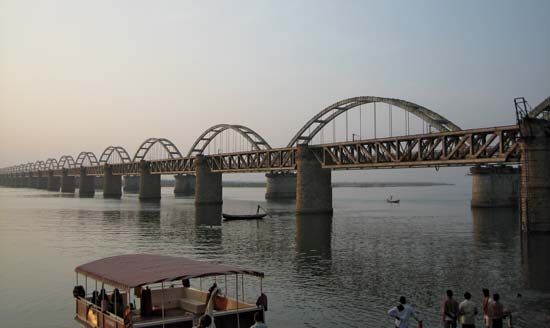
What are some of the major cities and religious sites along the Godavari River?
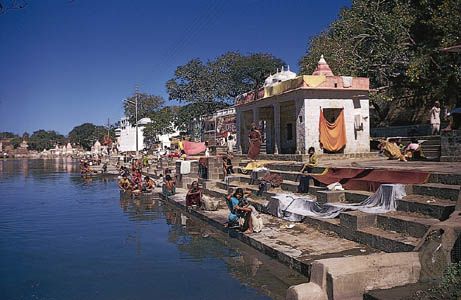
The Godavari River is considered sacred to Hindus and is often referred to as the Dakshin Ganga (southern Ganges). Its banks are home to several significant cities and religious sites that attract pilgrims seeking spiritual purification through ritual bathing and temple visits.41
Major Cities and Religious Sites
- Nashik: Located in Maharashtra, this city is one of the most important religious centers along the river. It is associated with the legend that Rama lived there during his exile. The city features numerous ghats (stepped bathing places) and holy temples, including Kala Ram and Gora Ram. Nearby, the village of Tryambakeshvar houses a prominent Shaivite Jyotirlinga temple.5
- Rajamahendravaram (Rajahmundry): Situated at the head of the Godavari delta in Andhra Pradesh, this city is a major regional hub. While it is a center for commerce and transportation, its location on the river makes it a significant point for those traveling along the lower reaches of the Godavari.6
The river itself is recognized as a tirtha—a place made sacred through its association with deities—and bathing in its waters is considered a powerful act of devotion.1
Where is the Godavari River located, and what is its significance in India?
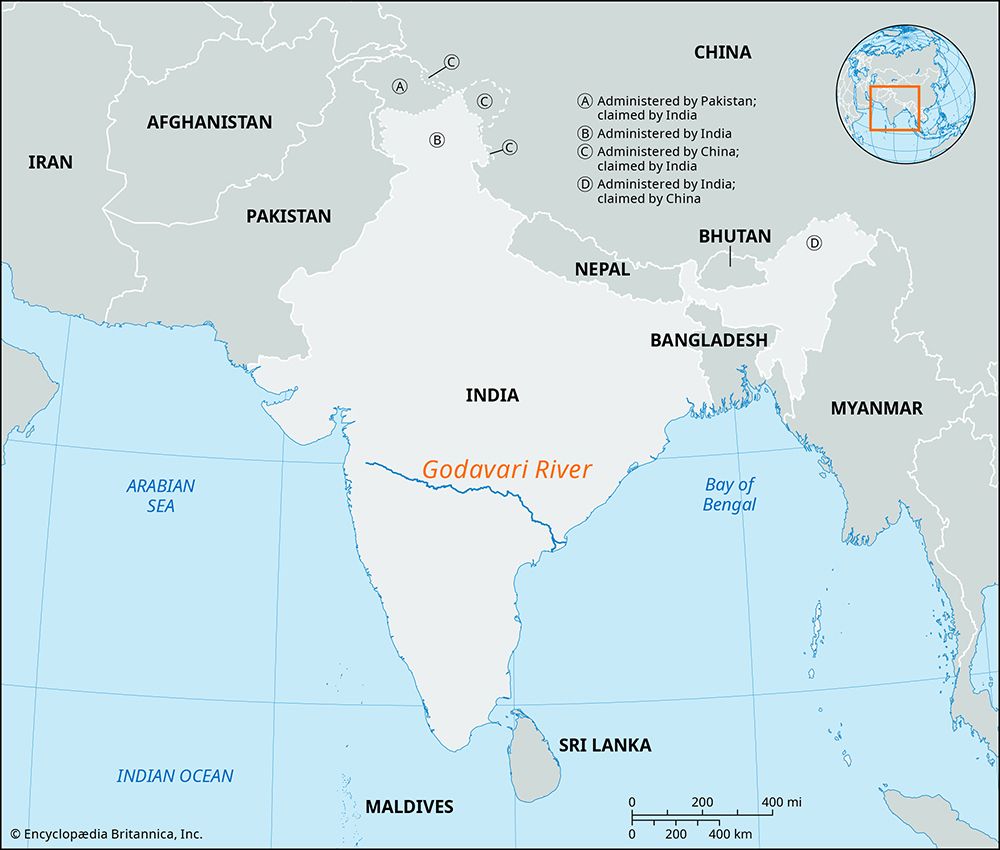
The Godavari River is a major waterway in central and southeastern India, stretching approximately 910 miles (1,465 km) from its source in the Western Ghats of Maharashtra to the Bay of Bengal. It flows eastward across the Deccan plateau, passing through the states of Maharashtra, Telangana, and Andhra Pradesh, with a basin that also extends into Odisha, Chhattisgarh, Madhya Pradesh, Karnataka, and Puducherry.1
The river holds immense significance for several reasons:
- Spiritual Importance: Known as the Dakshin Ganga (southern Ganges), the Godavari is considered sacred to Hindus, serving as a site for ritual bathing and religious devotion.1
- Agricultural Vitality: The river is a cornerstone of India’s agricultural economy. Its delta region, linked with the Krishna River via a navigable canal system, is one of the country’s most productive rice-growing areas.18
- Water Resource Management: The basin contains over 900 dams, supporting critical irrigation and hydroelectric power projects that sustain both coastal and upland regions.1
Sources
- Godavari River — Encyclopædia Britannica
- Wainganga River — Encyclopædia Britannica
- Sir Arthur Thomas Cotton — Encyclopædia Britannica
- Nashik — Encyclopædia Britannica
- Rajamahendravaram — Encyclopædia Britannica
- Godarpura — Encyclopædia Britannica
- tirtha — Encyclopædia Britannica
- Godavari — Merriam-Webster
- Andhra Pradesh - Agriculture, forestry, and fishing — Encyclopædia Britannica
Published on · 4 min read