Gomphothere
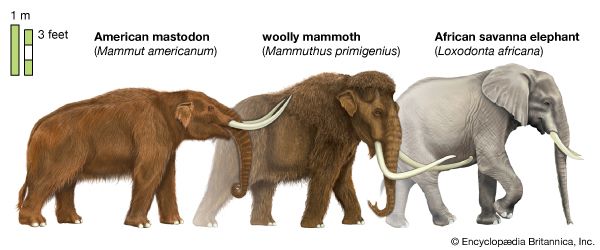
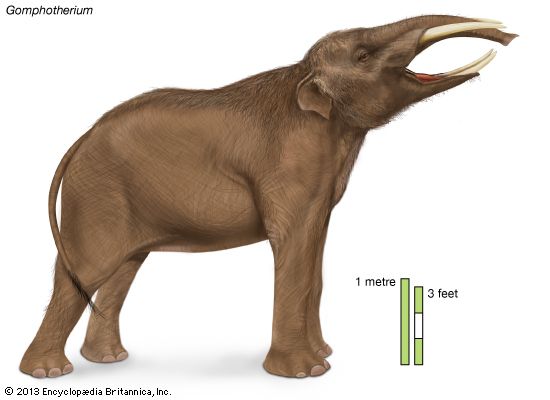
Gomphotheres were a widespread group of extinct proboscideans that lived from the late Oligocene Epoch (approximately 33.9 million to 23 million years ago)…
When and where did gomphotheres live during Earth’s history?
Gomphotheres were a widespread group of extinct proboscideans that lived from the late Oligocene Epoch (approximately 33.9 million to 23 million years ago) through the late Pleistocene and into the early Holocene (ending roughly 11,700 years ago).1
Regarding their geographic distribution, these animals inhabited every continent except Antarctica and Australia. For the majority of their history, they were restricted to Africa, Eurasia, and North America. They eventually expanded into South America during the early Pleistocene, following the formation of a land bridge across the Isthmus of Panama. Gomphotheres were highly adaptable, thriving in diverse environments including grasslands, forests, and marshes. Their eventual extinction is believed to be linked to the broader megafaunal die-offs that occurred during the late Quaternary Period.1
What led to the extinction of gomphotheres?
The decline and eventual extinction of gomphotheres were driven by a combination of long-term environmental shifts and the broader megafaunal extinctions of the late Quaternary Period.
Following the Miocene Epoch, gomphothere diversity began to wane as global temperatures cooled and ecosystems underwent significant changes. This decline coincided with the rising diversity of true elephants, which may have outcompeted them in certain niches.1
The final demise of the remaining clades is often attributed to the same factors debated for other large mammals of the late Pleistocene:
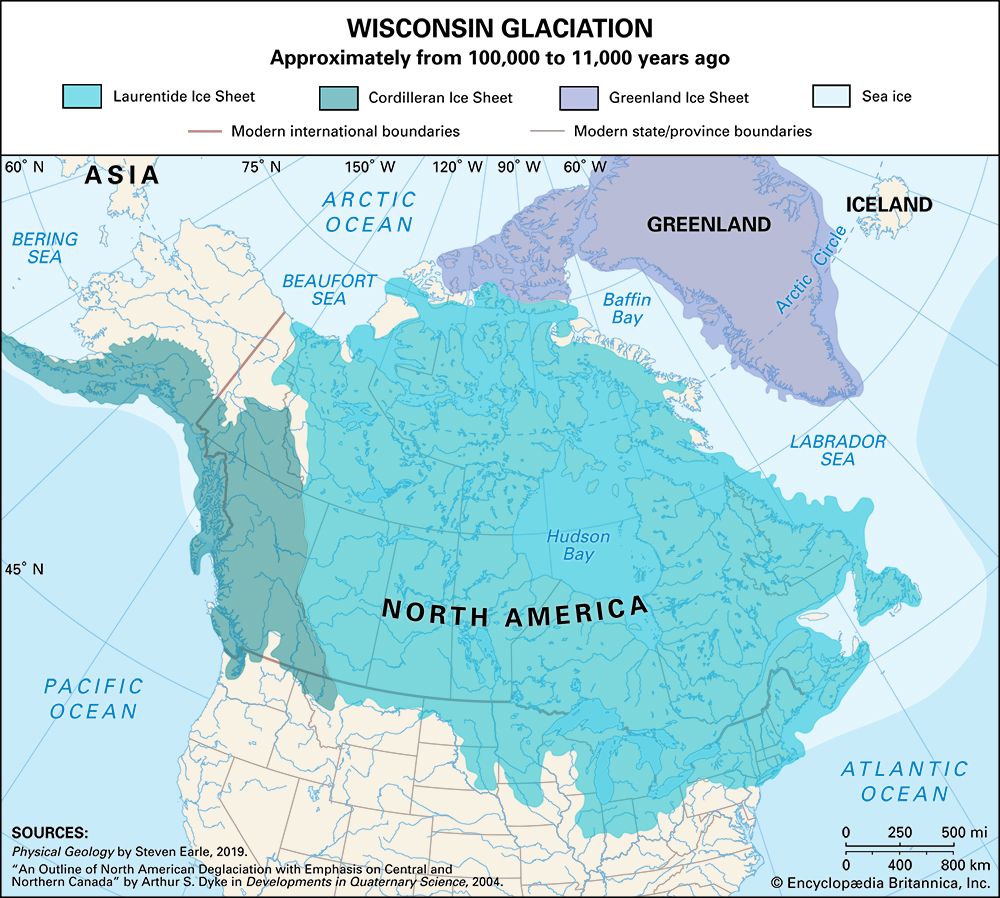
- Climatic and Environmental Change: The transition from the last glacial period brought abrupt climate shifts, causing the reorganization of vegetation and increased seasonality, which placed significant stress on large herbivores.12
- Human Impact: Archaeological evidence, such as findings at the El Fin del Mundo site in Mexico and Monte Verde in Chile, confirms that gomphotheres coexisted with early human populations. It is widely hypothesized that human hunting and environmental disruption contributed to their extinction.12
What evidence suggests that early humans might have interacted with gomphotheres?
Evidence for the interaction between early humans and gomphotheres is primarily derived from archaeological sites where the remains of these extinct proboscideans have been discovered in direct association with human settlements.
Key findings include:
- El Fin del Mundo, Mexico: Excavations at this site have uncovered gomphothere remains dated to approximately 12,000 years ago, placing them in the same temporal and spatial context as early human inhabitants.1
- Monte Verde, Chile: At this location, researchers identified gomphothere remains associated with human activity dating back roughly 13,000 years.1
These findings indicate that gomphotheres coexisted with early human populations during the late Pleistocene Epoch. While the exact nature of these interactions—such as whether humans actively hunted these animals or scavenged their remains—remains a subject of scientific study, the presence of their bones within human-occupied sites strongly suggests that they were a part of the environment and potentially the subsistence strategies of early human groups.13
How did gomphotheres adapt to different environments during their existence?
Gomphotheres successfully adapted to diverse environments, including grasslands, forests, and marshes, by evolving specialized physical traits, particularly in their teeth and tusks.1
To manage a coarse, abrasive diet, they developed higher-crowned teeth that were continually replaced via a “conveyor-belt” system, allowing them to grind down tough vegetation. Their adaptations varied by habitat:1
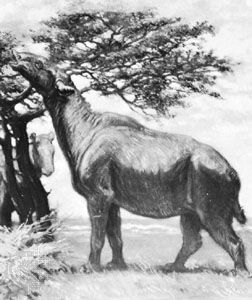
- Marsh-dwelling species: Genera such as Amebelodon and Platybelodon featured shovel-like tusks and protruding lower jaws, which were likely used to scoop up soft aquatic plants or dig for roots.1
- Terrestrial species: Some members of Platybelodon exhibited wear patterns on their tusks suggesting they also consumed tree bark and leaves in terrestrial settings.1
- General feeding: Many gomphotheres utilized a side-to-side jaw motion to grind vegetation between their cusped, plated molars. These teeth were likely well-suited for the grasses that expanded globally during the Miocene Epoch that expanded globally during the Miocene Epoch.1
Additionally, their trunks evolved in various forms, ranging from elephant-sized appendages to shorter, tapirlike snouts, further aiding their ability to forage across different ecological niches.1
Sources
- gomphothere — Encyclopædia Britannica
- Gomphotheriidae — Merriam-Webster
- Pleistocene Epoch - Megafaunal extinctions — Encyclopædia Britannica
- Homo habilis - Behavioral inferences — Encyclopædia Britannica
Published on · 3 min read