Gray Fox
Sorry, the Britannica knowledge base does not contain information regarding the specific communication methods of the gray fox. While we have information on…
How do gray foxes communicate with each other?
Sorry, the Britannica knowledge base does not contain information regarding the specific communication methods of the gray fox. While we have information on the general characteristics of this canine, the provided search results do not detail their vocalizations or social signaling behaviors.1
What role does the gray fox play in its ecosystem?
The gray fox (Urocyon cinereoargenteus) plays a functional role in its ecosystem primarily as an omnivorous predator and a natural population regulator. By consuming a diverse diet that includes small mammals, birds, and insects, the gray fox helps maintain ecological balance by controlling rodent populations.2
In addition to its role as a predator, the gray fox is an opportunistic feeder that incorporates fruit into its diet, which may contribute to seed dispersal within its habitat. While the species is sometimes viewed as a nuisance for raiding hen houses, its presence is generally considered beneficial to the environment due to its impact on prey species numbers. As a member of the Canidae family, it occupies a niche as a solitary, nocturnal hunter, distinct from pack-hunting canids like wolves.23
How does the gray fox’s diet differ from other fox species?
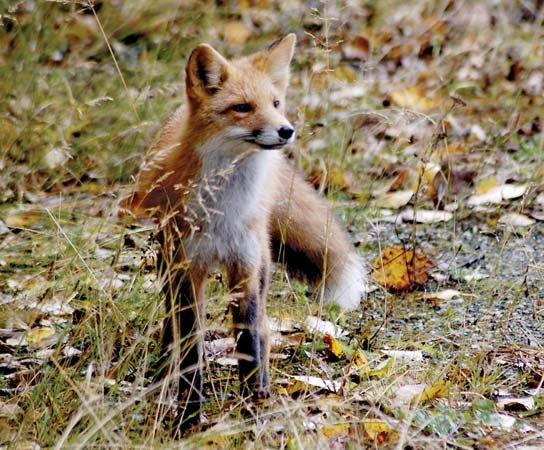
The gray fox (Urocyon cinereoargenteus) and other fox species, such as the red fox, share a fundamentally similar dietary profile as omnivores. Both consume a diverse range of food sources, including small mammals, birds, insects, and fruit.245
While their diets overlap significantly, the primary distinction lies in their opportunistic feeding behaviors and environmental adaptations rather than a strict difference in food categories:
- Generalist Feeding: Both the gray fox and the red fox are highly adaptable. The red fox is known for its ability to thrive in diverse environments, ranging from Arctic tundra to urban areas, where it readily consumes human-associated food like garbage, pet food, and grain, in addition to its natural prey of mice, voles, and rabbits.4
- Niche Specialization: Other fox species exhibit more specialized dietary habits based on their specific habitats. For example, the fennec has evolved large ears specifically to detect burrowing insects and small mammals in desert environments, while the swift fox focuses its diet on the small animals and insects found on the North American plains.4
Ultimately, while the gray fox is noted for being a retiring, nocturnal hunter that commonly climbs trees to access food, its dietary composition remains consistent with the broad, opportunistic omnivory seen across the Canidae family.24
What are the distinguishing physical characteristics of the gray fox?
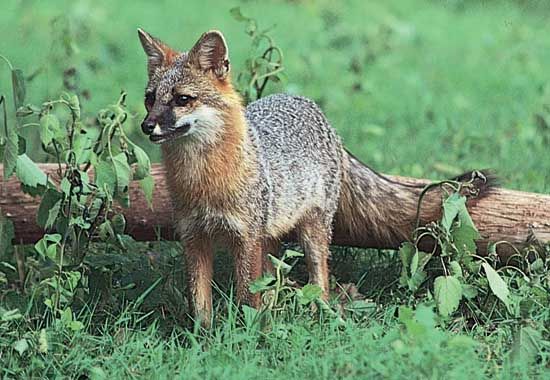
The gray fox (Urocyon cinereoargenteus) is a distinct member of the Canidae family, characterized by several specific physical traits:
- Coat and Coloration: The species is named for its grizzled, gray-furred coat. It is further distinguished by reddish coloration found on its neck, ears, and legs, as well as white underparts.24
- Size and Weight: The gray fox typically reaches a body length of approximately 50–75 cm (20–30 inches), excluding its tail. Its tail adds another 30–40 cm (12–16 inches) to its total length. In terms of mass, the animal generally weighs between 3 and 6 kg (7 and 13 pounds).2
- Unique Behavioral Adaptation: While not a physical feature in the traditional sense, the gray fox possesses a unique anatomical capability among North American foxes: it is a proficient climber that commonly ascends trees.2
These features help differentiate the gray fox from other species, such as the red fox, which is generally larger and possesses a different color palette.26
Sources
- Why do coyotes scream? — Encyclopædia Britannica
- gray fox — Encyclopædia Britannica
- dog - Foxes — Encyclopædia Britannica
- fox — Encyclopædia Britannica
- omnivore — Encyclopædia Britannica
- gray fox — Merriam-Webster
Published on · 3 min read