Red Fox
Canines, including the red fox, communicate using a combination of vocalizations and visual signals. While social species often have more complex…
How do red foxes communicate with each other, and what vocalizations do they use?
Canines, including the red fox, communicate using a combination of vocalizations and visual signals. While social species often have more complex repertoires, solitary or pair-living species like the red fox utilize these signals to advertise territory, ward off aggressors, and interact with mates and young.1
Their vocal repertoire includes a variety of sounds such as:
- Howls
- Yelps
- Snarls
- Barks
- Growls1
These vocalizations are frequently paired with specialized visual signals to convey intent and minimize aggressive interactions. These physical cues include movements of the ears and tail, the raising of fur, and the baring of teeth. By integrating these signals, foxes can effectively manage social encounters and territorial boundaries without resorting to physical conflict.12
What are the physical characteristics that distinguish red foxes from other fox species?
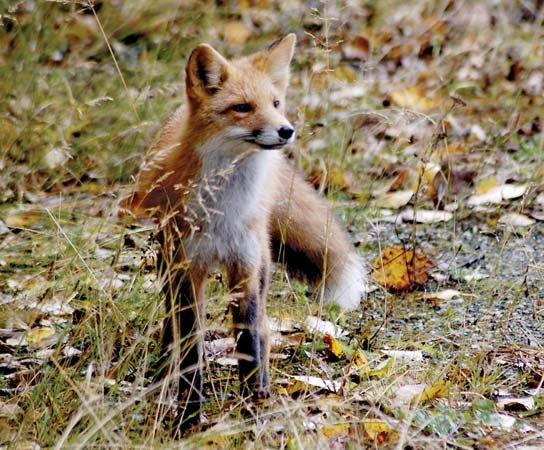
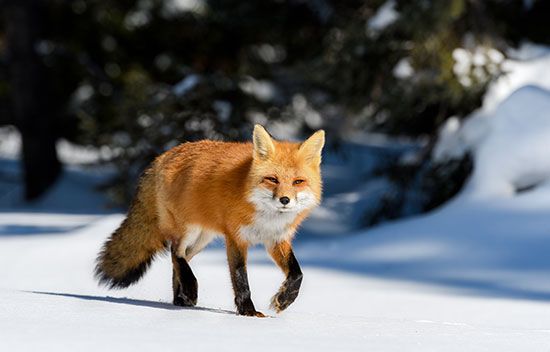
The red fox (Vulpes vulpes) is distinguished from other fox species primarily by its size and characteristic coloration. While many fox species share a similar general form—small to medium-sized bodies with bushy tails, pointed ears, and narrow snouts—the red fox is generally larger, typically weighing 5–7 kg (10–15 pounds) and measuring 90–105 cm in total length.45
Key physical traits include:
- Coat: Typically a rich reddish-brown, though color is highly variable. North American populations may exhibit black or silver coats, while the “cross fox” variant features a yellowish-brown coat with a black cross pattern across the shoulders and back.45
- Distinctive Markings: They are commonly identified by their white-tipped tails and black ears and legs.45
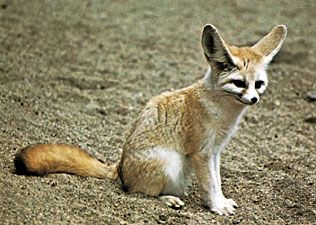
- Adaptability: Unlike some specialized species, such as the fennec with its huge ears for desert heat or the bat-eared fox, the red fox possesses a robust build that allows it to thrive in diverse environments ranging from Arctic tundra to urban centers.45
How do red foxes adapt to seasonal changes throughout the year?
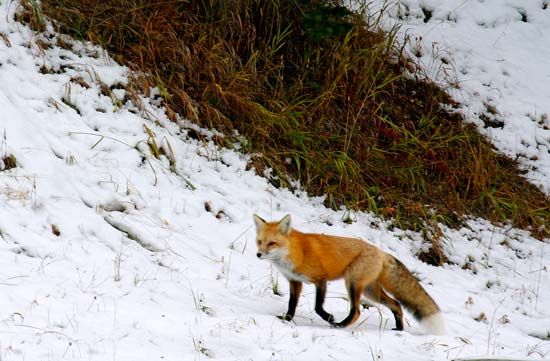
Red foxes adapt to seasonal changes through a combination of behavioral shifts and reproductive cycles, though they do not undergo the dramatic seasonal coat color changes seen in some of their relatives, such as the Arctic fox.5
Their primary seasonal adaptations include:
- Reproductive Timing: Red foxes mate in the winter. This timing ensures that the gestation period of seven to eight weeks aligns with the arrival of warmer months, allowing the female to give birth in the spring.46
- Parental Care: Cubs are born in dens—often repurposed burrows—and are cared for by both parents throughout the summer. This period of intensive care supports the growth and development of the young before they become independent.46
- Dispersal: The young foxes typically disperse in the fall once they are fully grown, a seasonal transition that marks the end of the family unit’s dependency and prepares the individuals for the coming winter.46
- Behavioral Flexibility: In human-dominated environments, red foxes have shown the ability to adapt their behavior seasonally and spatially, such as becoming more nocturnal or adjusting their hunting patterns to thrive in urban ecosystems.4
Where are red foxes typically found, and how have they adapted to different habitats?
The red fox (Vulpes vulpes) possesses the largest natural distribution of any land mammal other than humans. They are found throughout Europe, temperate Asia, northern Africa, and North America, and they have been successfully introduced to Australia.45
Habitat Adaptability
Red foxes are highly versatile, thriving in environments ranging from Arctic tundra to arid desert, though they prefer mixed landscapes of forests and grasslands. Their ability to adapt to human-dominated environments is particularly notable:45
- Urbanization: They have successfully colonized large cities and suburbs, where they often exhibit behavioral shifts such as becoming more nocturnal and aggressive.45
- Morphological Changes: Some research suggests that urban-dwelling foxes have developed shorter, wider snouts and smaller braincases compared to their rural counterparts.5
- Dietary Flexibility: They are opportunistic feeders, consuming mice, rabbits, fruit, and birds, as well as human-provided resources like garbage and pet food.45
Sources
- Why do coyotes scream? — Encyclopædia Britannica
- canine - Natural history — Encyclopædia Britannica
- Animal communication - Senders and receivers — Encyclopædia Britannica
- fox — Encyclopædia Britannica
- red fox — Encyclopædia Britannica
- 7 Animals That Turn White in Winter — Encyclopædia Britannica
Published on · 3 min read