Great Blue Heron
The great blue heron (Ardea herodias) is the largest heron in North America, recognized for its stately demeanor, blue-gray plumage, and a wingspan reaching…
What is a great blue heron?
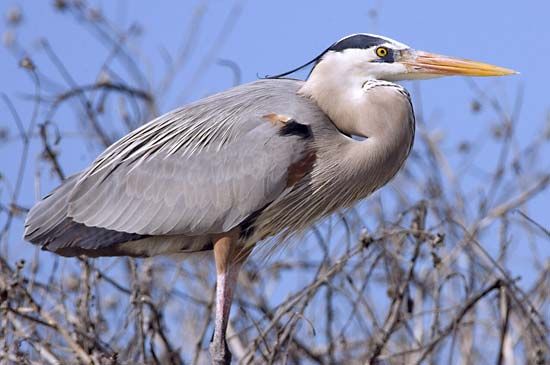
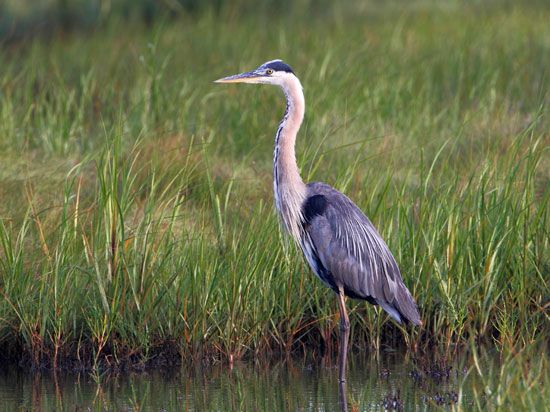
The great blue heron (Ardea herodias) is the largest heron in North America, recognized for its stately demeanor, blue-gray plumage, and a wingspan reaching nearly 2 meters (6.6 feet). These birds are characterized by their S-shaped necks, long legs, and spear-like beaks, which they use to hunt fish, amphibians, and crustaceans.1
Found from Alaska to South America, they typically nest in colonies known as rookeries, often located in trees near water. While populations faced significant threats in the 19th century due to the fashion trade, they have since recovered thanks to protections like the Lacey Act and the Migratory Bird Treaty Act. Today, the species is listed as of least concern by the IUCN, with a population estimated between 500,000 and 5 million individuals.1
Where do great blue herons live?
Great blue herons (Ardea herodias) have a vast geographic range across the Western Hemisphere. They are found from Alaska, Canada, and the contiguous United States south through Mexico and the Caribbean Sea to northern Colombia and Venezuela.1
Their habitat preferences include:
- Foraging Areas: They are primarily associated with wetlands, marshes, and the edges of bodies of water where they hunt for fish, amphibians, and other aquatic prey.1
- Nesting Sites: They build large nests in colonies known as rookeries, typically situated in trees or small shrubs near the water’s edge.1
- Migratory Patterns: The species is largely migratory; populations in Canada and the northern U.S. fly south during the winter to find open water, while those in the southern U.S. often remain in their nesting areas year-round.1
What does a great blue heron look like?
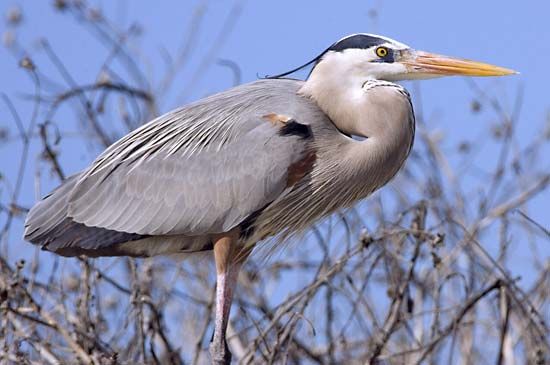
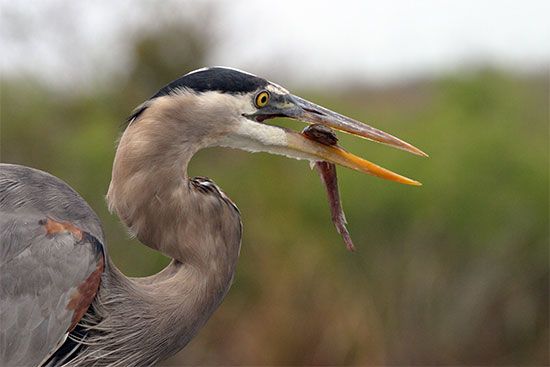
The great blue heron (Ardea herodias) is a large, stately bird recognized for its distinct physical features and impressive size. As the largest heron in North America, it can reach heights of nearly 1.4 meters (4.6 feet) and possesses a wide wingspan that extends up to 2 meters (6.6 feet) or more.2
Key physical characteristics include:
- Plumage: They are primarily blue-gray in color, featuring gray-blue wings and showy plumes on the head and neck.12
- Neck and Head: A signature S-shaped neck, which can range in color from white to gray with patches of rust-red, is topped with a dark, black crown.2
- Body Structure: They have long, thin “stick-figure” legs and a sharp, yellowish, spear-like beak used for hunting.2
- Variations: While typically blue-gray, the species includes a white morph known as the great white heron (A. herodias occidentalis), which is sometimes classified as a separate species.12
Adults generally weigh between 2.1 and 3.3 kg (4.6 and 7.3 pounds), with males typically being slightly larger and heavier than females.2
What do great blue herons eat?
Great blue herons are primarily fish eaters that typically hunt near dawn and dusk. They are opportunistic predators that use their sharp, spear-like bills to strike and capture a wide variety of prey, which they swallow whole.1
Their diet includes:
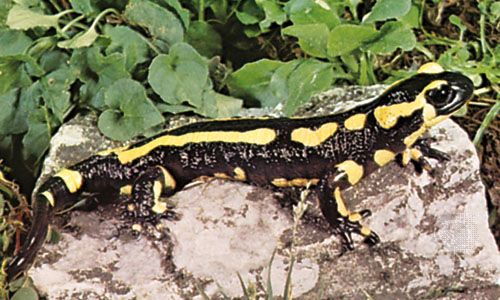
- Aquatic prey: Amphibians such as frogs and salamanders, as well as crustaceans and turtles.1
- Terrestrial prey: Rodents and insects.1
- Other: Occasionally, they will also consume other birds.1
Sources
- Great blue heron — Encyclopædia Britannica
- great blue heron — Merriam-Webster
- Heron — Encyclopædia Britannica
Published on · 3 min read