Great Kei River
The Great Kei River is a river located in the Eastern Cape province of South Africa. It is formed southeast of Komani by the confluence of the White Kei and…
What is Great Kei River?
The Great Kei River is a river located in the Eastern Cape province of South Africa. It is formed southeast of Komani by the confluence of the White Kei and Black Kei rivers.1
The river flows for approximately 140 miles (225 km) in a southeasterly direction before emptying into the Indian Ocean. Its longest tributary is the Tsomo River. Like many other river systems in the region, such as the Great Fish and Sundays rivers, the Great Kei drains significant areas of the southern landscape. Its course, along with that of its headwaters, is characterized by winding paths. Due to the highly seasonal nature of South African rivers, the Great Kei does not support navigation by craft for any significant distance from its mouth.12
What are the major rivers in South Africa?
South Africa’s river systems are highly seasonal, and due to their steep gradients and fluctuating volumes, they are generally not navigable by craft for any significant distance from their mouths. The country’s drainage is divided among several major systems:3
Major River Systems
- Orange River System: The Orange River is the longest in South Africa, flowing approximately 1,300 miles from the Lesotho Highlands to the Atlantic Ocean3. Its principal tributary is the Vaal River, and together they drain the greater part of the country.213
- Limpopo System: North of the Witwatersrand ridge, the plateau is drained toward the Indian Ocean by the Limpopo River and its tributaries, including the Krokodil, Mogalakwena, Luvuvhu, and Olifants rivers.3
- KwaZulu-Natal Rivers: Several systems drain the area between the escarpment and the sea, including the Komati, Pongolo, Mfolozi, Mgeni, and the Tugela River, which is the largest river in the country by volume.3
- Southern and Western Rivers: The Mkomazi, Mzimvubu, Great Kei, Great Fish, Sundays, and Gourits rivers drain the southern regions, while the Breë, Berg, and Olifants rivers primarily drain the Western Cape.3
How do seasonal changes affect South African rivers?
Seasonal changes significantly impact the flow of South African rivers, which are characterized by high variability and a lack of consistent volume. Because the country’s river flow is closely tied to seasonal rainfall patterns, the amount of water in these channels fluctuates dramatically throughout the year, with relatively little groundwater contribution during the dry season.267
These fluctuations are driven by the country’s climate, where precipitation is often limited and unevenly distributed. During the summer months, tropical air masses can bring rain to the northeastern regions, while winter brings cold fronts and precipitation to the southern and southwestern coastal areas. Because of these seasonal shifts and the steep gradients of the landscape, South African rivers generally lack the stable volume and depth required for navigation by even small craft.628
Furthermore, the severity of these seasonal changes can be exacerbated by drought, which reduces river flow and creates significant water management challenges for the country. To mitigate these issues, infrastructure such as dams and reservoirs is often used to modify river flow and provide more reliable water storage.79
What is the significance of the Eastern Cape province?
The Eastern Cape is a province in south-central South Africa that holds significant geographical, economic, and cultural importance. Formerly part of the Cape of Good Hope province, it became a distinct province in 1994 with Bhisho as its capital.12
Geographical and Ecological Significance
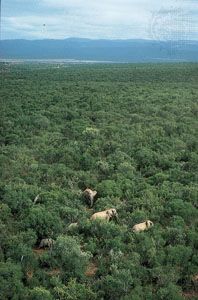
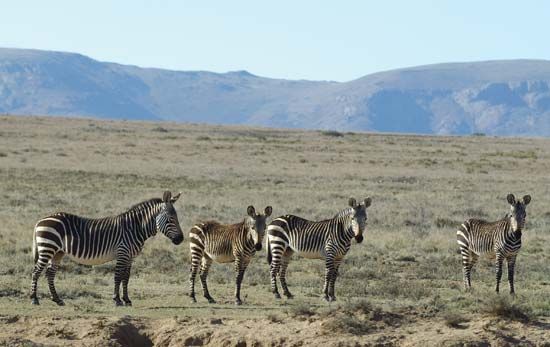
The province features a diverse landscape, ranging from the mountainous southern spur of the Drakensberg to a narrow coastal plain along the Indian Ocean. It is home to notable conservation areas, including Mountain Zebra National Park and Addo Elephant National Park. Furthermore, parts of the province are included in the Cape Floral Region, a World Heritage site recognized for its extraordinary plant diversity.1213
Economic Contributions
The Eastern Cape plays a vital role in South Africa’s agricultural and manufacturing sectors:
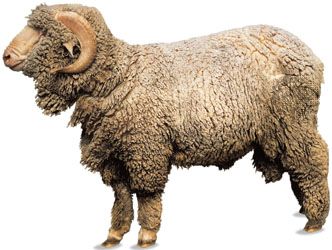
- Agriculture: The region is a major producer of Merino sheep, Angora goats, and dairy cattle. Coastal areas support the cultivation of pineapples, tobacco, potatoes, and citrus fruits, while inland areas utilize irrigation to grow wheat, corn, and sorghum.1214
- Industry: Manufacturing centers in Gqeberha and East London are key hubs for motor vehicle production and food processing.12
Cultural and Social Context
The province is home to a predominantly Xhosa-speaking population, reflecting the rich cultural heritage of the region. It also serves as an educational center, hosting several universities in cities such as Makhanda and Gqeberha.a](https://www.britannica.com/place/Makhanda) and Gqeberha.12
Sources
- Great Kei River — Encyclopædia Britannica
- South Africa - Drainage — Encyclopædia Britannica
- Orange River — Encyclopædia Britannica
- world’s longest rivers — Encyclopædia Britannica
- Africa - Orange basin — Encyclopædia Britannica
- Africa - Factors influencing the African climate — Encyclopædia Britannica
- South Africa - Climate — Encyclopædia Britannica
- Africa - Water resources — Encyclopædia Britannica
- South Africa - Transportation and telecommunications — Encyclopædia Britannica
- Current and Historical Droughts Around the World — Encyclopædia Britannica
- water scarcity - Engineering technologies — Encyclopædia Britannica
- Eastern Cape — Encyclopædia Britannica
- South Africa - Agriculture, forestry, and fishing — Encyclopædia Britannica
- South Africa - Resistance to apartheid — Encyclopædia Britannica
- Eastern Cape — Merriam-Webster
- South Africa - Flora and fauna — Encyclopædia Britannica
- Southern Africa - Political organizations and trade unions — Encyclopædia Britannica
Published on · 3 min read