How Strong Is a Shark’s Bite?
Sharks possess some of the most powerful bite forces in the animal kingdom, a capability driven by specialized muscular and skeletal adaptations.

How strong is a shark’s bite?
Sharks possess some of the most powerful bite forces in the animal kingdom, a capability driven by specialized muscular and skeletal adaptations.1
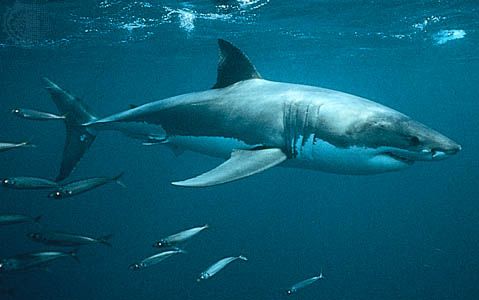
- Great White Shark: Computer analyses estimate the bite force of a great white shark at approximately 18,000 newtons (N).1
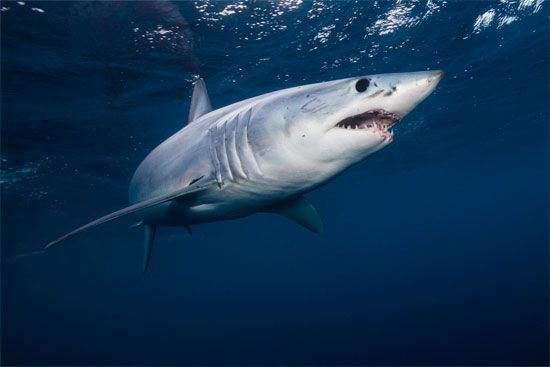
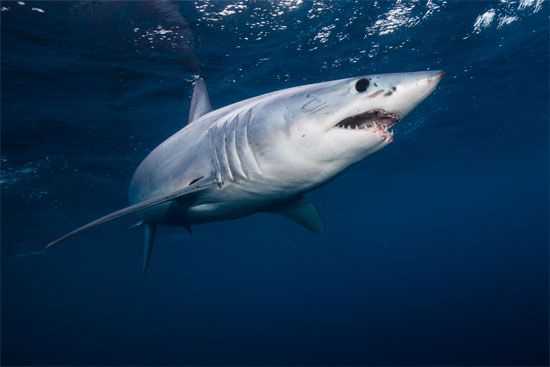
- Mako Shark: The strongest bite force ever physically measured in a shark belongs to a mako, recorded at about 13,000 N.1
The effectiveness of these bites is enhanced by the shark’s dentition and jaw mechanics. Many species feature teeth designed for shearing and sawing, and they often use body rotations and head vibrations to maximize their impact. While these predators are exceptionally strong, for context, the saltwater crocodile holds a recorded bite force of 16,460 N, placing it just behind the great white shark in terms of measured power.12
How do shark teeth differ between species?
Shark teeth are highly diagnostic, meaning their shape and structure are key indicators of a species’ identity and its specific feeding habits. While all sharks utilize a continuous replacement system—where new teeth from rows behind move forward to replace those lost or worn down—the morphology of these teeth varies significantly based on diet.324
Variations in Tooth Morphology
- Shearing and Sawing: Predatory species, such as the great white shark, possess large, sharply pointed, and coarsely serrated teeth. These are designed to cut through flesh and shatter bone, often aided by body rotations and head vibrations during feeding.54
- Crushing: Bottom-dwelling species that feed on shellfish and other crustaceans typically have coarse, pavementlike teeth adapted for crushing hard prey.3
- Specialized Feeding: Some species, like saw sharks, feature sharp teeth along the sides of a long, bladelike snout used to impale or cut prey.6
- Filter Feeding: The largest sharks, including the whale shark and basking shark, do not rely on traditional biting teeth for hunting; instead, they use specialized gill rakers or spongy tissue to strain plankton from the water.63
What are the sensory systems sharks use to find prey?
Sharks utilize a highly integrated suite of sensory systems to locate prey, often relying on a combination of chemical, mechanical, and electrical cues to navigate their environment.89
- Olfaction (Smell): This is generally considered the primary sense for locating prey from a distance. Sharks have a highly developed sense of smell and can detect minute concentrations of substances, such as blood, in the water.8910
- Lateral Line System: This system consists of mechanoreceptors called neuromasts arranged along the head and body. It allows sharks to detect low-frequency vibrations and pressure changes in the water, helping them sense the movement of nearby prey or predators.829
- Electroreception: Sharks possess specialized organs called ampullae of Lorenzini, which are concentrated on the head and snout. These organs detect the weak electric fields generated by the muscle contractions of prey. This system is particularly effective at short range, often serving as the final sensory input before a strike.6210
- Vision and Hearing: While visual acuity varies by species, many sharks have eyes adapted to their specific habitats. Additionally, their hearing apparatus is highly sensitive to low-frequency sounds, which aids in acoustic orientation.8910
How do filter-feeding sharks eat without a powerful bite?
Filter-feeding sharks—specifically the whale shark, basking shark, and megamouth shark—do not rely on a powerful bite to feed because they have evolved specialized anatomical structures that function like a sieve to capture plankton and other small organisms.22
Instead of using teeth to shear or crush prey, these sharks utilize a straining apparatus located within their gill slits:11
- Whale Sharks: These sharks possess elaborate, spongy tissue supported by their gill arches that traps food as water passes through.112
- Basking and Megamouth Sharks: These species utilize modified gill rakers to filter minute, drifting organisms from the water.11
As these sharks swim with their mouths open, seawater enters the cavity and flows through the gill slits. The meshlike tissue acts as a filter, retaining the prey while allowing the water to exit. Periodically, the shark closes its mouth to swallow the concentrated food. While these sharks do possess hundreds of rows of small, pointed teeth, these are considered vestigial structures that do not play a functional role in their feeding process.2
Sources
- How strong is a shark’s bite? — Encyclopædia Britannica
- chondrichthyan - Sharks — Encyclopædia Britannica
- How many teeth does a shark have? — Encyclopædia Britannica
- white shark - Evolution — Encyclopædia Britannica
- white shark - Body structure — Encyclopædia Britannica
- shark - Shark behaviour — Encyclopædia Britannica
- shark - Description and habits — Encyclopædia Britannica
- chondrichthyan - Senses — Encyclopædia Britannica
- ampulla of Lorenzini — Encyclopædia Britannica
- lateral line system — Encyclopædia Britannica
- whale shark — Encyclopædia Britannica
- chondrichthyan - Respiration — Encyclopædia Britannica
Published on · 3 min read