Inoceramus
Inoceramus is a genus of extinct pelecypods, or clams, that lived from the Jurassic to the Cretaceous periods, approximately 199.6 million to 65.5 million…
What is Inoceramus?
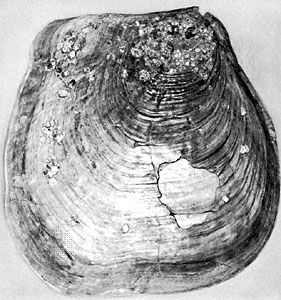
Inoceramus is a genus of extinct pelecypods, or clams, that lived from the Jurassic to the Cretaceous periods, approximately 199.6 million to 65.5 million years ago. These large, filibranchiate bivalve mollusks are particularly notable for being widespread and characteristic of Cretaceous rock formations.12
The genus is easily identified by its distinctive shell, which is thick, large, and features concentric wrinkles. The dorsal region of the shell contains numerous pits that served as anchoring points for the ligaments used to close the shell.1
What are some other types of marine fossils from the Cretaceous period?
The Cretaceous Period was home to a diverse array of marine life, many of which are preserved as fossils that help scientists correlate geologic strata. Beyond Inoceramus, other significant marine fossils from this era include:34
- Ammonites: These extinct cephalopods are among the most widely used index fossils due to their rapid evolution and wide distribution. They ranged from standard coiled forms to “heteromorphs,” which featured unusual, non-coiled shapes like corkscrews.543
- Belemnites: Often found in cooler boreal waters, these were squid-like cephalopods with internal, bullet-shaped shells.364
- Rudists: These unique, large bivalves were dominant reef-builders in the Tethyan region, often forming structures that now serve as petroleum reservoirs.3
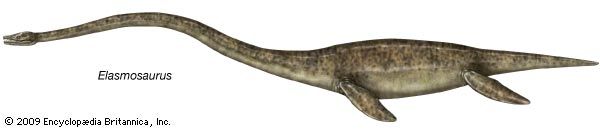
- Marine Reptiles: The seas were inhabited by large predators, including long-necked plesiosaurs, fishlike ichthyosaurs, and the formidable mosasaursichthyosaur), and the formidable mosasaurs.37
- Microfossils: The period is named for chalk, which is composed largely of the microscopic plates of coccolithophores. Other important microscopic fossils include foraminiferans, diatoms, radiolarians, and ostracods.374
- Other Invertebrates: Echinoids (sea urchins), crinoids, and various snails also left behind significant fossil records.34
How do paleontologists use fossils to determine the age of rock layers?
Paleontologists and geologists determine the relative age of rock layers using fossils through a process known as biostratigraphy. This method relies on the law of faunal succession, which observes that fossilized plants and animals appear in the rock record in a predictable, orderly sequence over time.91011
Key Principles and Techniques
- Index Fossils: The primary tool for this dating is the index fossil. To be effective, an index fossil must be easily recognizable, abundant, geographically widespread, and have existed for only a short span of geologic time. Finding these fossils in separated rock outcrops allows geologists to correlate the layers, confirming they were formed during the same interval of Earth’s history.121113
- Correlation: By integrating fossil data from various locations, scientists can piece together a comprehensive record of life on Earth. This allows them to match strata from different geographic regions, even when the physical characteristics of the rocks differ.111310
- Relative vs. Absolute Dating: While fossils provide the relative order of rock layers, they do not provide an exact age in years. To calibrate the fossil record, geologists often use absolute dating techniques, such as measuring radioactive isotopes within minerals, to assign specific numerical ages to the strata.1113
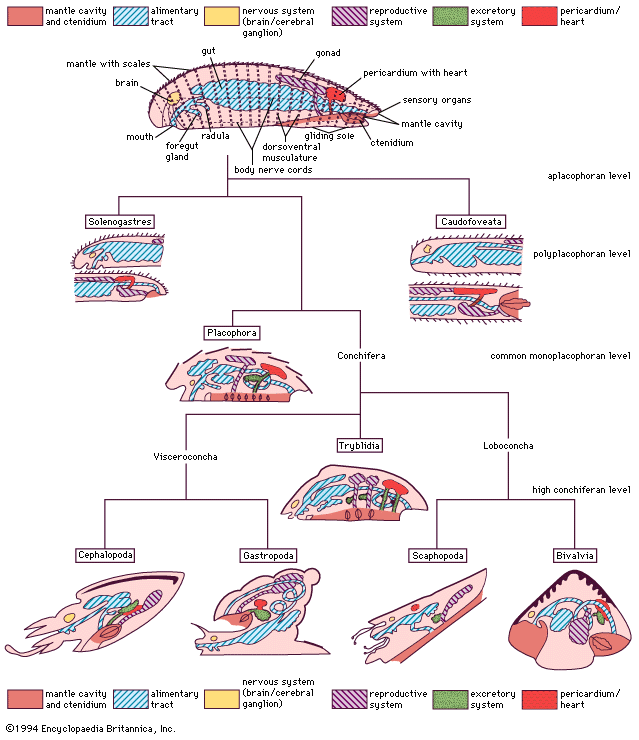
What are the main differences between bivalves and other types of mollusks?
Bivalves (class Bivalvia) are distinct from other members of the phylum Mollusca due to several key anatomical and lifestyle adaptations. While most mollusks possess a head and a radula—a specialized rasping organ used for feeding—bivalves have lost both of these features, reflecting their largely sedentary, filter-feeding existence.1516
The primary differences include:
- Shell Structure: As their name suggests, bivalves are characterized by a shell divided into two distinct halves, or valves, connected by a hinge. In contrast, other mollusks exhibit a wide variety of shell forms, such as the single coiled shell of gastropods, the eight plates of chitons, or the internal/reduced shells found in many cephalopods.1516
- Feeding Mechanism: Most bivalves are ciliary suspension feeders. They have modified their respiratory gills into large, plate-like organs called ctenidia, which filter microscopic organisms from the water. Other mollusks utilize a diverse range of feeding strategies, such as the radula-based scraping of algae by chitons or the predatory hunting behaviors of cephalopods.151617
- Body Plan: Bivalves possess a laterally compressed body, often with an ax-shaped foot used for burrowing or anchoring. This contrasts with the dorsoventrally elongated bodies of cephalopods or the worm-like, shell-less forms of Aplacophora.16
Sources
- Inoceramus — Encyclopædia Britannica
- Inoceramus — Merriam-Webster
- Cretaceous Period - Marine life — Encyclopædia Britannica
- ammonoid — Encyclopædia Britannica
- Cretaceous Period — Encyclopædia Britannica
- Belemnitidae — Merriam-Webster
- belemnite — Merriam-Webster
- Cretaceous Period - Correlation — Encyclopædia Britannica
- index fossil — Encyclopædia Britannica
- law of faunal succession — Encyclopædia Britannica
- dating - Principles and techniques — Encyclopædia Britannica
- dating - Determination of sequence — Encyclopædia Britannica
- biostratigraphy — Merriam-Webster
- dating - Distinctions between relative-age and absolute-age measurements — Encyclopædia Britannica
- bivalve — Encyclopædia Britannica
- mollusk - Annotated classification — Encyclopædia Britannica
- What’s the difference between clams, mussels, and oysters? — Encyclopædia Britannica
- mollusk - Habitats, feeding habits, and associations — Encyclopædia Britannica
Published on · 3 min read