Kauri Pine
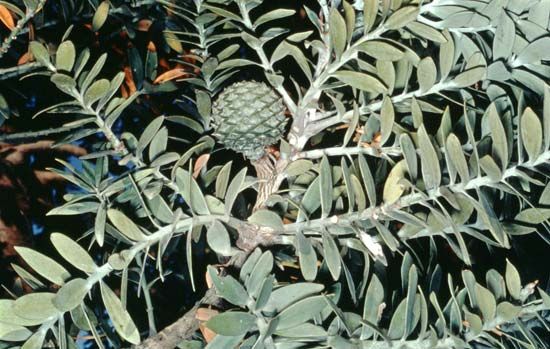
The kauri pine (Agathis australis) is a massive, resinous conifer belonging to the Araucariaceae family, native to the North Island of New Zealand. These…
What is Kauri pine?
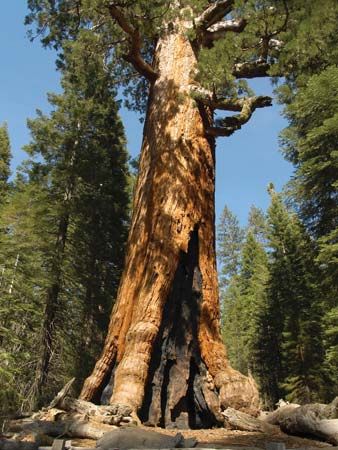
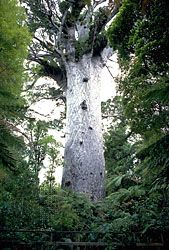
The kauri pine (Agathis australis) is a massive, resinous conifer belonging to the Araucariaceae family, native to the North Island of New Zealand. These impressive trees can grow up to 45 meters (150 feet) tall with a trunk diameter reaching 7 meters (23 feet).1
The tree is highly valued for its fine, straight-grained timber and its resin, straight-grained timber and its resin. This substance, often referred to as kauri gum, kauri copal, or dammar, is collected from living trees or excavated from the sites of ancient forests. Due to its durability, the resin has historically been a key ingredient in the production of varnishes, lacquers, linoleum, and sealing wax. While A. australis is the most well-known, it is part of the broader Agathis genus, which includes 13 species of pinelike plants distributed from the Philippines to Australia.213
What is kauri gum and how was it historically collected?
Kauri gum, also known as kauri copal or dammar, is a durable, amber-like resin produced by the kauri pine (Agathis australis) and other species within the Agathis genus.12
Historically, this resin was obtained through two primary methods:
- Collection from living trees: The resin could be harvested directly from the trunks of living kauri trees.2
- Excavation: Much of the commercially used gum was found as fossilized deposits buried in the ground at the sites of ancient forests, where it had accumulated over long periods.12
Because of its hardness and durability, kauri gum became a valuable commodity used extensively in the manufacturing of varnishes, lacquers, linoleum, and sealing wax.12
How do Kauri trees contribute to the ecosystem of New Zealand?
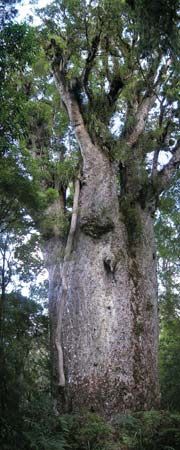
Kauri trees (Agathis australis) play a distinct role in the New Zealand ecosystem, particularly regarding soil development. Their presence is a key indicator of podzolized soils, which are characterized by acid leaching in humid forest environments.1
Unlike forests dominated by species such as false beech, which typically thrive in areas of higher soil fertility, kauri forests are associated with these leached, nutrient-poor soil conditions. As massive, resinous conifers, these trees contribute to the unique environmental profile of the North Island, where they have historically shaped the landscape through their growth and the accumulation of their durable resin.14
What are some other notable species in the Araucariaceae family?
The family Araucariaceae consists of evergreen coniferous trees, most notably represented by the genera Araucaria, Agathis, and Wollemia. Beyond the kauri pine, several other species are significant for their ecological, historical, or ornamental value:6
- Monkey Puzzle Tree (Araucaria araucana): Native to the Andes Mountains, this tree is famous for its spiral arrangement of rigid, needle-pointed leaves. It is a long-lived species that can survive for over 700 years and is currently listed as endangered.7
- Norfolk Island Pine (Araucaria heterophylla): Despite its name, it is not a true pine. It is widely cultivated as an ornamental and a popular houseplant due to its symmetrically tiered branches.89
- Wollemi Pine (Wollemia nobilis): Often called a “living fossil,” this critically endangered tree was only discovered in 1994 in a remote Australian canyon. It is the sole member of its genus and shares characteristics with ancestors that date back to the Jurassic Period.10
- Bunya Pine (Araucaria bidwillii): Native to southeastern Queensland, this species is known for its edible seeds and is frequently used as an outdoor ornamental.9
- Paraná Pine (Araucaria angustifolia): Another common outdoor ornamental within the genus, valued for its distinct growth habit.9
Sources
- kauri pine — Encyclopædia Britannica
- kauri — Merriam-Webster
- Agathis — Encyclopædia Britannica
- New Zealand - Soils of New Zealand — Encyclopædia Britannica
- red kauri — Merriam-Webster
- Norfolk Island pine — Encyclopædia Britannica
- Araucaria — Encyclopædia Britannica
- monkey puzzle tree — Encyclopædia Britannica
- Araucariaceae — Merriam-Webster
- Wollemi pine — Encyclopædia Britannica
Published on · 3 min read