Coppermine River
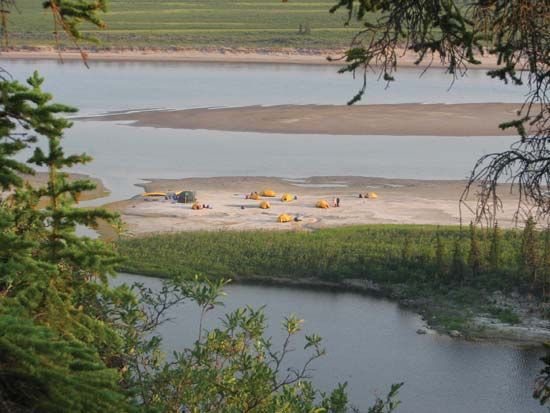
The Coppermine River is a 525-mile (845 km) stream located in Canada, flowing through the Northwest Territories and the Kitikmeot region of Nunavut.
What is Coppermine River?
The Coppermine River is a 525-mile (845 km) stream located in Canada, flowing through the Northwest Territories and the Kitikmeot region of Nunavut.
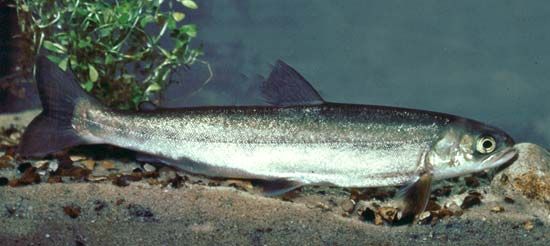
Originating in the Barren Grounds north of Great Slave Lake, the river flows northward, draining several lakes before emptying into the Arctic Ocean at Coronation Gulf. It was named by the explorer Samuel Hearne in 1771 due to copper deposits found along its banks. Because of its numerous rapids and limited ice-free season, the river is unnavigable, though it is well-known for its Arctic char fishing.
Who was the explorer Samuel Hearne?
Samuel Hearne (1745–1792) was an English seaman, fur trader, and explorer who became the first European to reach the Arctic Ocean overland in Canada. Employed by the Hudson’s Bay Company, he is credited with mapping the trend of the Arctic coastline.2
After two failed attempts, Hearne successfully trekked across the Barren Grounds in 1770–1772, covering approximately 5,000 miles and discovering the Coppermine River. Later, he established Cumberland House, the first permanent settlement in Saskatchewan. In 1782, while serving as governor of Prince of Wales Fort, he surrendered the post to a French force led by Jean-François de Galaup, comte de La Pérouse. La Pérouse encouraged Hearne to document his travels, resulting in the publication of his famous account of his Arctic journey.2
What is the geography of the Barren Grounds?
The Barren Grounds are a vast, treeless tundra region in northern mainland Canada. Spanning primarily across Nunavut and the eastern Northwest Territories, the area extends from Hudson Bay westward to Great Slave Lake and Great Bear Lake, reaching north to the Arctic Ocean.3
The geography is characterized by a low, glaciated plain situated below 1,000 feet (300 meters) in elevation. The surface features:
- Vegetation: Primarily grasses, mosses, and lichens.3
- Terrain: Granitic outcrops interspersed with countless lakes and rivers, such as the Coppermine, Back, Kazan, and Thelon rivers.3
- Soil: The ground is permanently frozen, which leads to extensive swampy conditions during the summer thaw.3
This harsh environment supports wildlife including caribou, musk oxen, foxes, and bears, and is largely inhabited by the Inuit in coastal areas.3
We could dive deeper into the unique wildlife adaptations of the Arctic tundra or explore the significance of the region’s protected sanctuaries.
How do animals survive in the Arctic climate?
Animals in the Arctic have evolved diverse physiological, behavioral, and structural adaptations to survive extreme cold and limited resources.
Physical and Physiological Adaptations
- Insulation: Large herbivores like musk oxen possess exceptionally thick coats to retain body heat. Polar bears utilize a combination of a dense undercoat, hollow hairs that trap air, and a thick layer of fat (up to 4 inches deep) to stay warm in temperatures as low as –50°F.56
- Body Size: Larger body size in species like reindeer (caribou) and musk oxen reduces surface area relative to volume, minimizing heat loss.5
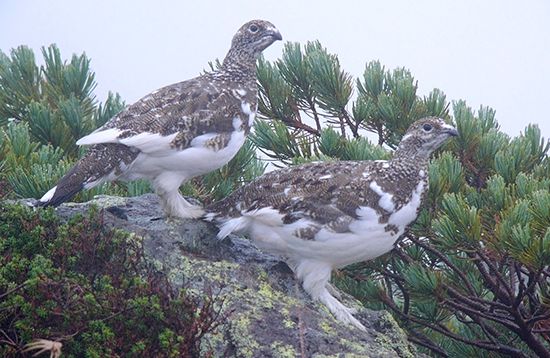
- Camouflage: Many species, including foxes, Arctic hares, and ptarmigans, undergo seasonal color shifts, sporting white coats in winter to blend into the snow.5
Behavioral Strategies
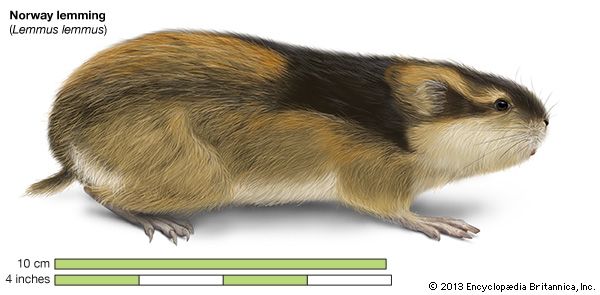
- Shelter: Small mammals like lemmings remain active all winter by living and even reproducing under the insulating layer of snow.57
- Foraging: Reindeer use sharp hooves and antlers to clear snow to reach lichens and plants. Predators often follow seasonal prey patterns, while some, like snowy owls, migrate to forested regions when food is scarce.5
Sources
- Coppermine River — Encyclopædia Britannica
- Samuel Hearne — Encyclopædia Britannica
- Barren Grounds — Encyclopædia Britannica
- Barren Grounds — Merriam-Webster
- Tundra - Arctic mammals — Encyclopædia Britannica
- Polar ecosystem - Development and structure of populations and communities — Encyclopædia Britannica
- Inuit: Top Questions — Encyclopædia Britannica
- Why are polar bears white? — Encyclopædia Britannica
Published on · 3 min read