Kerguelen Islands
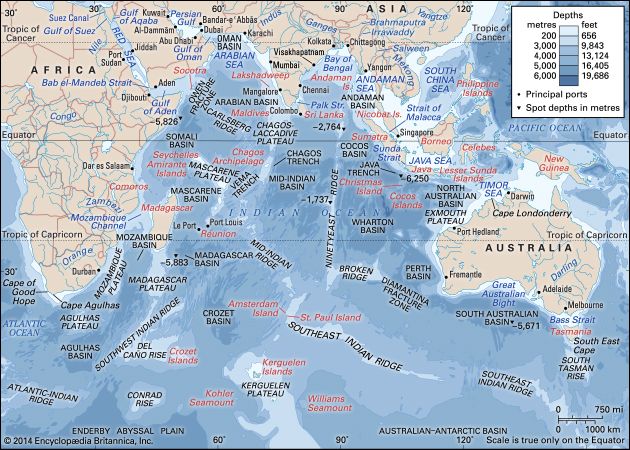
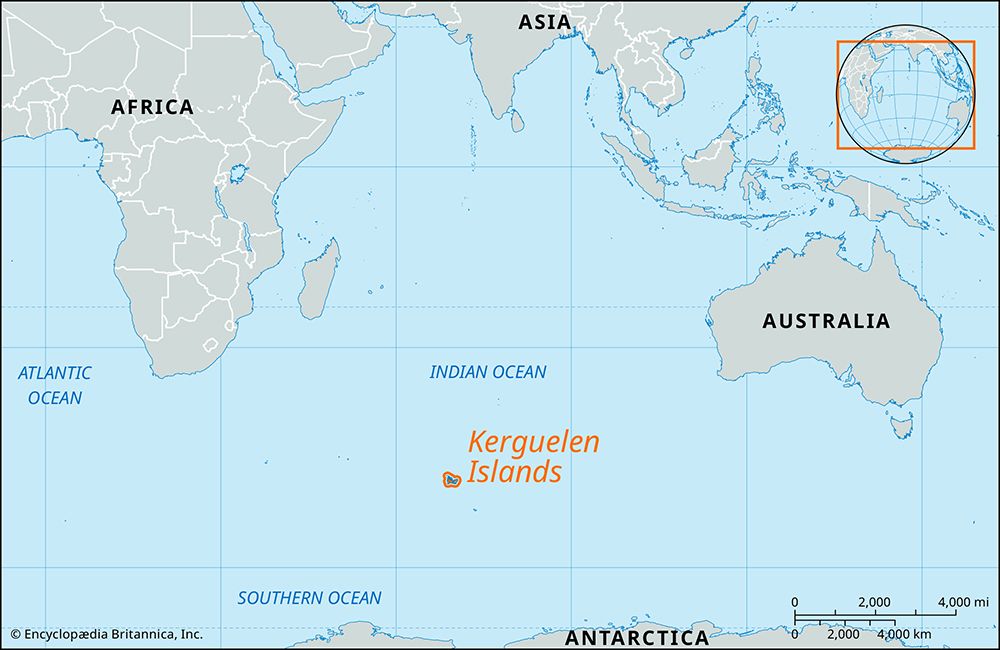
The Kerguelen Islands are a remote archipelago located in the southern Indian Ocean. Administratively, they are part of the French Southern and Antarctic…
What is Kerguelen Islands?
The Kerguelen Islands are a remote archipelago located in the southern Indian Ocean. Administratively, they are part of the French Southern and Antarctic Lands. The group consists of the main island, Kerguelen (also known as Desolation Island), and nearly 300 smaller islets, covering a total area of approximately 2,400 square miles (6,200 square km).123
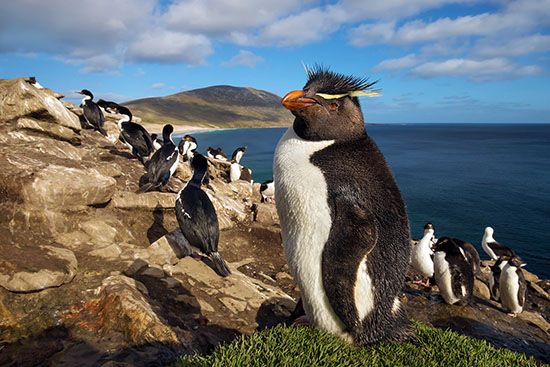
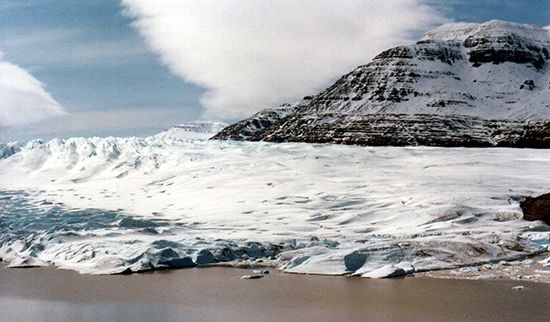
The landscape is characterized by windswept plains of moss and tussock grass, rocky outcrops, mountains, and heavy glaciation, with peaks reaching up to 6,445 feet (1,965 meters). While the islands’ climate makes them unsuitable for permanent human settlement, they serve as a vital haven for wildlife, including seals, albatrosses, terns, and four species of penguins.14
Discovered in 1772 by French navigator Yves-Joseph de Kerguelen-Trémarec, the islands were historically frequented by whalers and seal hunters. Today, they are primarily utilized for scientific research, centered at the Port-aux-Français base established in 1950.13
What kind of scientific research is conducted at Port-aux-Français?
Scientific research at the Port-aux-Français base is primarily focused on meteorological and environmental studies. As part of the French Southern and Antarctic Territories, the islands serve as a strategic location for scientists to operate weather stations and conduct various other research projects in the southern Indian Ocean.1
While the provided records confirm that French scientists utilize these facilities for weather monitoring and general research, specific details regarding the full scope of ongoing experiments are not detailed in the current knowledge base.1
How do animals like penguins survive in such a cold, remote climate?
Penguins have evolved remarkable physiological and behavioral adaptations to survive in freezing, remote climates. Their ability to maintain a stable body temperature in environments where water temperatures can drop below 0 °C (32 °F) relies on several key mechanisms:
- Insulation: Penguins possess a dense arrangement of short, stiff feathers that trap a layer of air against their skin, providing highly effective insulation. This is complemented by a thick layer of body fat that further protects them from the cold.56
- Countercurrent Heat Exchange: Because their feet are often in direct contact with ice or freezing water, penguins utilize a specialized thermal conduction system. Closely aligned arteries and veins in their lower limbs allow heat to transfer from warm blood flowing out from the body core to the cooler blood returning from the extremities, conserving vital body heat.56
- Communal Behavior: During harsh storms, penguins often form tightly packed huddles. This behavior allows them to share body heat and shield one another from the wind, which is essential for the survival of both adults and their young.5
What are some other examples of remote islands in the Southern Ocean?
The Southern Ocean is home to numerous remote and isolated island groups, many of which are volcanic in origin and serve as critical sites for scientific research or wildlife conservation. Notable examples include:
- Heard Island and McDonald Islands: An Australian external territory featuring glaciated terrain and active volcanoes, designated as a UNESCO World Heritage site.11
- Crozet Islands: A rugged French archipelago in the southern Indian Ocean known for its steep cliffs and status as a national conservation area.12
- South Georgia: Located in the Atlantic portion of the Southern Ocean, this island is a hub for scientific activity and is historically significant as the final leg of Sir Ernest Shackleton’s 1916 expedition.2
- South Shetland Islands: Situated in the Drake Passage, these barren, snow-covered islands have historically supported whaling and sealing, and currently host various Antarctic exploration bases.1
- Ross Island: Located in the Ross Sea, this island is home to both the U.S. McMurdo Station and New Zealand’s Scott Base, as well as the active volcano Mount Erebus.3
Sources
- Kerguelen Islands — Encyclopædia Britannica
- 8 of the World’s Most-Remote Islands — Encyclopædia Britannica
- Kerguelen Islands — Merriam-Webster
- French Southern and Antarctic Territories — Encyclopædia Britannica
- How do penguins stay warm? — Encyclopædia Britannica
- Antarctica - Birds — Encyclopædia Britannica
- Procellariiform - Importance to humans — Encyclopædia Britannica
- Antarctica - Plant life — Encyclopædia Britannica
- Gentoo penguin — Encyclopædia Britannica
- penguin - Form and function — Encyclopædia Britannica
- Heard Island and McDonald Islands — Encyclopædia Britannica
- Crozet Islands — Encyclopædia Britannica
- Ross Island — Encyclopædia Britannica
- Southern Ocean — Encyclopædia Britannica
- South Shetland Islands — Encyclopædia Britannica
- list of islands - New Zealand — Encyclopædia Britannica
Published on · 3 min read