Koror
Koror serves as the primary commercial and population hub of Palau, connecting to other islands through both physical infrastructure and shared cultural life.
How does Koror connect to other islands in Palau, both physically and culturally?
Koror serves as the primary commercial and population hub of Palau, connecting to other islands through both physical infrastructure and shared cultural life.
Physical Connectivity
Koror is physically linked to neighboring islands through a network of bridges and causeways. A steel suspension bridge connects Koror to the larger island of Babelthuap, while causeways link Koror to Malakal and Arakabesan islands. Beyond these direct connections, transportation across the archipelago is primarily facilitated by boat or airplane, with regular commuter services operating between Koror and the islands of Peleliu and Angaur.123
Cultural Connectivity
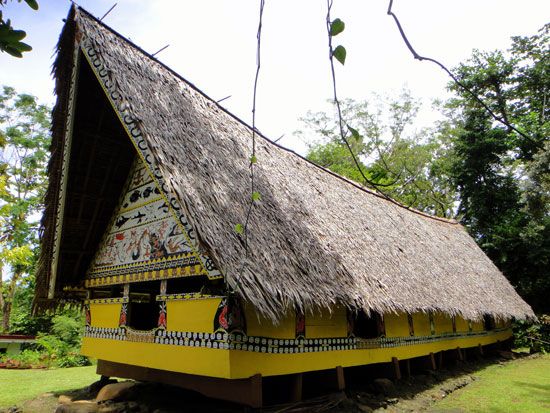
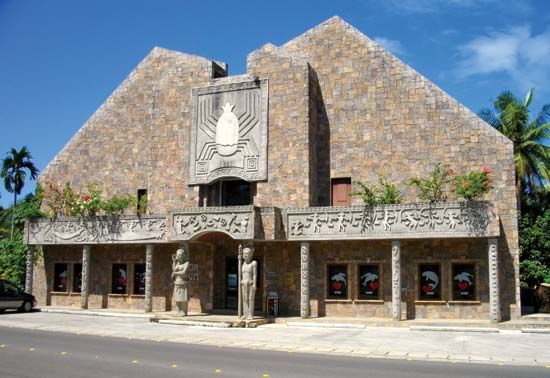
Culturally, Koror acts as a central repository for the nation’s heritage. It houses the Belau National Museum and the Etpison Museum, which preserve and display artifacts, photographs, and maps that represent the history and traditions of the broader Palauan society. While rural areas maintain traditional subsistence practices like taro cultivation and reef fishing, Koror serves as the modern center where these customs are integrated with contemporary business and governance.43
How does the government structure of Koror fit into the larger political system of Palau?
Within the political system of Palau, Koror functions as one of the nation’s 16 traditional settlement areas, each of which is organized as a state. As a state, Koror maintains its own local government, which includes an elected governor and a legislature.1
While Koror previously served as the national capital, that role shifted in 2006 to Melekeok on the island of Babelthuap. Despite this change, Koror remains the country’s primary population and commercial center, housing the majority of the nation’s residents and providing essential services, such as the national hospital, which supports the entire country.471
At the national level, the Republic of Palau operates under a presidential system established by its constitution in 1981. This system features a national legislature, the Olbiil Era Kelulau, and a Council of Chiefs that advises the president on matters of traditional law and custom, ensuring that local traditions remain integrated into the broader governance of the republic.1
How has Koror’s role as a former capital influenced its current status in Palau?
Koror’s history as the former capital of Palau has solidified its role as the nation’s primary commercial, population, and industrial hub, even after the capital moved to Melekeok in 2006.81
Because it served as the administrative center for much of the 20th century—including during the Japanese administration and the subsequent Trust Territory of the Pacific Islands era—Koror developed the infrastructure necessary to support the vast majority of the country’s population. Today, it remains the most densely populated area in Micronesia, housing nearly three-quarters of Palau’s residents.12
Its legacy as the former capital is reflected in its status as the center for tourism and shipping, featuring key industrial facilities like the Ngemelachel harbor. While the seat of government has shifted to the capitol complex at Ngerulmud, Koror continues to function as the essential economic engine of the republic, providing the services and connectivity that sustain the nation.182
What unique marine life can be found in the waters surrounding Koror?
The waters surrounding Koror and the broader Palau archipelago host one of the most diverse marine environments in the world, benefiting from the region’s proximity to Indonesia, New Guinea, and the Philippines.6
The marine life found in these waters includes a vast array of species, such as:
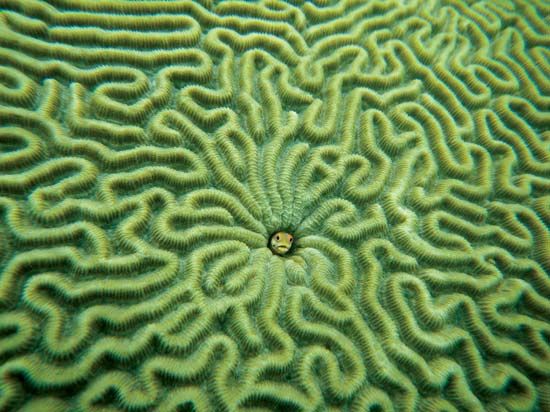
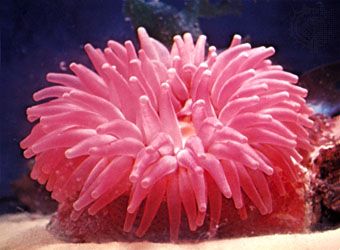
- Corals and Invertebrates: A profusion of corals, sea anemones, squid, starfish, sea urchins, sea cucumbers, and clams.6
- Fish: A wide variety of fish species exist in these waters, contributing to Palau’s status as a premier global scuba-diving destination.6
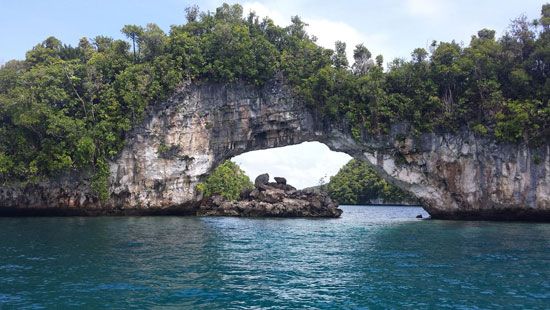
- Unique Organisms: The “rock islands” near Koror feature interior brackish lakes connected to the lagoon by subterranean channels; these isolated environments contain unique organisms not found elsewhere.9
- Other Marine Fauna: The ecosystem also supports various snails and feather-duster worms.6
Sources
- Koror — Encyclopædia Britannica
- Palau - Economy of Palau — Encyclopædia Britannica
- Palau - Cultural life — Encyclopædia Britannica
- Palau — Encyclopædia Britannica
- Palau - Ethnic groups and languages — Encyclopædia Britannica
- Palau - Relief and drainage — Encyclopædia Britannica
- Palau - Government and society — Encyclopædia Britannica
- Palau: Top Questions — Encyclopædia Britannica
- Palau - Plant and animal life — Encyclopædia Britannica
- New Caledonia - Plant and animal life — Encyclopædia Britannica
Published on · 3 min read