Kuban River
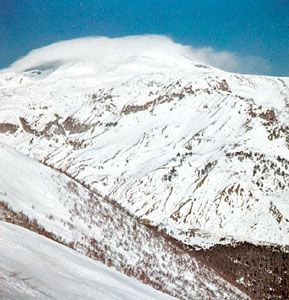
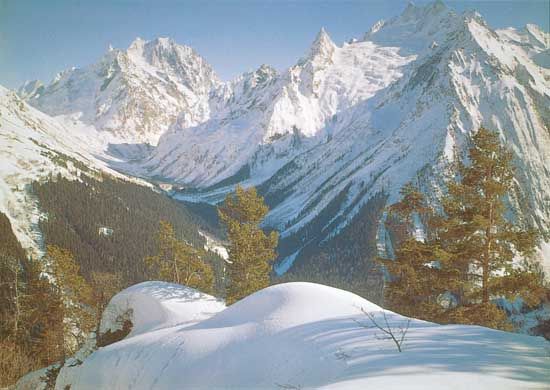
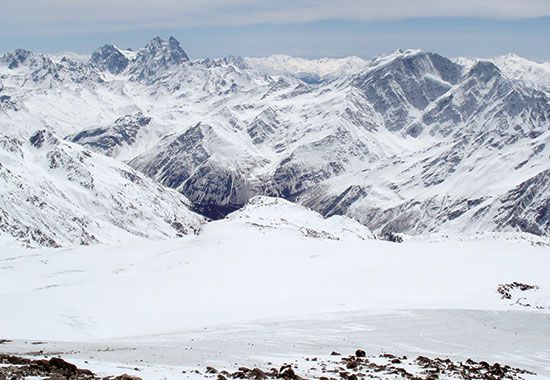
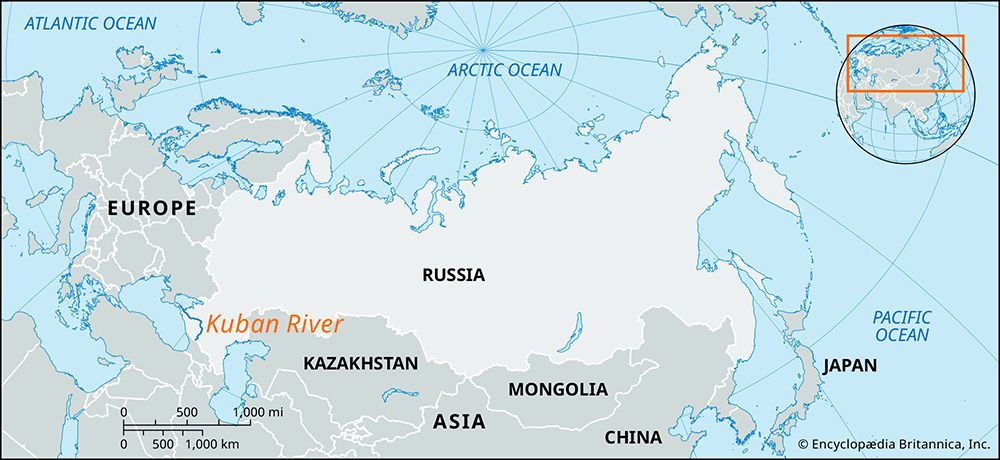
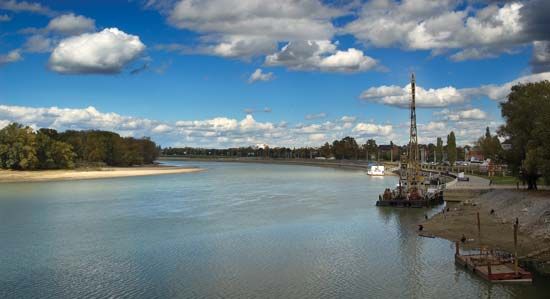
The Kuban River is a 563-mile (906 km) waterway located in southwestern Russia. It originates from glaciers on Mount Elbrus in the Greater Caucasus mountains.
What is Kuban River?
The Kuban River is a 563-mile (906 km) waterway located in southwestern Russia. It originates from glaciers on Mount Elbrus in the Greater Caucasus mountains.1
The river flows north through narrow, rapid-filled gorges before reaching the Stavropol Upland. From there, it turns westward, traversing a broad, marshy floodplain until it empties into the Sea of Azov.12
The Kuban is navigable as far as Krasnodar, and a significant portion of its water is diverted for irrigation purposes. Historically, the river is also notable for giving its name to the Cossack group that settled along its northern banks during the late 18th and early 19th centuries.1
What is the significance of Mount Elbrus?
Mount Elbrus is a significant geographical and cultural landmark located in the Caucasus mountains of southwestern Russia. Standing at 18,510 feet (5,642 meters), it is widely recognized as the highest point in Europe, though its classification as a European feature is sometimes debated due to its proximity to the border of Asia.345
Key aspects of its significance include:
- Geological Features: Formed over 2.5 million years ago, Elbrus is an extinct volcano with twin cones. It remains geologically active in a limited sense, as it still emits sulfurous gases on its eastern slopes and features numerous mineral springs.3
- Glacial Importance: The mountain is covered by 22 glaciers, which serve as a vital water source for the Kuban River and headwaters of the Terek River.34
- Mountaineering: As one of the world’s “Seven Summits,” it is a premier destination for mountaineering and tourism. The first ascent of its eastern peak occurred in 1829, followed by the first ascent of the higher western peak in 1874.36
Who were the Cossacks that settled along the Kuban River?
The Kuban Cossacks were one of the 11 major Cossack groups that emerged within the Russian Empire by the end of the 19th century. They settled along the northern banks of the Kuban River during the late 18th and early 19th centuries.71
Historically, the Cossacks were “free men” or “adventurers” who established self-governing military communities. While they originally formed in the Dnieper and Don regions, the Russian government utilized them as frontier defenders and advance guards for territorial expansion. In exchange for military service, the Cossacks were granted certain privileges and a degree of autonomy, though this relationship shifted over time as the Russian state exerted increasing control over their leadership and social structure.7
By the late 18th century, the autonomy of these groups had waned, with all Cossack males required to serve 20 years in the Russian army. The Kuban Cossacks, like other hosts, eventually saw their traditional communal social structures deteriorate as the central government integrated them more fully into the imperial military apparatus.7
What are the main characteristics of the Sea of Azov?
The Sea of Azov is an inland sea located between Ukraine and Russia, serving as a northern extension of the Black Sea via the Kerch Strait. It is characterized by the following features:
- Physical Geography: It is the world’s shallowest sea, with a maximum depth of only about 46 feet (14 m). The floor is generally level, and the shoreline varies from low, sand-spit-filled northern and western coasts to high, jagged southern coasts.8
- Hydrology: The sea receives significant freshwater input from the Don and Kuban rivers, resulting in low salinity levels. Conversely, the Syvash system, separated by the Arabat Spit, is highly saline.8
- Climate and Navigation: The basin experiences a temperate, continental climate with frequent fogs and winter ice, often requiring the use of icebreakers for navigation.8
- Ecology: Due to its shallowness and nutrient-rich river influx, the sea supports diverse marine life, including over 300 invertebrate species and approximately 80 fish species, such as sturgeon and anchovies.8
Sources
- Kuban River — Encyclopædia Britannica
- Kuban' — Merriam-Webster
- Mount Elbrus — Encyclopædia Britannica
- The World’s Highest Mountains by Continent — Encyclopædia Britannica
- Caucasus - Study and exploration — Encyclopædia Britannica
- El'brus — Merriam-Webster
- Cossack — Encyclopædia Britannica
- Sea of Azov — Encyclopædia Britannica
Published on · 3 min read