Laburnum
The genus Laburnum consists of two species of poisonous trees and shrubs within the Fabaceae family.
Where is the laburnum plant native to, and in which regions is it commonly cultivated?
The genus Laburnum consists of two species of poisonous trees and shrubs within the Fabaceae family.1
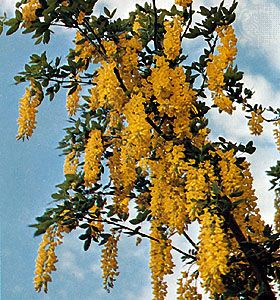
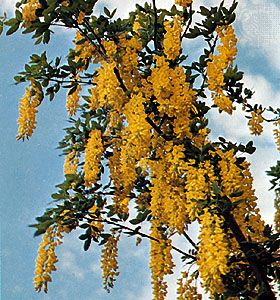
The species Laburnum anagyroides, commonly known as golden chain, is native to southern Europe. More broadly, the genus is native to regions across Eurasia. These plants are widely cultivated as ornamentals in various regions, valued primarily for their striking, pendulous racemes of bright yellow flowers.12
It is important to note that all parts of the laburnum plant are poisonous, particularly the seeds, which can be fatal to livestock.1
How is the laburnum plant used in landscaping and gardening, despite its toxicity?
Despite their toxicity, laburnum plants are highly valued in landscaping and gardening primarily for their aesthetic appeal. Gardeners and landscape designers cultivate them as ornamental trees and shrubs specifically for their striking, pendulous racemes of bright yellow flowers, which can reach up to 25 cm (10 inches) in length.12
While all parts of the plant are poisonous—particularly the seeds, which pose a risk to cattle—the plant remains a popular choice for its visual impact in temperate gardens. Beyond its floral beauty, the wood of the alpine laburnum (Laburnum alpinum) is historically significant for its greenish or reddish-brown hue and its ability to take a high polish, making it a prized material for cabinetmaking and inlay work.1
When incorporating such plants into a landscape, it is essential to practice responsible gardening by placing them away from areas accessible to grazing livestock or small children to mitigate the risks associated with their toxicity.
Are there any medicinal or traditional uses of laburnum, despite its toxicity?
While the laburnum plant is highly valued for its aesthetic qualities and its durable, polishable wood used in cabinetmaking and inlay work, there are no recognized medicinal or traditional uses for the plant due to its significant toxicity.1
All parts of the laburnum plant are poisonous, particularly the seeds, which have been known to be fatal to cattle. Because of these severe health risks, it is not utilized in traditional medicine or herbal practices. The plant’s primary historical utility has been restricted to its ornamental value in gardening and the use of its timber in fine woodworking.1
What are the toxic properties of the laburnum plant, and which parts are most dangerous?
The laburnum plant is a genus of poisonous trees and shrubs belonging to the Fabaceae family. While the plant is cultivated for its ornamental value, it is important to recognize that all parts of the laburnum are toxic.1
The seeds are considered the most dangerous part of the plant. Ingestion of these seeds has been known to be fatal to cattle, although other animals such as hares and rabbits are reportedly unharmed by the plant’s toxins. Because the entire plant contains poisonous compounds, caution should be exercised when planting it in areas accessible to children or livestock to ensure safety and prevent accidental ingestion.1
Sources
- laburnum — Encyclopædia Britannica
- laburnum — Merriam-Webster
Published on · 2 min read