Bay Laurel
Bay laurel (Laurus nobilis) is a fragrant evergreen tree belonging to the Lauraceae family, native to the Mediterranean region. It is widely recognized as…
What is bay laurel?
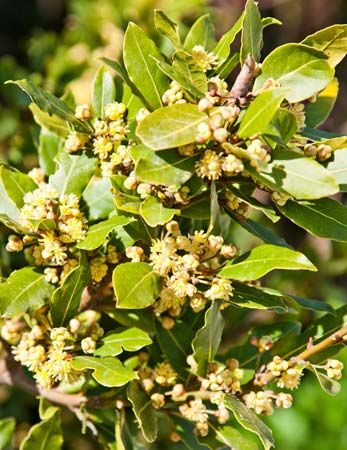
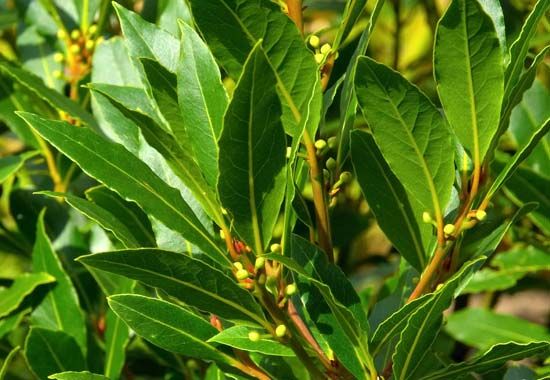
Bay laurel (Laurus nobilis) is a fragrant evergreen tree belonging to the Lauraceae family, native to the Mediterranean region. It is widely recognized as the source of the bay leaf, a popular culinary spice used to flavor stews, fish, and marinades.123
The tree typically grows between 6 and 18 meters tall and features stiff, leathery, oval-shaped leaves. Historically, in ancient Greece, wreaths made from its branches were used to crown victorious athletes and heroes. Beyond its culinary applications, the plant has been used in traditional medicine and for the production of essential oils in cosmetics.123
It is important to note that the term “bay laurel” can sometimes be used colloquially to refer to other plants, such as the California laurel or even unrelated species like oleander, though Laurus nobilis is the primary culinary variety.42
Why were laurel wreaths significant in ancient Greek culture?
In ancient Greek culture, the laurel wreath was a powerful symbol of victory, distinction, and divine favor. Its significance was deeply rooted in the mythology of Apollo, the god of music, poetry, and prophecy, who was considered the patron of these arts.567
The connection between the laurel and Apollo originated from the myth of the nymph Daphne. According to legend, when Apollo pursued her, she prayed for rescue and was transformed into a laurel tree. Apollo subsequently adopted the tree as his sacred emblem, often appearing in art wearing a laurel crown.867
Because of this divine association, the laurel became a standard of excellence:
- Athletic and Musical Achievement: Laurel wreaths were awarded to victors of the Pythian Games, which were held at Delphi in honor of Apollo.69
- Symbol of Triumph: The tradition of honoring heroes and victors with these garlands persisted, eventually influencing Roman customs where victorious generals were celebrated with laurel.8110
- Literary Honor: As Apollo was the patron of poets, the laurel became synonymous with poetic achievement, a tradition that survives today in the title of poet laureate.56
What are some other common herbs used in a bouquet garni?
A classic bouquet garni is a bundle of herbs used to infuse flavor into soups, stews, and sauces, typically consisting of parsley, thyme, and a bay leaf.11
Beyond these core ingredients, several other herbs and aromatics are commonly added to customize the flavor profile:
- Celery: Often included for its earthy, savory depth.11
- Garlic: Used to provide a pungent, aromatic base.11
- Fennel: Adds a subtle, sweet, anise-like note.11
- Marjoram: Contributes a mild, sweet, and slightly floral flavor.11
- Orange peel: Sometimes added to provide a bright, citrusy contrast to savory dishes.11
These ingredients are tied together with string or enclosed in a porous container, such as cheesecloth, to ensure they can be easily removed before the dish is served.1112
How do other plants like cherry laurel differ from true bay laurel?
While the term “laurel” is often used colloquially for various plants, it is important to distinguish between the true bay laurel (Laurus nobilis) and unrelated species like the cherry laurel.
The primary differences include:
- Botanical Classification: The true bay laurel belongs to the family Lauraceae, whereas cherry laurels belong to the rose family (Rosaceae) and the genus Prunus.13
- Culinary Use: The leaves of the true bay laurel are a staple culinary herb used to flavor soups and stews. In contrast, cherry laurels are primarily cultivated as ornamental hedge plants and are not used for cooking.143
- Safety: Both plants contain cyanogenetic glycosides in their tissues, which can release hydrogen cyanide gas. Because of this, it is vital not to confuse the edible bay leaf with the leaves of cherry laurel or other plants sharing the name.314
- Appearance: Bay laurel leaves are dull, leathery, and wavy-edged, while cherry laurel leaves are typically glossy and smooth.13
Sources
- bay laurel — Encyclopædia Britannica
- Bay leaf — Encyclopædia Britannica
- bay laurel — Merriam-Webster
- bay tree — Encyclopædia Britannica
- Daphne — Encyclopædia Britannica
- List of Poets Laureate of Britain — Encyclopædia Britannica
- A Reading Break on 'Laurel' — Merriam-Webster
- Pythian Games — Encyclopædia Britannica
- Apollo — Encyclopædia Britannica
- triumph — Encyclopædia Britannica
- bouquet garni — Encyclopædia Britannica
- bouquet garni — Merriam-Webster
- tarragon: Top Questions — Encyclopædia Britannica
- cherry laurel — Encyclopædia Britannica
Published on · 3 min read