Leeward Islands
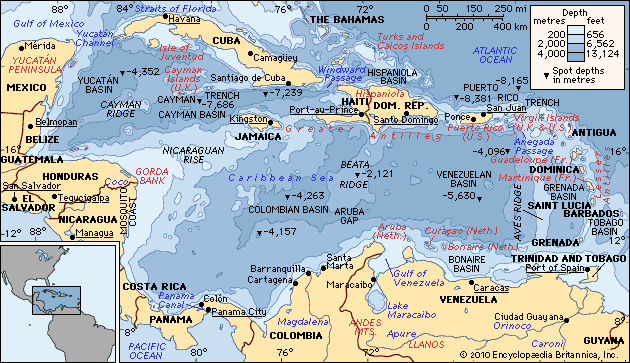
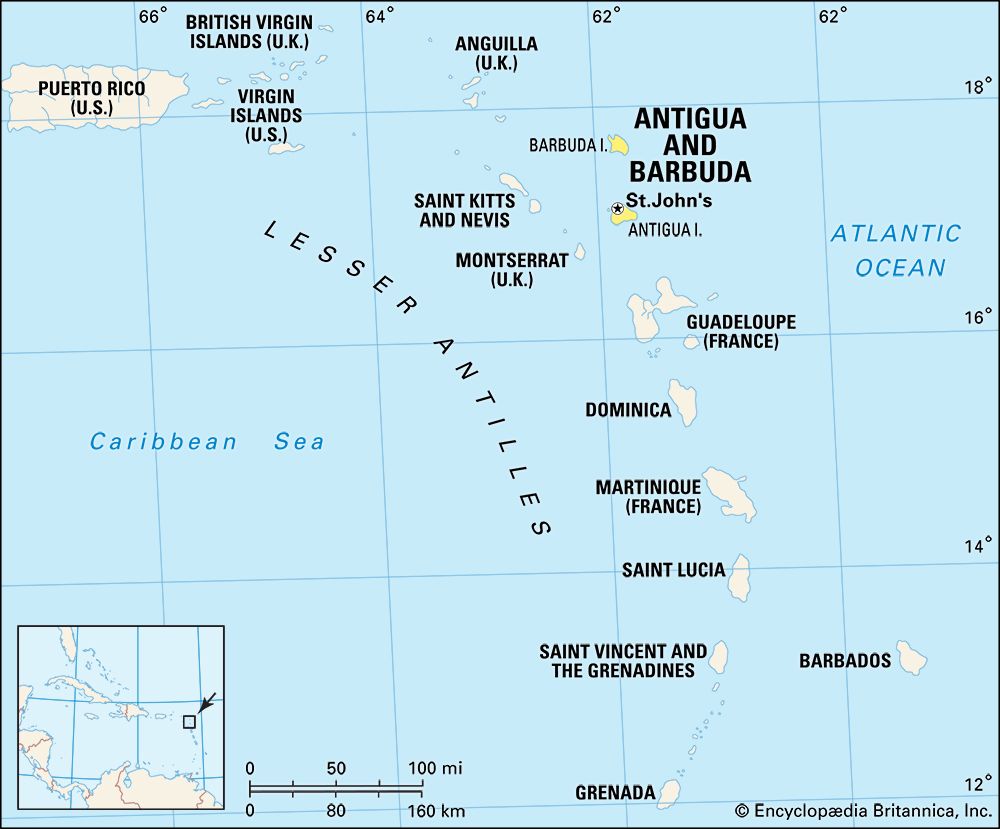
The Leeward Islands, located in the northeastern Caribbean Sea, were formed through complex tectonic processes associated with the Lesser Antilles volcanic…
How were the Leeward Islands formed, and what is their geological significance?
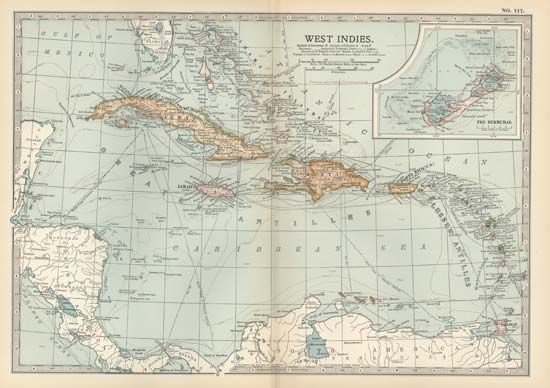
The Leeward Islands, located in the northeastern Caribbean Sea, were formed through complex tectonic processes associated with the Lesser Antilles volcanic arc. This arc was created by the ongoing subduction of the central Atlantic lithosphere beneath the eastern edge of the Caribbean Plate.12
Geologically, the islands exhibit diverse formations:
- Volcanic Ridge: The chain extending from Saint Kitts and Nevis to Montserrat consists of a volcanic ridge, featuring active geological sites like the Soufrière volcano on Guadeloupe.1
- Coral Limestone: Other areas, including Antigua, Anguilla, and Barbuda, are composed of coral limestone formations.1
- Submerged Mountains: The Virgin Islands are distinct, forming part of a submerged mountain chain geologically linked to the Greater Antilles.1
The significance of this region lies in its role as a dynamic boundary where tectonic plates interact, shaping the islands’ varied topography and volcanic activity.
What are the primary economic activities and industries in the Leeward Islands?
The economies of the Leeward Islands are diverse, though they share a common reliance on trade and external aid from former colonial powers. The primary economic activities and industries across the region include:
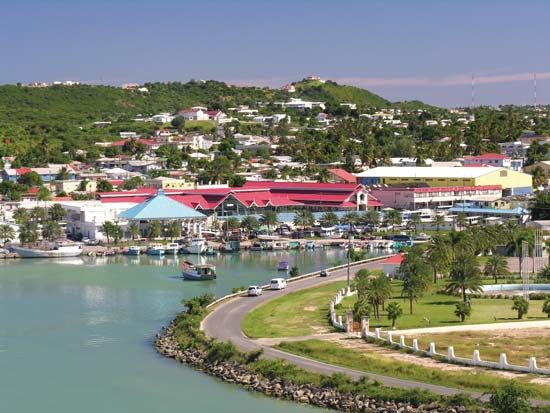
- Tourism: This is the dominant sector for most islands, driven by the region’s tropical climate, scenery, and beaches. It has largely supplanted traditional agriculture as the primary source of income and has stimulated growth in construction and transportation infrastructure.4516
- Financial Services: Many islands have developed significant offshore banking and financial sectors. Some jurisdictions have also gained reputations as tax havens, though this has occasionally led to regulatory scrutiny regarding money laundering.416
- Agriculture and Fishing: While once the mainstay of the economy, large-scale plantation agriculture (such as sugarcane) has declined significantly. Current agricultural efforts focus on diversified crops like fruits (mangoes, citrus, papayas) and vegetables for local consumption. Fishing remains a traditional livelihood and a source of foreign exchange, particularly through the export of lobster and fish.4716
- Manufacturing: Industrial activity is generally small-scale, focusing on processing agricultural products, rum distilling, and the manufacture of clothing, textiles, and construction materials like concrete blocks.41
How does the climate of the Leeward Islands differ from other Caribbean regions?
The climate of the Leeward Islands is characterized as tropical, yet it is notably drier than the climate found in the more southerly regions of the Caribbean. While the islands experience the typical warmth of the region, this heat is moderated by trade winds.1
Several factors contribute to the climatic variations within the Leeward chain and in comparison to other Caribbean areas:
- Latitudinal and Elevation Differences: Rainfall patterns are not uniform; precipitation tends to increase in more southerly latitudes and at higher elevations. Consequently, different parts of a single island may experience distinct microclimates.1
- Regional Comparison: The Leeward Islands generally receive less rainfall than the Windward Islands located to their south.112
- Seasonal Risks: Like much of the broader Caribbean, the Leeward Islands face the threat of hurricanes periodically between June and October.112
While the trade winds provide a cooling effect, the overall moisture levels and rainfall distribution remain key features that distinguish the Leeward Islands from their neighbors to the south.112
What are some unique flora and fauna found in the Leeward Islands?
The Leeward Islands feature a diverse range of flora and fauna, largely influenced by the varying topography and volcanic or coral origins of the islands.
Flora
Vegetation across the region is highly dependent on elevation and rainfall. In mountainous areas like those found on Guadeloupe, dense forests thrive, featuring hardwoods such as mahogany and ironwood. Conversely, the smaller, drier islands often consist of tropical dry forest characterized by groves of latania (a type of fan palm) and various species of cactus. Mangrove swamps are also a notable feature along riverbanks in the region.
Fauna
The islands support a variety of wildlife, though biodiversity has been impacted by historical hunting and environmental changes:
- Mammals: Raccoons are plentiful in some highland areas, and other inhabitants include agoutis—small, rabbitlike rodents—as well as mongooses.
- Birds: The region is home to numerous bird species, including the Guadeloupe woodpecker, Antillean nighthawks, pigeons, partridges, and monk parakeets.
- Marine Life: The surrounding warm waters are rich in biodiversity, supporting populations of lobsters, crabs, octopuses, and various fish species such as tarpons, snooks, hogfishes, snappers, and parrot fishes.
Sources
- Leeward Islands — Encyclopædia Britannica
- North America - 120 to 30 million years ago — Encyclopædia Britannica
- Windward Islands — Encyclopædia Britannica
- United States Virgin Islands - Economy — Encyclopædia Britannica
- Dominica - Agriculture, forestry, and fishing — Encyclopædia Britannica
- Saint Vincent and the Grenadines - Tourism — Encyclopædia Britannica
- Barbados - Agriculture and fishing — Encyclopædia Britannica
- Cabo Verde - Services — Encyclopædia Britannica
- Antigua and Barbuda — Encyclopædia Britannica
- Hawaii - Agriculture, forestry, and fishing — Encyclopædia Britannica
- Anguilla - Economy — Encyclopædia Britannica
- Climate - Zonal surface winds — Encyclopædia Britannica
- Dominica - Plant and animal life — Encyclopædia Britannica
- Cabo Verde - Plant and animal life — Encyclopædia Britannica
- Saint Vincent and the Grenadines - Relief, soils, and drainage — Encyclopædia Britannica
- Guadeloupe - Plant and animal life — Encyclopædia Britannica
Published on · 3 min read