Leopard’s Bane
Leopard’s bane refers primarily to any plant belonging to the genus Doronicum within the Asteraceae family. These perennial herbs are native to Eurasia and…
What is Leopard’s bane?
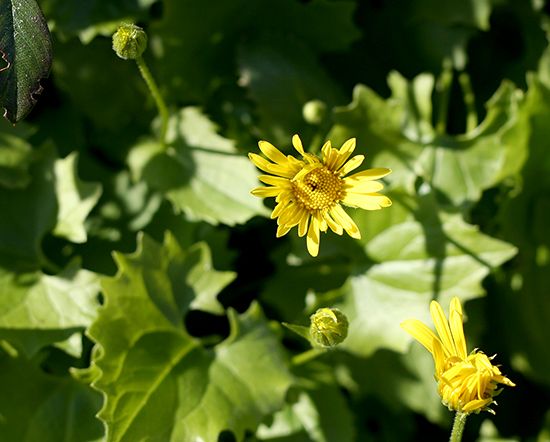
Leopard’s bane refers primarily to any plant belonging to the genus Doronicum within the Asteraceae family. These perennial herbs are native to Eurasia and are characterized by their large, showy yellow flower heads, which feature a central disk surrounded by a single row of ray flowers.123
While the term most commonly identifies Doronicum species—some of which, such as D. cordatum and D. plantagineum, are popular garden ornamentals—it is occasionally used to describe other plants, including certain species of Arnica or herb paris.12
What are the characteristics of the Asteraceae plant family?
The Asteraceae family, also known as the aster, daisy, or composite family, is one of the largest families of angiosperms, comprising over 1,620 genera and 25,000 species of herbs, shrubs, and trees distributed globally.45
Key Characteristics
- Flower Heads: The most defining feature is the grouping of flowers into compact inflorescences (heads) that resemble individual flowers. These heads are subtended by an involucre of small bracts.6
- Floral Structure: The calyx is highly modified into a pappus, consisting of scales, awns, or bristles. The ovary is inferior, with a single basal ovule, and the fruit is a one-seeded achene.56
- Pollination: Members typically employ a plunger pollination mechanism, where the style pushes pollen out of the anther tube to facilitate outcrossing.7
- Diversity: Heads are categorized as discoid, radiate, disciform, or ligulate based on the types of florets present.6
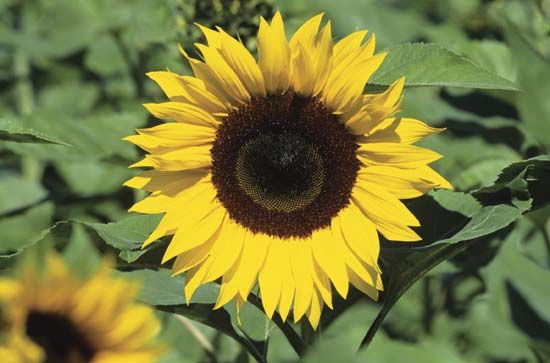
The family is economically significant for its many ornamental plants, food crops like lettuce and sunflowers, and sweeteners like stevia.8
How do perennial plants differ from annuals?
The primary difference between annual and perennial plants lies in their life cycle and longevity.
Annual Plants
An annual is a plant that completes its entire life cycle—from germination to seed production and death—within a single growing season9. For these plants, the seed is the only part that survives from one year to the next. Their death is often a “programmed” physiological process, where the development of reproductive structures like fruits and seeds accelerates the plant’s senescence. Common examples include cereal grains, lettuce, and garden flowers like marigolds.910
Perennial Plants
A perennial is a plant that persists for several years, regrowing and reblooming year after year. While the aboveground portions of herbaceous perennials may die back in autumn, the plant survives through specialized underground structures such as bulbs, rhizomes, or tubers. All trees and shrubs are perennials, as are many herbaceous plants like chrysanthemums and asparagus.1112
Why are some plants given names like ‘bane’?
Plants are often given names containing “bane” because the term historically refers to a “slayer” or a “source of harm or ruin,” reflecting the plant’s perceived toxicity or its traditional use as a deterrent against pests.1314
In botanical naming, the suffix “bane” typically signals that a plant is poisonous or was believed to be a remedy for a specific affliction. For example:
- Baneberry: Named for the genus Actaea, these plants are known for their acrid, poisonous berries.15
- Banewort: A name historically applied to belladonna, a highly toxic plant, as well as other species.16
- Fleabane: Unlike plants named for their own toxicity, this name reflects the plant’s historical use as a repellent; it was once believed that the dried herbs could drive away fleas.14
While some plants are named for their ability to cause harm to humans or animals—such as those containing lethal phytotoxins—others carry the name due to their traditional roles in folk medicine or pest control.1714
Sources
- Leopard’s bane — Encyclopædia Britannica
- leopard's-bane — Merriam-Webster
- doronicum — Merriam-Webster
- Asteraceae — Encyclopædia Britannica
- list of plants in the family Asteraceae — Encyclopædia Britannica
- Asteraceae - Flowers — Encyclopædia Britannica
- Asteraceae - Pollination — Encyclopædia Britannica
- Asteraceae - Economic importance — Encyclopædia Britannica
- Is That Plant 'Perennial' or 'Annual'? — Merriam-Webster
- Perennial — Encyclopædia Britannica
- Annual — Encyclopædia Britannica
- Plant development - Senescence in plants — Encyclopædia Britannica
- bane — Merriam-Webster
- banewort — Merriam-Webster
- baneberry — Merriam-Webster
- Fleabane — Encyclopædia Britannica
- poison - Plant poisons (phytotoxins) — Encyclopædia Britannica
- Plant Names That Sound Like Insults | Fleabane — Merriam-Webster
- 7 of the World’s Deadliest Plants — Encyclopædia Britannica
Published on · 3 min read