Lingulid
Lingulid brachiopods, commonly known as lamp shells, are a group of small, inarticulate brachiopods characterized by several distinct anatomical features.
What are the unique anatomical features of lingulid brachiopods?
Lingulid brachiopods, commonly known as lamp shells, are a group of small, inarticulate brachiopods characterized by several distinct anatomical features.12
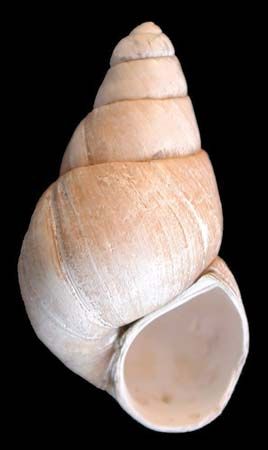
Unlike articulate brachiopods, lingulids possess unhinged shells composed primarily of chitinous or chitinophosphatic material. Their shells are typically biconvex, meaning both valves are convex, and they feature an apical beak for attachment on both valves.12
A defining characteristic of the order Lingulida is the presence of a fleshy pedicle—a stalk-like structure used for attachment—that emerges between the two valves at the tapered end of the organism. Internally, as members of the class Inarticulata, they exhibit complex shell musculature and possess an intestine that includes an anal opening, a feature absent in many other brachiopod groups. These organisms are highly resilient, with modern representatives like the genus Lingula capable of thriving in brackish, oxygen-poor environments that are often unsuitable for other marine life.21
What is the ecological importance of lingulid brachiopods in marine ecosystems?
Lingulid brachiopods, such as the modern genus Lingula, play a distinct role in marine ecosystems, particularly in environments where other organisms struggle to survive. Their ecological importance is highlighted by several key factors:
- Environmental Indicators: Lingulids are highly valued as fossil indicators of ancient environments. Because they are often found in muddy, brackish, and oxygen-poor waters—conditions generally unsuitable for most other marine life—their presence in the geological record provides scientists with critical data regarding historical environmental conditions.1
- Niche Adaptation: These organisms are specialized for life in soft substrates. By living in burrows within mud or sand, they occupy a specific ecological niche. They utilize a flexible, contractile pedicle to anchor themselves at the bottom of these burrows, allowing them to extend their shells to feed or retract quickly when threatened.45
- Filter Feeding: As filter feeders, lingulids contribute to the cycling of organic matter. They use a lophophore to create water currents, trapping minute organisms and organic particles in mucus to transport them to the mouth. By protruding their anterior ends above the mud and arranging their setae into tubes, they efficiently manage incoming food-bearing currents and outgoing waste-bearing currents.4
How are lingulid brachiopods used in paleontological studies?
In paleontological studies, lingulid brachiopods are primarily valued as indicators of ancient environmental conditions rather than for stratigraphic correlation.1
Because modern lingulids, such as the genus Lingula, are characteristically found in muddy, brackish, and oxygen-poor environments that are typically inhospitable to other marine organisms, their presence in the fossil record allows researchers to reconstruct the paleoenvironments of specific rock layers. While other groups of brachiopods—such as those found in Silurian shelly facies—are highly effective as index fossils for dating and correlating strata, lingulids are considered of little use for these specific chronological purposes.16
Their long evolutionary history, dating back to the Cambrian Period, makes them significant components of early brachiopod faunas, providing a consistent biological baseline for studying long-term environmental adaptations.1
How long have lingulid brachiopods existed on Earth, and why are they considered ‘living fossils’?
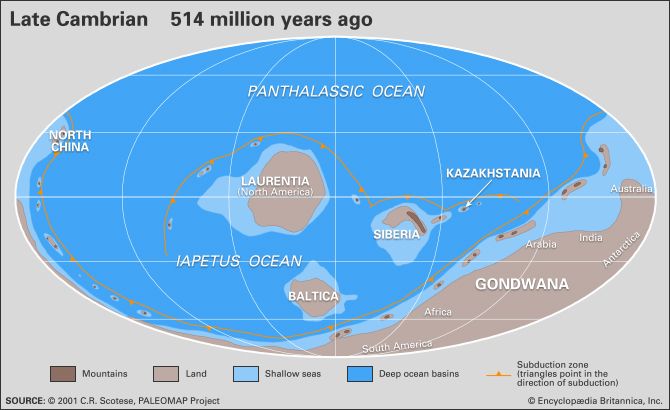
Lingulid brachiopods have an exceptionally long evolutionary history, first appearing in the fossil record during the Cambrian Period (approximately 542 million to 488 million years ago) and likely originating even earlier during Precambrian time.1
They are often referred to as “living fossils” because their basic body plan and structure have remained remarkably stable over hundreds of millions of years. For example, the fossil genus Lingulella, which dates back to the Cambrian, is structurally and visually very similar to the modern genus Lingula. This morphological consistency demonstrates that the lingulid form is highly effective for their specific ecological niche—living in burrows within mud or sand—allowing them to persist successfully across vast geological timescales while other species have come and gone.145
Sources
- lingulid — Encyclopædia Britannica
- lamp shells - Annotated classification — Encyclopædia Britannica
- lingulid — Merriam-Webster
- lamp shells - Behaviour and ecology — Encyclopædia Britannica
- lamp shells - Form and function — Encyclopædia Britannica
- Silurian Period - Brachiopods — Encyclopædia Britannica
- linguliferous — Merriam-Webster
Published on · 3 min read