Lamp Shells
Sorry, the Britannica knowledge base does not contain this information. While the provided articles confirm that lamp shells (phylum Brachiopoda) are marine…
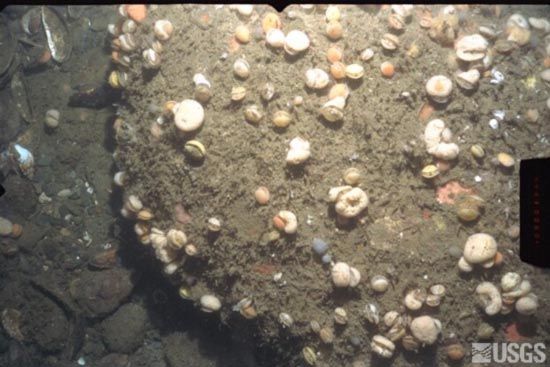
How many species of lamp shells are known to exist today?
Sorry, the Britannica knowledge base does not contain this information. While the provided articles confirm that lamp shells (phylum Brachiopoda) are marine invertebrates that have persisted since the Cambrian Period, they do not specify the exact number of extant species.
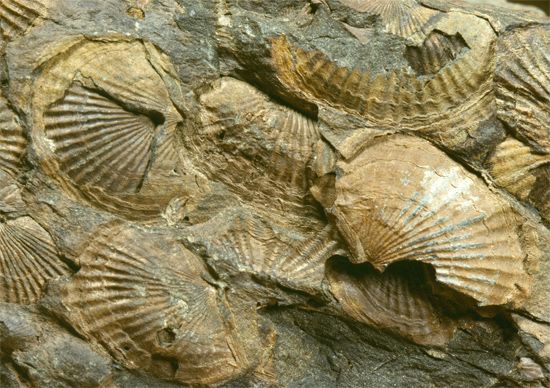
What are lamp shells and what phylum do they belong to?
Lamp shells are bottom-dwelling marine invertebrates that belong to the phylum Brachiopoda. They are characterized by a body enclosed in two valves, or shells, of unequal size that are bilaterally symmetrical, meaning the left and right sides are mirror images of each other. The name “lamp shell” is derived from their resemblance to early Roman oil lamps.14
These animals possess a lophophore—a specialized feeding structure—and often feature a fleshy stalk, known as a pedicle, which extends into the substrate to anchor them. While they were once among the most abundant forms of life on Earth, they are now less numerous, with approximately 300 living species known to exist today. Their fossil record is extensive, with over 30,000 extinct species described, allowing scientists to trace their evolution back to the Cambrian Period about 542 million years ago.451
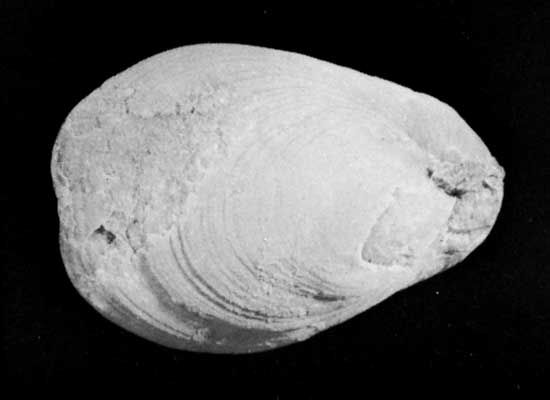
How do lamp shells differ from other bivalve mollusks?
Although lamp shells (phylum Brachiopoda) and bivalve mollusks both possess two shells, they are distinct groups of animals that are not closely related. Their differences are fundamental to their anatomy and symmetry:1
- Symmetry: In lamp shells, the two valves are of unequal size, but each individual valve is bilaterally symmetrical (the left and right sides of a single valve are mirror images). In contrast, most bivalve mollusks have two valves that are mirror images of each other (left and right valves), though this can be modified in some species.8910
- Orientation: Lamp shell valves are positioned dorsally (top) and ventrally (bottom). Bivalve shells are typically positioned on the left and right sides of the animal.8910
- Feeding Structures: Lamp shells use a lophophore—a specialized, tentacle-bearing organ—to gather food. Bivalves typically use their gills (ctenidia) and labial palps for filter feeding.211510
- Internal Anatomy: Lamp shells possess a coelom and a pedicle (a fleshy stalk) for attachment. Bivalves have a mantle cavity and often use a foot or a byssus for movement or attachment.5910
How long have lamp shells existed in Earth’s history?
Lamp shells, which belong to the phylum Brachiopoda, have a long and extensive history on Earth. They first appeared in the fossil record during the Cambrian Period, approximately 542 million years ago.113
Throughout their history, they have persisted from the Lower Cambrian to the present day. While they are less numerous now, they were once one of the most abundant forms of life on the planet, and their fossil record allows scientists to survey their evolutionary development across hundreds of millions of years.131
Sources
- lamp shells — Encyclopædia Britannica
- lamp shells - Size range and diversity of structure — Encyclopædia Britannica
- lamp shells - Distinguishing taxonomic features — Encyclopædia Britannica
- lampshell — Merriam-Webster
- Brachiopoda — Merriam-Webster
- lamp shells - Annotated classification — Encyclopædia Britannica
- Conchidium — Encyclopædia Britannica
- lophophore hypothesis — Encyclopædia Britannica
- bivalve - Internal features — Encyclopædia Britannica
- lophophore — Merriam-Webster
- lamp shells - Form and function — Encyclopædia Britannica
- Circulatory system - Brachiopoda — Encyclopædia Britannica
- Cambrian Period - Fauna — Encyclopædia Britannica
- branchiopod - Evolution and paleontology — Encyclopædia Britannica
Published on · 2 min read