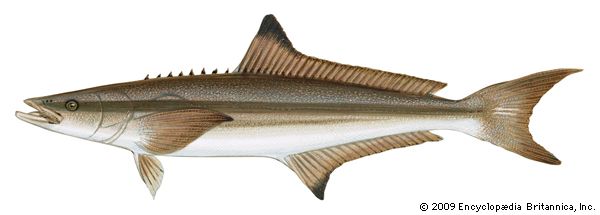
Muskellunge
The muskellunge (Esox masquinongy) is a solitary, predatory fish belonging to the pike family (Esocidae). It is native to the weedy rivers and lakes of the…
What is muskellunge?
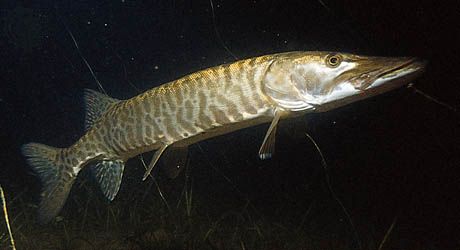
The muskellunge (Esox masquinongy) is a solitary, predatory fish belonging to the pike family (Esocidae). It is native to the weedy rivers and lakes of the North American Great Lakes region and is highly regarded as a fighting game fish.12
As the largest member of the pike family, the muskellunge can reach lengths of 1.8 meters (6 feet) and weights exceeding 36 kilograms (80 pounds). It is physically distinguished by its elongate body and the absence of scales on the lower portions of its cheeks and gill covers. Like other pikes, it is a stealthy hunter that lurks in vegetation before making a rapid lunge to seize prey, which typically includes smaller fish, insects, and occasionally waterfowl or small mammals. The name is derived from the Ojibwa word ma·skino·še·.123
How can you tell a muskellunge apart from a northern pike?
Distinguishing between a muskellunge and a northern pike can be challenging due to their similar appearance and habits, but there are key physical differences to observe:
- Size: The muskellunge is the largest member of the pike family, capable of reaching lengths of 1.8 meters (6 feet) and weights exceeding 36 kilograms (80 pounds). In contrast, the northern pike is generally smaller, reaching a maximum size of about 1.4 meters (4.5 feet) and 21 kilograms (46 pounds).13
- Markings: Northern pike are typically identified by pale, bean-shaped spots on their bodies. Muskellunge are often characterized by dark markings.32
- Scales: While both species lack scales on the lower parts of their gill covers, the muskellunge is further distinguished by the absence of scales on the lower portion of its cheeks as well.13
Both fish are solitary, voracious predators that utilize similar hunting strategies, lurking in vegetation before lunging at prey.3
What kind of prey do these large predatory fish typically hunt?
As voracious, solitary predators, members of the pike family—including the muskellunge and northern pike—employ a stealth-based hunting strategy. They typically remain motionless or lurk within aquatic vegetation, waiting for prey to swim within range before launching a sudden, rapid lunge to seize their target.1
Their diet is varied and generally includes the following:
- Small fishes: These form a primary component of their diet.1
- Insects and aquatic invertebrates: These are commonly consumed, particularly by smaller or younger individuals.1
- Larger prey: Larger specimens are known to hunt waterfowl and small mammals that venture into the water.1
Why are muskellunge considered such popular game fish?
The muskellunge is highly regarded as a premier game fish primarily due to its reputation as a formidable fighter when hooked. As the largest member of the pike family (Esocidae), this solitary and somewhat uncommon predator presents a significant challenge for anglers.1
Its status as a valuable sport fish is bolstered by its impressive physical potential, as it can reach lengths of up to 1.8 meters (6 feet) and weigh 36 kilograms (80 pounds) or more. While it is also consumed as a food fish, its primary appeal lies in the pursuit of such a large, elusive, and powerful specimen within the weedy rivers and lakes of the North American Great Lakes region.12
Sources
- muskellunge — Encyclopædia Britannica
- muskellunge — Merriam-Webster
- pike — Encyclopædia Britannica
Published on · 2 min read