Snakefly
A snakefly (order Raphidiodea or Raphidioptera) is an insect easily identified by its small head and a long, slender "neck," which is actually an elongated…
What is snakefly?
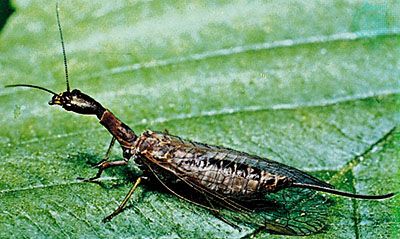
A snakefly (order Raphidiodea or Raphidioptera) is an insect easily identified by its small head and a long, slender “neck,” which is actually an elongated prothorax. Measuring approximately 15 mm (0.6 inch) in length, these insects possess two pairs of net-veined wings, long antennae, and chewing mouthparts. Females are equipped with a long ovipositor used for laying eggs.1
The life cycle of a snakefly consists of four stages: egg, larva, pupa, and adult. The larvae are active and carnivorous, typically residing beneath loose tree bark. Found on every continent except Australia, snakeflies are considered beneficial to humans because they prey on the larvae and pupae of other insects.1
What does the term carnivorous mean in the context of insects?
In the context of insects, the term carnivorous refers to species whose diet consists of other animals. These insects are often described as predators, as they hunt, capture, and consume other arthropods, including caterpillars, mites, and other insect larvae or eggs.2345
Carnivorous insects have evolved various specialized adaptations to secure their food:
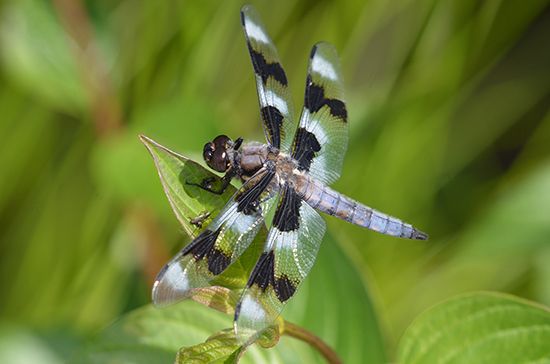
- Hunting and Grasping: Many predatory insects, such as dragonflies and wheel bugs, possess specialized mouthparts or modified front legs designed to grasp and immobilize prey.635
- Feeding Mechanisms: Some species use piercing-sucking mouthparts to inject venomous saliva, which digests the prey’s body fluids internally before they are consumed.35
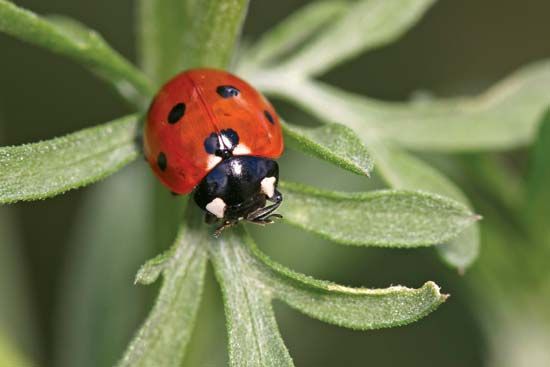
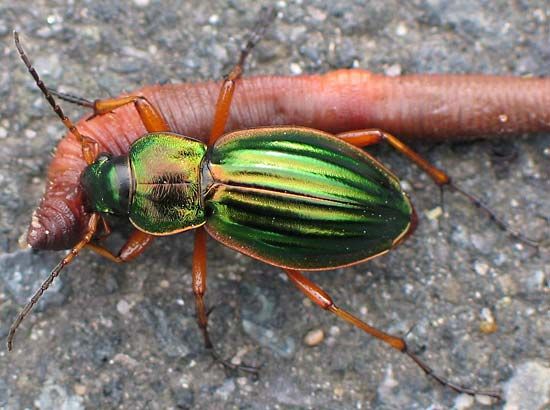
- Ecological Role: These insects are often considered beneficial to humans because they help regulate populations of other insects that may be considered pests. For example, ladybugs feed on plant-sucking insects like aphids, while certain ground beetles prey on caterpillars.47
How does an ovipositor help a female insect?
An ovipositor is a specialized organ found in female insects that is used for depositing eggs. Formed by the modification of the terminal segments of the abdomen, this structure serves as a vital tool for ensuring the survival of offspring by allowing the female to place her eggs in specific, often protected, environments.9103
Depending on the species, the ovipositor can be adapted for various functions, including:
- Placement: It allows the female to deposit eggs in precise locations, such as inside plant tissues, within the soil, or on specific surfaces, which helps protect the developing embryos from environmental hazards or predators.103
- Modification for Specialized Tasks: In many insects, particularly those in the order Hymenoptera (such as bees, wasps, and sawflies), the ovipositor is highly specialized and can be adapted for sawing, piercing, or stinging.11
- Structural Variation: The organ often consists of paired appendages known as ovipositor valves. While some insects possess a well-developed, prominent ovipositor, in others, it may be short or even concealed.1211
By enabling the female to control where her eggs are laid, the ovipositor plays a critical role in the reproductive success and life cycle of many insect species.103
What are some other examples of beneficial insects?
Beyond their roles as predators and pollinators, many insects provide significant benefits to humans and the environment through the production of raw materials and their contributions to ecological health.
Commercial and Industrial Benefits
Certain insects are valued for the substances they produce, which have been utilized by humans for centuries:6
- Honey and Wax: Produced by bees, these substances are essential agricultural and commercial products.6
- Silk: The larvae of certain moths, most notably the silkworm, produce the fibers used to create silk, a highly valued textile material.6
- Dyes and Pigments: Historically, various insects have been harvested to produce natural dyes and pigments used in textiles and art.6
Ecological and Scientific Contributions
Insects perform vital functions that sustain the health of our planet:
- Scavengers and Decomposers: Many insects act as scavengers, breaking down decaying plant and animal tissues. This process is crucial for nutrient cycling, as it releases stored nutrients back into the soil, making them available for plant growth.1415
- Scientific Research: Insects are indispensable in scientific study. Fruit flies have been foundational to our understanding of genetics, while other insects are used to study hormonal functions, nerve physiology, and biodiversity.14
- Environmental Indicators: Because they are sensitive to changes in their surroundings, insects are often used as indicators to assess water quality and soil contamination.14
Sources
- snakefly — Encyclopædia Britannica
- carnivore — Encyclopædia Britannica
- insect - Annotated classification — Encyclopædia Britannica
- carnivorous — Merriam-Webster
- heteropteran - Food habits — Encyclopædia Britannica
- Coleoptera - As predators — Encyclopædia Britannica
- wheel bug: Top Questions — Encyclopædia Britannica
- Pest — Encyclopædia Britannica
- ovipositor — Merriam-Webster
- insect - Reproductive system — Encyclopædia Britannica
- insect - Reproduction — Encyclopædia Britannica
- Animal reproductive system - Provisions for the developing embryo — Encyclopædia Britannica
- Orthoptera - General features — Encyclopædia Britannica
- Why are bees important? — Encyclopædia Britannica
- Biological control — Encyclopædia Britannica
- insect — Encyclopædia Britannica
- ichneumon wasp — Encyclopædia Britannica
- soil organism — Encyclopædia Britannica
- insect - Commercial significance — Encyclopædia Britannica
- insect - Ecological factors — Encyclopædia Britannica
Published on · 3 min read