Spongillafly
A spongillafly is any insect belonging to the family Sisyridae within the order Neuroptera. These insects are smoky brown in color and bear a physical…
What is spongillafly?
A spongillafly is any insect belonging to the family Sisyridae within the order Neuroptera. These insects are smoky brown in color and bear a physical resemblance to lacewings.1
Their life cycle is closely tied to aquatic environments. Females deposit clusters of eggs on or near water, often under a protective silky web. The larvae are notable for living as parasites on freshwater sponges. Once a larva reaches maturity, it leaves the water to spin a double-walled, lacelike cocoon, within which it undergoes its pupal stage. Spongillaflies are found globally wherever freshwater sponges are present.1
How do spongillafly larvae survive while living on freshwater sponges?
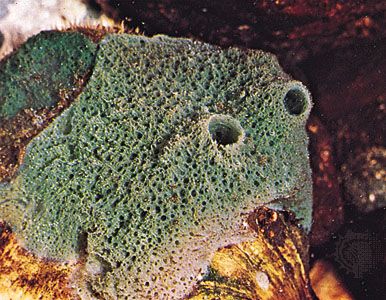
Spongillafly larvae (family Sisyridae) are specialized aquatic parasites that survive by feeding directly on freshwater sponges.
To facilitate this parasitic lifestyle, the larvae possess specific anatomical adaptations:
- Specialized Mouthparts: They are equipped with elongated, bristle-like piercing structures formed by their mandibles and maxillae. These structures allow the larvae to penetrate the sponge tissue and extract nutrients.1
- Aquatic Adaptation: As they live entirely within an aquatic environment, their bodies are moderately elongated and hairy, which helps them navigate and remain stable while attached to their host.1
- Sensory Equipment: They feature long, bristle-like antennae that assist them in their environment as they locate and feed upon the sponge.1
Unlike many other insects that may require complex respiratory adaptations to surface for air, these larvae are fully adapted to their life on the sponge, where they remain until they are fully grown and ready to leave the water to pupate.41
What are some other examples of insects that have aquatic larval stages?
Many insects have evolved to spend their larval stages in aquatic environments, developing specialized adaptations for movement and respiration. Here are several examples:
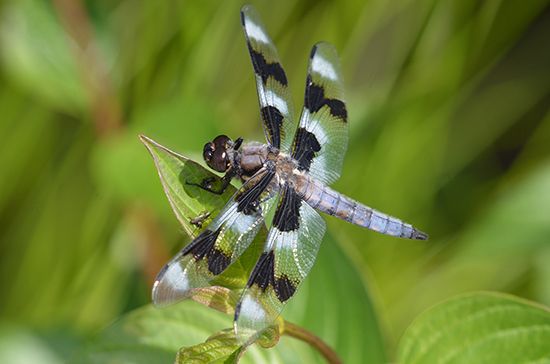
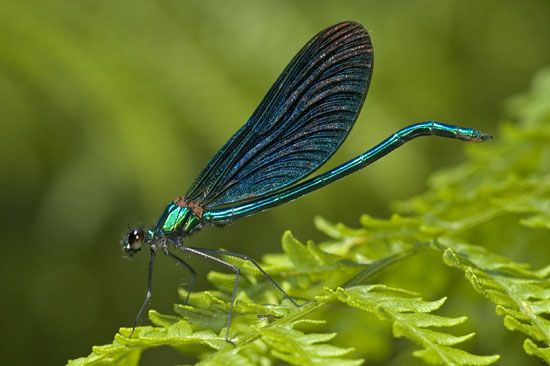
- Dragonflies and Damselflies: These insects (order Odonata) lay their eggs in or near water. Their larvae are strictly aquatic and possess unique respiratory structures; dragonflies have internal rectal gills, while damselflies have external rectal gills.89
- Caddisflies: The larvae of these mothlike insects are essentially aquatic. Depending on the species, they may be free-living or construct protective cases. They often feature abdominal gills to facilitate oxygen uptake from the water.810
- Mayflies: Like caddisflies, mayfly larvae (order Ephemeroptera) are aquatic and utilize tracheal gills located on the thorax or abdomen to breathe underwater.8
- Mosquitoes: Mosquito larvae, often called “wrigglers,” are aquatic and typically feed on algae and organic debris. While some aquatic insects use gills, mosquito larvae often breathe atmospheric air by using a respiratory siphon at the tip of their abdomen to reach the surface.83
- Midges: These insects have aquatic larvae that obtain oxygen directly from the water through their thin cuticle, which is in contact with abundant internal breathing tubes (tracheae).8
How does the metamorphosis of a spongillafly differ from that of a dragonfly?
The metamorphosis of a spongillafly differs significantly from that of a dragonfly, primarily due to the type of developmental process each insect undergoes.
Spongillafly Metamorphosis
Spongillaflies (family Sisyridae) undergo complete, or holometabolous, metamorphosis. This process includes four distinct life stages: egg, larva, pupa, and adult.1213
- Larval Stage: The larva is a specialized parasite that lives on freshwater sponges.13
- Pupal Stage: When fully grown, the larva leaves the water and spins a protective, double-walled, lacelike cocoon to undergo its transformation into an adult.13
Dragonfly Metamorphosis
In contrast, dragonflies (order Odonata) undergo incomplete, or hemimetabolous, metamorphosis. This process lacks a pupal stage entirely.12143
- Nymphal Stage: The aquatic young, often called naiads, resemble the adult in form and predatory habits, though they possess specialized aquatic adaptations like gills.1514
- Emergence: Development occurs through a series of molts. At maturity, the nymph crawls out of the water, undergoes its final molt, and emerges directly as a winged adult, leaving behind a cast skin known as an exuvia.31514
Sources
- spongillafly — Encyclopædia Britannica
- squirrel — Encyclopædia Britannica
- Odonata - The larval stage — Encyclopædia Britannica
- neuropteran - Annotated classification — Encyclopædia Britannica
- freshwater sponge — Encyclopædia Britannica
- Diptera - Larvae — Encyclopædia Britannica
- sponge fly — Merriam-Webster
- insect - Aquatic insects — Encyclopædia Britannica
- caddisfly - Distinguishing taxonomic features — Encyclopædia Britannica
- heteropteran - Habitats — Encyclopædia Britannica
- mosquito - Physical features and behavior — Encyclopædia Britannica
- nymph — Encyclopædia Britannica
- Metamorphosis — Encyclopædia Britannica
- sponge - Sexual reproduction — Encyclopædia Britannica
- insect - Types of metamorphosis — Encyclopædia Britannica
- dragonfly — Encyclopædia Britannica
- Odonata - Basic structure — Encyclopædia Britannica
Published on · 3 min read