Niger River
The Niger River flows through several countries in western Africa, supporting numerous significant urban centers along its banks. Key cities located along or…
What are some of the major cities located along the banks of the Niger River?
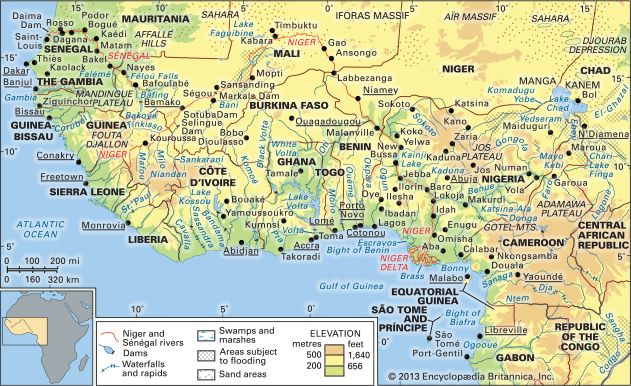
The Niger River flows through several countries in western Africa, supporting numerous significant urban centers along its banks. Key cities located along or near the river include:
- Bamako: The capital of Mali, which serves as a major riverine hub.1
- Koulikoro: A notable port city in Mali situated along the river’s middle course.12
- Mopti: Located at the confluence of the Niger and the Bani River, this city is a key center in the region of lakes and backwaters.1
- Timbuktu: Historically significant, this city is served by the nearby port of Kabara.12
- Gao: A major city in Mali located along the river’s northern bend.12
- Niamey: The capital of Niger, which is a prominent city along the river’s path.13
- Jebba: A town in Nigeria that serves as an important point for navigation and infrastructure.12
- Lokoja: Situated at the confluence of the Niger and Benue rivers.1
- Onitsha: The largest town on the Niger’s banks in Nigeria.1
Are there any notable dams or hydroelectric projects on the Niger River, and what are their impacts?
The Niger Dams Project in Nigeria comprises a series of major hydroelectric installations, including the Kainji Dam (1969), the Jebba Dam (1984), and the Shiroro Dam (1990) on the Kaduna tributary. Additionally, dams such as those at Sotuba and Markala in Mali contribute to regional water management.78
Impacts of the Projects
These dams provide essential benefits, including:
- Energy and Infrastructure: They serve as vital sources of hydroelectric power and provide improved river navigation and road crossings.5
- Agriculture and Economy: Reservoirs like Kainji Lake support extensive fishing and irrigation projects, enabling the cultivation of crops such as rice, cotton, and sugarcane.758
- Tourism: The creation of protected areas, such as the Kainji Lake National Park, has promoted the tourism industry.75
However, these projects have caused significant social and environmental disruption. The construction of Kainji Dam displaced approximately 50,000 people and submerged several settlements, including the town of Bussa. Furthermore, managing these structures presents risks; in 1999, emergency water releases to prevent structural failure exacerbated severe flooding, destroying homes and cropland.57
How does the Niger River impact the environment and ecosystems along its path?
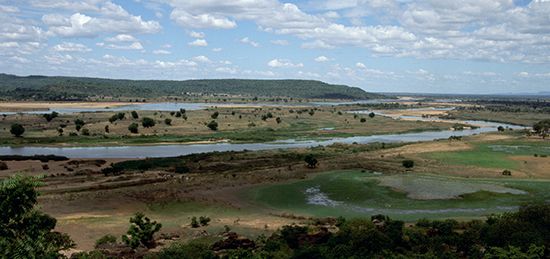
The Niger River plays a critical role in shaping the environment and ecosystems of western Africa by traversing diverse vegetational zones, ranging from the sedge-covered Fouta Djallon highlands to savanna grasslands, high rainforests, and coastal mangrove swamps.19
Ecosystems and Biodiversity
The river’s hydrology, characterized by seasonal flooding, supports a rich variety of life. The “internal delta” in Mali—a vast network of lakes, creeks, and backwaters—serves as a vital habitat for numerous bird species, including geese, herons, egrets, and storks. The river itself is home to diverse fish populations, such as catfish, carp, and Nile perch, as well as hippopotamuses, crocodiles, and various lizards.19
Environmental Challenges
While the river sustains life, human activity has significantly altered its environment:
- Resource Exploitation: In the Niger delta, the extraction of oil and natural gas has caused adverse environmental impacts.10
- Infrastructure Disruption: Large-scale projects like the Kainji Dam have submerged settlements and altered local landscapes, while emergency water releases from such dams have historically exacerbated flooding, destroying cropland and displacing communities.7
- Sedimentation: The delta is gradually extending seaward due to the accumulation of silt transported by the river, a natural process that continues to reshape the coastal environment.1
How do people living along the Niger River utilize it for their daily lives and economic activities?
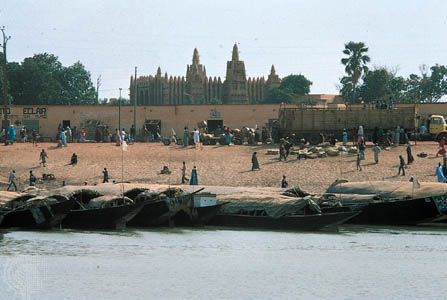
People living along the Niger River rely on the waterway as a fundamental resource for their livelihoods, economic stability, and daily sustenance.
Agriculture and Irrigation
The river valley serves as a vital agricultural corridor. Planners have long utilized the river to support large-scale irrigation, transforming vast tracts of land into productive areas for crops such as rice, cotton, sugarcane, and various vegetables. Significant irrigation schemes have been developed in regions like Bida and across the Niger and Benue basins, often supported by barrages and dams that manage water levels for farming.56
Fishing
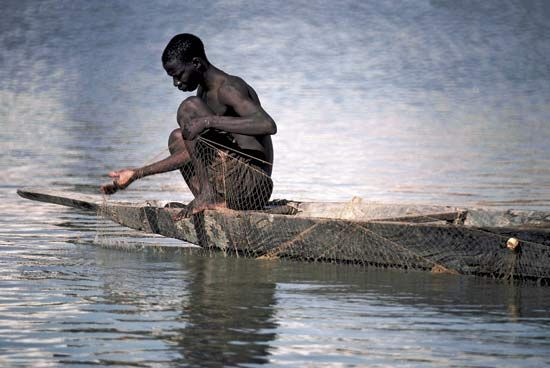
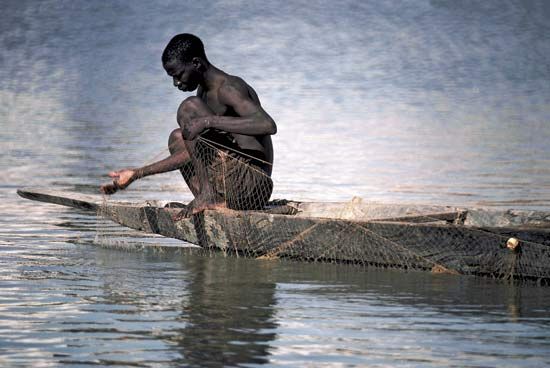
Fishing is a specialized and essential occupation for many ethnic groups along the river, including the Bozo, Somono, Sorko, Kede, and Kakanda. This activity is particularly crucial during the dry season when coastal fish catches are at their lowest. However, this economic pillar faces threats; for instance, oil pollution in the Niger delta has devastated fish populations, severely undermining the economy of local communities like the Ijo.4
Transportation and Energy
The river acts as a major artery for commercial shipping, with large vessels navigating from the Atlantic Ocean to Onitsha year-round. Smaller craft utilize the river further upstream, depending on seasonal water levels. Additionally, the river is a critical source of hydroelectricity, with major installations like the Kainji Dam providing power and creating reservoirs that further support local fishing and irrigation efforts.5136
Sources
- Niger River - Physiography — Encyclopædia Britannica
- Niger — Encyclopædia Britannica
- Nigeria: Top Questions — Encyclopædia Britannica
- Niger River - Transportation — Encyclopædia Britannica
- Niger River - Irrigation — Encyclopædia Britannica
- Niger - Settlement patterns — Encyclopædia Britannica
- Niger Dams Project — Encyclopædia Britannica
- Kainji Lake — Encyclopædia Britannica
- Niger River - Plant and animal life — Encyclopædia Britannica
- Niger River - Hydrology of Niger River — Encyclopædia Britannica
- Mali - Drainage and soils — Encyclopædia Britannica
- Nigeria - Drainage — Encyclopædia Britannica
- Niger River - People and economy — Encyclopædia Britannica
Published on · 4 min read