Nothosaurus
Nothosaurus is a genus of extinct marine reptiles that lived during the Triassic Period, approximately 251 million to 200 million years ago. Fossils of these…
What is Nothosaurus?
Nothosaurus is a genus of extinct marine reptiles that lived during the Triassic Period, approximately 251 million to 200 million years ago. Fossils of these creatures have been discovered across Europe, North Africa, and parts of Asia.1
Physically, Nothosaurus featured a slender body, a long neck and tail, and elongated limbs. While they were aquatic, their limbs were less specialized for swimming compared to later sauropterygians like plesiosaurids. They moved through the water by undulating their bodies and using their limbs for propulsion. Their skulls were long and flat, equipped with numerous pointed teeth, and they possessed a closed palate that allowed them to breathe while feeding underwater. Like other sauropterygians, they evolved from terrestrial ancestors distantly related to lizards and snakes.12
How did Nothosaurus differ from plesiosaurs?
Nothosaurus and plesiosaurs are both sauropterygians, but they differ significantly in their aquatic adaptations and body structure.
Nothosaurus, which appeared during the Triassic Period, possessed limbs that were less specialized for swimming and more comparable to those of terrestrial reptiles, allowing them to retain considerable mobility on land. They moved through the water by undulating their bodies and paddling with their limbs.13
In contrast, plesiosaurs—which emerged later—were more fully adapted to life in the water. Their limbs were modified into long, narrow flippers with numerous joints, allowing them to “fly” through the water like penguins or sea lions3. While Nothosaurus had a long, slender body, plesiosaurs featured a broad, stout torso with an inflexible structure formed by expanded, interlocking ventral ribs. Additionally, plesiosaurs typically had shorter tails and, in many species, significantly longer, more flexible necks.3
What other marine reptiles lived during the Triassic Period?
Beyond the Nothosaurus, several other groups of marine reptiles inhabited the seas during the Triassic Period:
- Ichthyosaurs: These were the largest inhabitants of Triassic seas. Early forms were long-bodied, undulating swimmers, but by the Late Triassic, some lineages grew to exceed 13 meters (43 feet) in length. They were efficient hunters with powerful fins, paddle-like limbs, and large eyes, and they are known to have given birth to live young.45
- Placodonts: These reptiles, which lived during the Middle Triassic, were structurally similar to nothosaurs but more compact. They were specialized for a diet of mollusks, possessing broad, flat tooth plates for crushing shells. Some species, such as Henodus, evolved dermal armor that gave them a superficial resemblance to turtles.46
- Dinocephalosaurus: Living approximately 245 million years ago, this archosauromorph is notable for being one of the oldest known reptiles to give birth to live young.4
How did early reptiles transition from land to water?
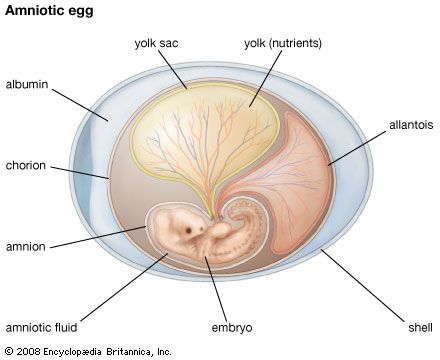
The transition of early reptiles from land to water was a complex evolutionary process that occurred multiple times throughout the Mesozoic Era3. While the earliest reptiles were terrestrial, having evolved amniotic eggs that allowed them to reproduce away from water, various lineages eventually returned to aquatic environments, necessitating significant physiological and anatomical adaptations.89
Key Adaptations for Aquatic Life
To survive in water, these reptiles underwent several critical changes:
- Locomotion: Terrestrial reptiles rely on limbs for propulsion, but aquatic reptiles shifted toward fishlike movement. Many, such as ichthyosaurs and early nothosaurs, utilized lateral undulations of the body and tail for propulsion. Over time, some groups evolved specialized flippers that functioned as rudders or paddles, allowing them to “fly” through the water.310
- Respiration: Because reptiles rely on lungs rather than gills, they had to develop mechanisms for holding their breath during long dives. Aquatic reptiles often exhibit intermittent breathing patterns, and some, like sea turtles, evolved complex lung structures to facilitate efficient gas exchange during their time at the surface.11
- Reproduction: A major barrier to a fully aquatic existence was the need to lay eggs on land. Some groups, such as ichthyosaurs, overcame this by evolving live birth, which allowed them to remain in the water throughout their entire life cycle.12
- Physiology: To prevent desiccation on land, reptiles evolved skin with a thick, wax-layered stratum corneum. While this was essential for terrestrial life, aquatic reptiles maintained these protective integumentary systems while adapting their body shapes—such as the development of streamlined forms or the interlocking rib “baskets” seen in plesiosaurs—to thrive in marine environments.910
Sources
- Nothosaurus — Encyclopædia Britannica
- Nothosaurus — Merriam-Webster
- sauropterygian — Encyclopædia Britannica
- Triassic Period - Fishes and marine reptiles — Encyclopædia Britannica
- ichthyosaur — Encyclopædia Britannica
- Jurassic Period - Marine life — Encyclopædia Britannica
- Jurassic Period - Vertebrates — Encyclopædia Britannica
- reptile - Swimming — Encyclopædia Britannica
- Triassic Period - Paleoclimate — Encyclopædia Britannica
- reptile - Historical development — Encyclopædia Britannica
- reptile - Fossil distribution — Encyclopædia Britannica
- Carboniferous Period - Amphibians and early reptiles — Encyclopædia Britannica
- Respiratory system - Reptiles — Encyclopædia Britannica
- fish - Sarcopterygii: fleshy-finned fishes — Encyclopædia Britannica
- A Journey Through Time Since the Precambrian - Triassic Period: 252.2 million to 201.3 million years ago — Encyclopædia Britannica
- muscle - Origins of the tetrapod limbs — Encyclopædia Britannica
- Integument - Reptiles — Encyclopædia Britannica
Published on · 3 min read