Oriole
The name "oriole" is derived from the New Latin oriolus, which traces back to the Medieval Latin oriol and the Old French oriol. Ultimately, the term…
What is the origin of the name ‘oriole’ and how does it relate to the bird’s appearance?
The name “oriole” is derived from the New Latin oriolus, which traces back to the Medieval Latin oriol and the Old French oriol. Ultimately, the term originates from the Latin word aureolus, meaning “golden-colored,” which is a diminutive of aureus, meaning “golden”.1
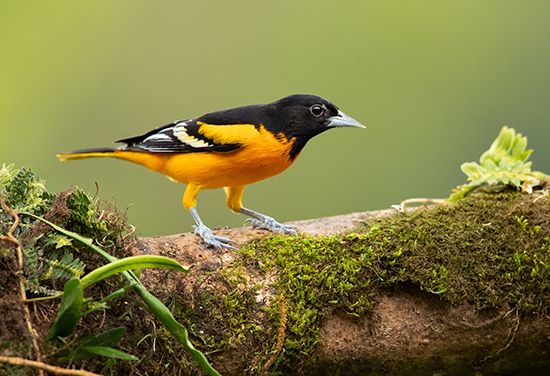
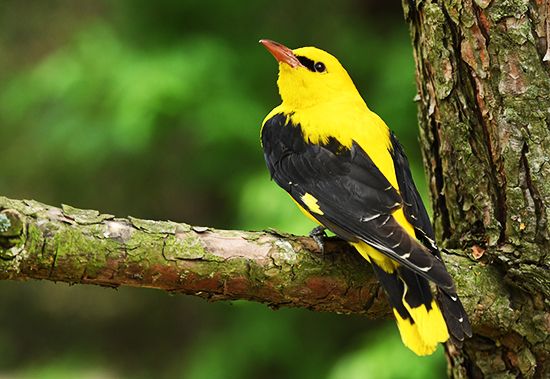
This etymology directly reflects the bird’s appearance. Males of both the Old World Oriolidae family and the New World Icteridae family are typically characterized by vibrant, high-contrast plumage, often featuring striking combinations of black and yellow or black and orange.21
Early American settlers applied the name “oriole” to New World species because their black-and-yellow patterns closely resembled those of the true orioles found in Europe, such as the golden oriole1. While these birds are often shy and difficult to spot in the treetops, their brilliant coloration serves as a hallmark of the group.2
Where are orioles typically found, and what are their preferred habitats?
Orioles are found across diverse regions, with their distribution divided between the Old World and the New World. Old World orioles, belonging to the family Oriolidae, primarily inhabit tropical and subtropical regions, though some species range as far as Central Asia and India. New World orioles, which are members of the family Icteridae, are found throughout North America, the United States, Mexico, and various tropical environments.14
Regarding their preferred habitats, these birds are typically found in woodlands and gardens, primarily in warm regions. They are generally shy and tend to remain high in the treetops, making them difficult to spot despite their often vibrant plumage. While they are primarily insect eaters, many species also consume significant amounts of fruit, with some, such as the yellow oriole of northern Australia, being strictly fruit eaters.1
What are some interesting cultural or historical references to orioles in literature or folklore?
While orioles are frequently celebrated in nature writing and birding culture, specific historical or folklore references are limited in the provided records. However, one notable cultural connection exists in the naming of the Baltimore oriole.
The bird’s common name is derived from George Calvert, the first Lord Baltimore, whose family coat of arms featured the black and gold colors that characterize the male of the species. This naming convention highlights the historical practice of associating the natural world with the heraldry and lineage of prominent figures during the colonial era.1
Beyond this, the general cultural significance of the oriole is largely tied to its aesthetic appeal. Early American settlers, struck by the vibrant plumage of New World species, applied the name “oriole” to them because their striking black-and-yellow patterns reminded them of the golden oriole of Europe, bridging a symbolic connection between the avian life of the Old and New Worlds.2
What are some of the most common species of orioles, and how do they differ?
Orioles are divided into two distinct groups: the Old World family Oriolidae and the New World family Icteridae. While they share similar names due to their striking black-and-yellow or orange plumage, they are biologically separate groups of perching birds.1
Old World Orioles (Oriolus)
These birds are primarily found in tropical and subtropical regions. Key species include:
- Golden oriole: The only European species, characterized by yellow plumage, dark eye marks, and black wings.1
- Maroon oriole: Found from the Himalayas to Indochina, this species is notable for its glowing crimson coloring rather than the typical yellow.1
- Yellow oriole: Native to northern Australia, this species is distinct for being a strict fruit eater.1
New World Orioles (Icterus)
These birds are found throughout the Americas and were named by settlers who noted their resemblance to European orioles. Common species include:1
- Baltimore oriole: A well-known North American species featuring black, white, and golden-orange feathers.1
- Bullock’s oriole: A western North American relative of the Baltimore oriole.1
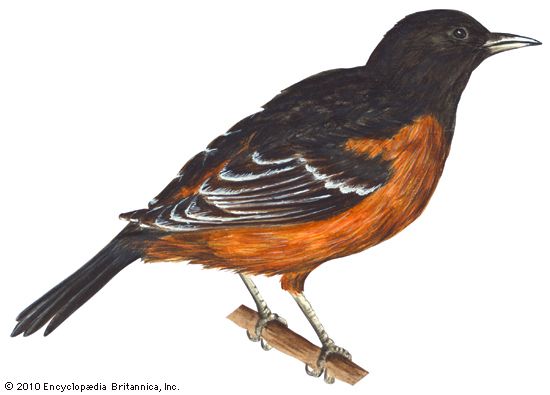
- Orchard oriole: Distinguished by its black and chestnut coloration.1
- Troupial: A tropical icterid known for its unique appearance.14
Sources
- Oriole — Encyclopædia Britannica
- oriole — Merriam-Webster
- aureolus trout — Merriam-Webster
- Oriolidae — Merriam-Webster
- Baltimore oriole — Merriam-Webster
- northern oriole — Merriam-Webster
- Icteridae — Encyclopædia Britannica
Published on · 3 min read