How Long Did Dinosaurs Live?
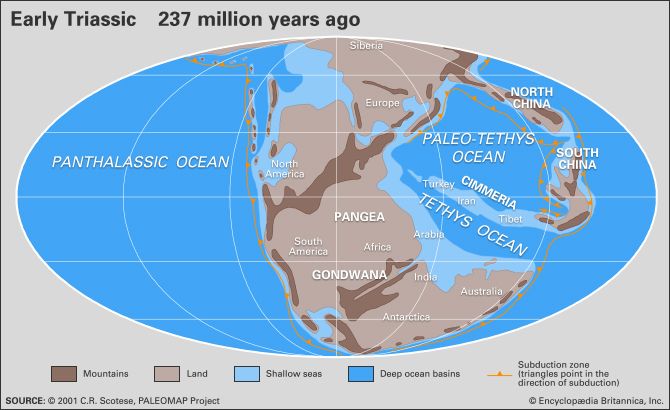
Dinosaurs first appeared roughly 245 million years ago, near the beginning of the Middle Triassic Epoch, and thrived worldwide for nearly 180 million years.
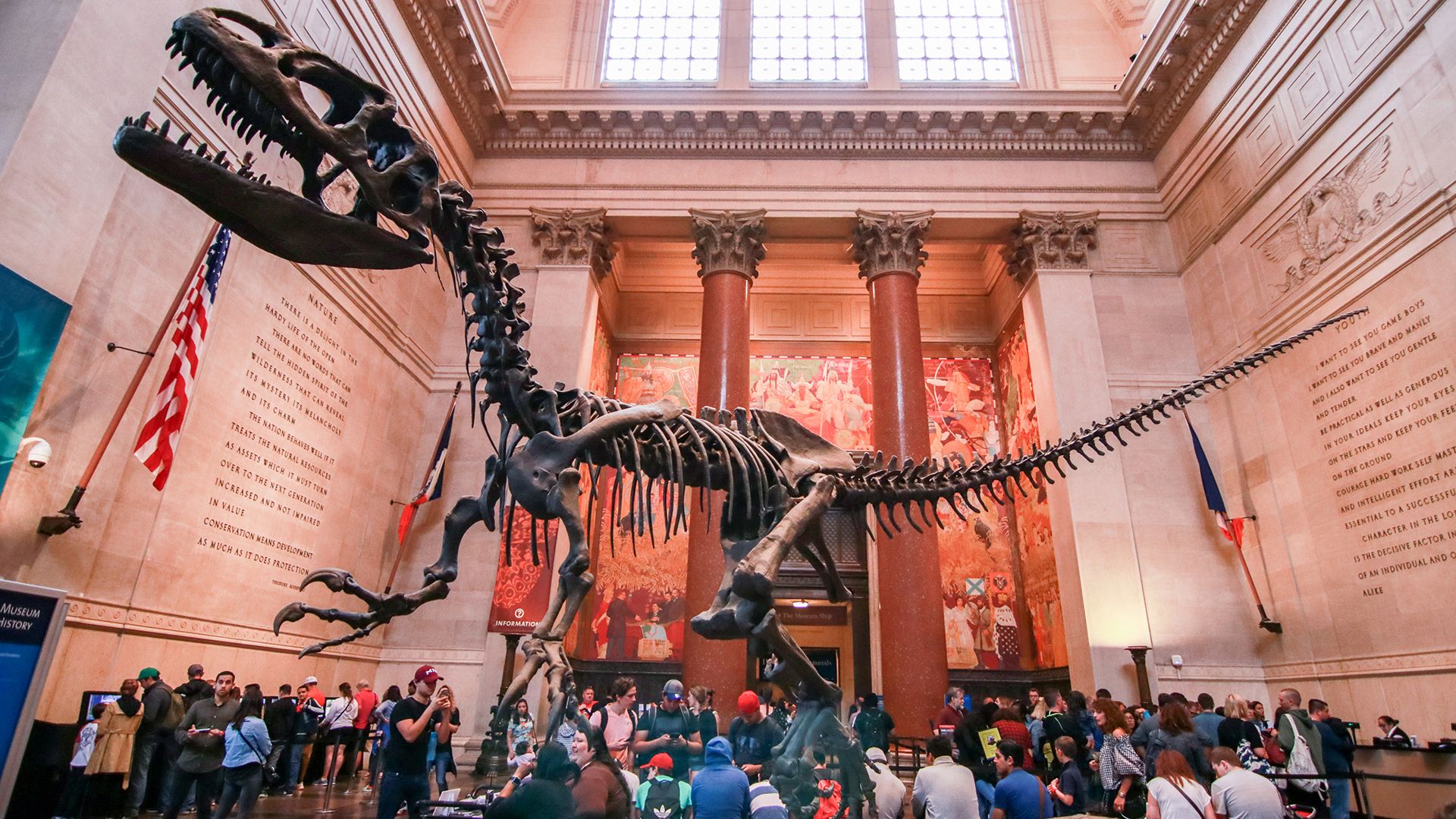
How long did dinosaurs live?
Dinosaurs first appeared roughly 245 million years ago, near the beginning of the Middle Triassic Epoch, and thrived worldwide for nearly 180 million years.1
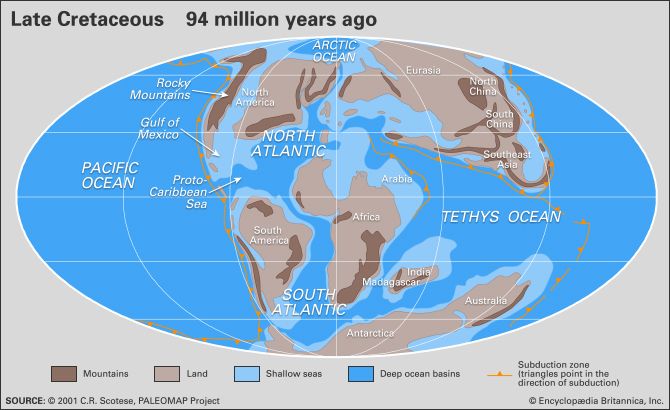
While most non-avian dinosaurs died out by the end of the Cretaceous Period, about 66 million years ago, it is important to note that they did not disappear entirely; one lineage evolved into birds approximately 155 million years ago and continues to exist today. Throughout the Mesozoic Era, dinosaur communities were in a state of constant change, with species evolving and being replaced by others. Because the fossil record is episodic, it is difficult to determine the precise duration of most individual dinosaur species or genera, as their existence is typically gauged only by approximate stratigraphic boundaries.12
How did scientists first discover that birds are related to dinosaurs?
Scientists first established the evolutionary link between birds and dinosaurs through the study of anatomical similarities and the discovery of transitional fossils. A pivotal moment occurred in 1970 when paleontologist John Ostrom identified that a specimen previously misclassified as a pterosaur was actually a member of the genus Archaeopteryx. By discerning structural parallels between Archaeopteryx and the predatory dinosaur Deinonychus—which he had discovered in 1964—Ostrom asserted in 1973 that birds evolved from theropod dinosaurs.7
These shared characteristics include a unique wrist joint that allows for sideways flexion, long arms, and a stiffened tail. Further evidence emerged in the 1990s with the discovery of remarkably preserved fossils in Liaoning province, China. These specimens, such as Sinosauropteryx, revealed that many non-avian dinosaurs possessed feathers or filamentous structures, confirming that feathers did not originate with flight but likely evolved for insulation or display before being adapted for avian locomotion.89
What caused the mass extinction event at the end of the Cretaceous Period?
The mass extinction at the end of the Cretaceous Period, occurring approximately 66 million years ago, resulted in the loss of roughly 80 percent of all animal species, including non-avian dinosaurs.1314
The Asteroid Theory
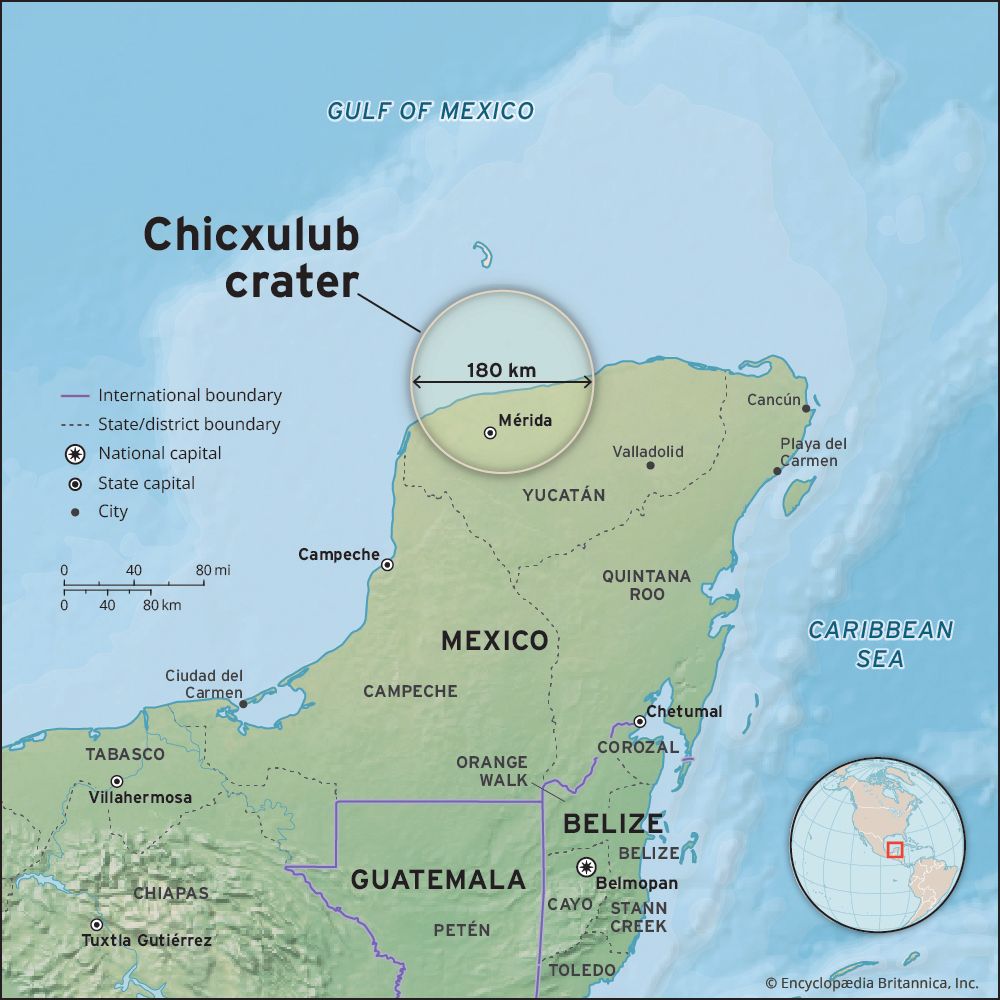
The most prominent explanation is the Alvarez theory, which posits that a massive asteroid—estimated to be 10 to 15 km (6 to 9 miles) in diameter—struck Earth near the Yucatán Peninsula in Mexico. This impact created the 180-km-wide Chicxulub crater and ejected vast quantities of debris into the atmosphere. The resulting global dust cloud blocked sunlight for months, halting photosynthesis and collapsing the food chain. Evidence for this includes a worldwide layer of iridium and the presence of tektites in the geological record.13151416
Terrestrial and Alternative Factors
Some scientists argue that terrestrial events also contributed to the extinction:
- Volcanism: The Deccan Traps in India produced massive lava flows, potentially causing a global greenhouse effect via carbon dioxide emissions.1314
- Tectonic Activity: Continental drift led to significant habitat changes that may have gradually weakened various species.1314
- Multiple Impacts: The discovery of other craters, such as the Boltysh crater, suggests the possibility of multiple bolide impacts.14
It is widely considered that a combination of these catastrophic and environmental factors likely drove the mass extinction.1314
What were the main differences between the Triassic, Jurassic, and Cretaceous periods?
The Mesozoic Era (252.2 million to 66 million years ago) is divided into three distinct periods, each characterized by unique geologic and biological developments.
Triassic Period (252.2–201.3 million years ago)
Following the largest mass extinction in Earth’s history, the Triassic began with most landmasses joined as the supercontinent Pangea. The climate was generally warm and dry. This period marked the recovery of life and the emergence of the first dinosaurs and the earliest mammals. By the end of the period, continental rifting began, and sea levels rose, allowing marine reptiles to colonize continental shelves.17218
Jurassic Period (201.3–145 million years ago)
The Jurassic is defined by the “Mesozoic Marine Revolution,” an evolutionary arms race between predators and prey that increased marine biodiversity. Significant groups like coccolithophores and foraminifera emerged, altering ocean geochemistry. On land, dinosaurs underwent a great radiation, with sauropods and stegosaurs becoming prominent.1920
Cretaceous Period (145–66 million years ago)
The Cretaceous saw the rise of angiosperms (flowering plants), which rapidly dominated land flora and transformed ecosystems through complex interactions with insects. Dinosaur communities continued to evolve, with duckbills, ceratopsians, and ankylosaurs becoming widespread. The period ended with a major mass extinction event that resulted in the demise of the dinosaurs.620
Sources
- A Journey Through Time Since the Precambrian - Cretaceous Period: 145 million to 66 million years ago — Encyclopædia Britannica
- Mesozoic Era — Encyclopædia Britannica
- dinosaur — Encyclopædia Britannica
- dinosaur - The K–T boundary event — Encyclopædia Britannica
- non-avian dinosaur — Merriam-Webster
- dinosaur - Faunal changes — Encyclopædia Britannica
- How Do We Know That Dinosaurs May Have Had Feathers? — Encyclopædia Britannica
- John Ostrom — Encyclopædia Britannica
- Did Dinosaurs Really Have Feathers? — Encyclopædia Britannica
- dinosaur - Theropoda — Encyclopædia Britannica
- Archaeopteryx — Encyclopædia Britannica
- dinosaur - Dinosaur descendants — Encyclopædia Britannica
- Cretaceous Period - Mass extinction — Encyclopædia Britannica
- How Big Was the Asteroid That Contributed to Dinosaur Extinction? — Encyclopædia Britannica
- K–T extinction — Encyclopædia Britannica
- Alvarez theory — Merriam-Webster
- A Journey Through Time Since the Precambrian - Triassic Period: 252.2 million to 201.3 million years ago — Encyclopædia Britannica
- Jurassic Period - Protists and invertebrates — Encyclopædia Britannica
- Triassic Period — Encyclopædia Britannica
- Plant - Evolution of seed plants and plant communities — Encyclopædia Britannica
- Triassic Period - Major subdivisions of the Triassic System — Encyclopædia Britannica
- dinosaur - Dinosaur ancestors — Encyclopædia Britannica
Published on · 4 min read