Pelagic Zone
Ocean currents are fundamental to the pelagic zone, acting as a primary mechanism for the transport of nutrients and the dispersal of organisms across the…
How do ocean currents affect the distribution of nutrients and organisms in the pelagic zone?
Ocean currents are fundamental to the pelagic zone, acting as a primary mechanism for the transport of nutrients and the dispersal of organisms across the global ocean.12
Nutrient Distribution
Currents facilitate the movement of nutrients both horizontally and vertically. A critical process is upwelling, where deep, nutrient-rich waters are brought to the surface. These nutrients, such as dissolved salts, are essential for phytoplankton to perform photosynthesis, which forms the base of the marine food web. Regions of consistent upwelling, such as those influenced by the California Current or Peru Current, are among the most biologically productive areas in the world. Conversely, thermohaline circulation slowly replaces surface waters with deeper, nutrient-laden water on a global scale.234561
Organism Dispersal
Currents dictate the range and distribution of pelagic species by transporting organisms, including larvae, over vast distances. Many marine animals, such as crustaceans and various fish, utilize a bipartite life cycle where their larval phase is spent in the plankton, making them highly dependent on currents for dispersal to new habitats. For example, the Gulf Stream is essential for transporting European eel larvae to their coastal destinations. Furthermore, currents can concentrate small organisms in specific areas, such as near estuaries or haloclines, creating dense food supplies for larger predators.7289
What is the pelagic zone, and how is it defined in oceanography?
The pelagic zone is the ecological realm that encompasses the entire ocean water column, representing the largest inhabited environment on Earth by volume. In oceanography, it is distinguished from the benthic environment, which refers to the ocean floor and its associated sediments.710
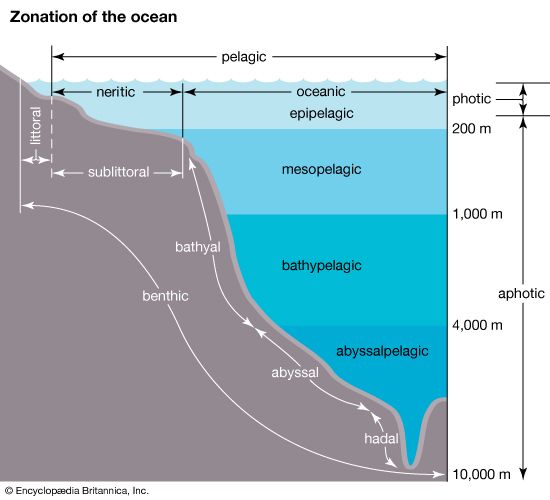
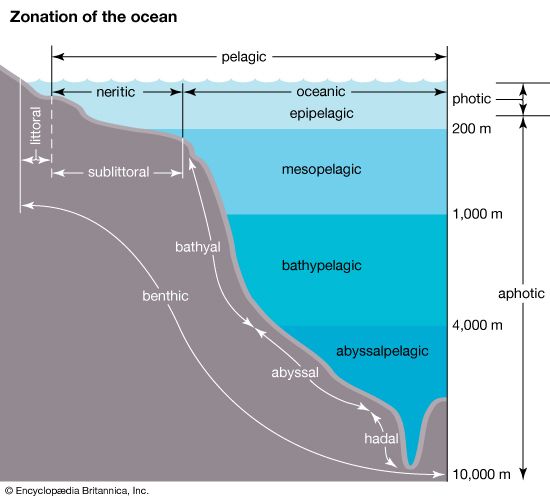
The pelagic zone is further defined by two primary provinces based on their proximity to land:
- Neritic province: The water column situated above the continental shelf, characterized by higher nutrient levels due to riverine runoff.10
- Oceanic province: All open waters extending beyond the continental shelf.10
Vertically, the pelagic zone is categorized into distinct layers based on depth and light penetration:
- Epipelagic zone: The uppermost layer where photosynthesis occurs, roughly corresponding to the photic zone.10
- Mesopelagic zone: Ranging from 200 to 1,000 metres.10
- Bathypelagic zone: Extending from 1,000 to 4,000 metres.10
- Abyssalpelagic zone: Encompassing the deepest waters from 4,000 metres down to the ocean trenches.10
What types of organisms are typically found in the pelagic zone?
Organisms in the pelagic zone are generally categorized into three main groups based on their movement and ecological roles:
- Phytoplankton: These are microscopic, photosynthetic organisms that inhabit the sunlit upper layers of the ocean. As the primary producers, they form the base of the marine food web by converting carbon dioxide and nutrients into energy using sunlight. Common examples include diatoms and dinoflagellates.711
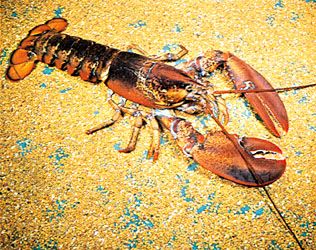
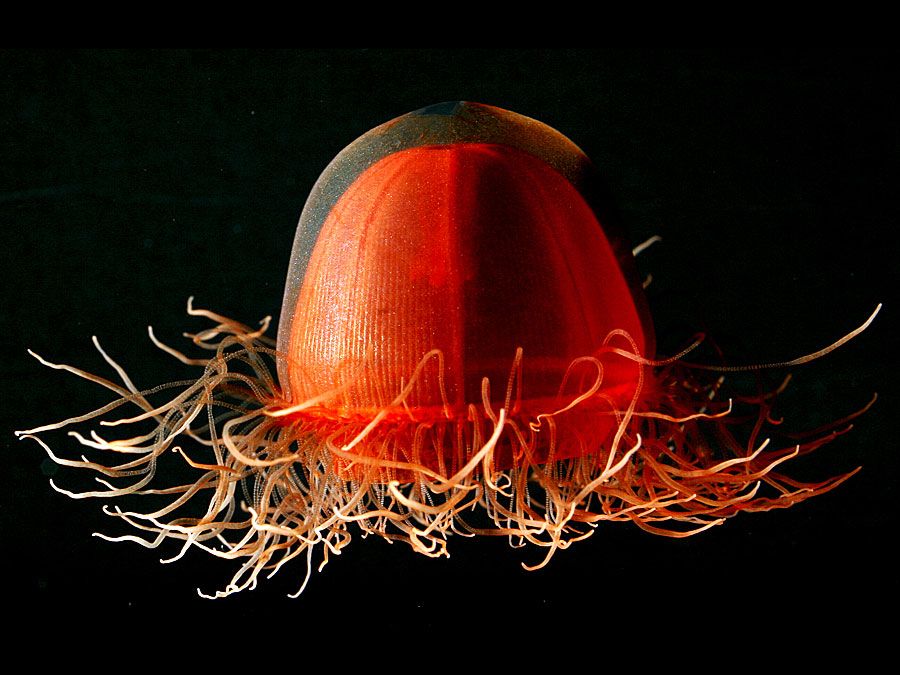
- Zooplankton: These are heterotrophic consumers that drift with water currents. They range from tiny microbes to large jellyfish. They are divided into holoplankton (which spend their entire lives as plankton, such as copepods and krill) and meroplankton (which spend only their larval stages as plankton, such as the larvae of crabs, lobsters, and fish).711
- Nekton: These are the free-swimming organisms capable of moving against currents. This group is dominated by bony and cartilaginous fishes, mollusks, and decapods, along with occasional marine mammals and reptiles.7
The abundance and diversity of these organisms generally decrease with increasing depth, though specialized life forms, including various eels and deep-sea fishes, inhabit deeper regions like the bathypelagic zone.712
How is the pelagic zone divided into different layers, and what are their characteristics?
The pelagic zone is defined as the entire water column of the ocean, representing the largest inhabited environment on Earth by volume. In oceanography, this environment is divided into two horizontal provinces based on their proximity to land: the neritic province (waters above the continental shelf) and the oceanic province (open waters beyond the shelf).1210
Vertically, the pelagic zone is categorized into four distinct layers based primarily on depth:
- Epipelagic zone: The uppermost layer, extending from the surface to roughly 200 metres. This region is equivalent to the photic zone, where sufficient sunlight penetrates to support photosynthesis.12
- Mesopelagic zone: The layer ranging from 200 to 1,000 metres deep.12
- Bathypelagic zone: The deep-ocean layer extending from 1,000 to 4,000 metres, inhabited by a wide variety of marine life including fishes and mollusks.712
- Abyssalpelagic zone: The deepest region, encompassing waters from 4,000 metres down to the recesses of deep-sea trenches.12
Sources
- Marine ecosystem - Ocean currents — Encyclopædia Britannica
- plankton - Plankton and biological productivity — Encyclopædia Britannica
- Marine ecosystem - Distribution and dispersal — Encyclopædia Britannica
- Marine ecosystem - Migrations of marine organisms — Encyclopædia Britannica
- Marine ecosystem - Upwelling — Encyclopædia Britannica
- thermohaline circulation — Encyclopædia Britannica
- pelagic zone — Encyclopædia Britannica
- How Do Ocean Currents Affect the Biosphere? — Encyclopædia Britannica
- Marine ecosystem - The pelagic food chain — Encyclopædia Britannica
- Marine ecosystem - Geography, oceanography, and topography — Encyclopædia Britannica
- Marine ecosystem - Plankton — Encyclopædia Britannica
- bathypelagic zone — Encyclopædia Britannica
- Marine ecosystem - Links between the pelagic environments and the benthos — Encyclopædia Britannica
Published on · 3 min read