Pepper
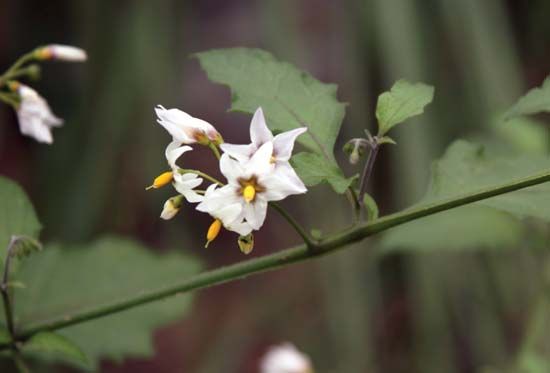
The genus Capsicum, which belongs to the nightshade family (Solanaceae), includes five primary species of domesticated peppers. It is important to note that…
What are the main species of pepper plants in the genus Capsicum?
The genus Capsicum, which belongs to the nightshade family (Solanaceae), includes five primary species of domesticated peppers. It is important to note that these are distinct from black pepper (Piper nigrum), which belongs to an entirely different plant family and genus.123
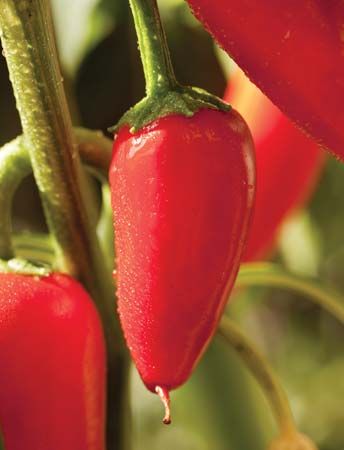
The five main domesticated species of Capsicum are:
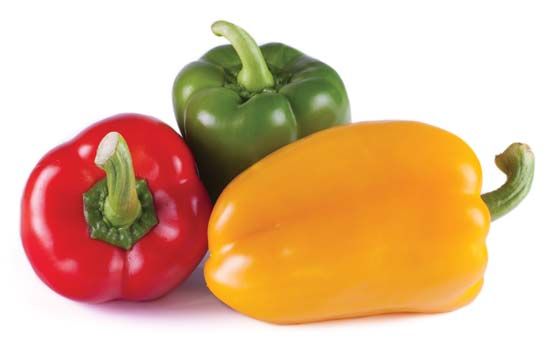
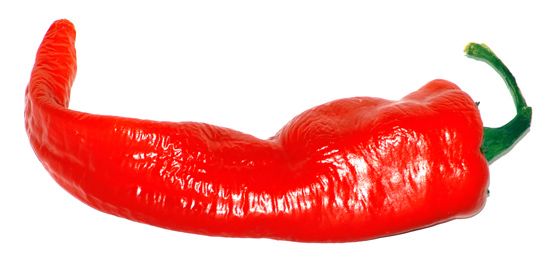
- Capsicum annuum: The most economically important species, encompassing a vast array of cultivars including bell peppers, cayenne, jalapeño, serrano, and those used to produce paprika.124
- Capsicum baccatum: Commonly known as Peruvian peppers.2
- Capsicum chinense: A species known for some of the world’s hottest peppers, including the habanero, the ghost chili, and the Carolina reaper.12
- Capsicum frutescens: Includes various hot peppers, such as the tabasco cultivar.12
- Capsicum pubescens: Often referred to as tree peppers.2
While the genus originated in South America, many of these species were independently domesticated by Indigenous peoples across Central and South America, with C. annuum specifically traced to Mexico.124
How did peppers originate and spread around the world?
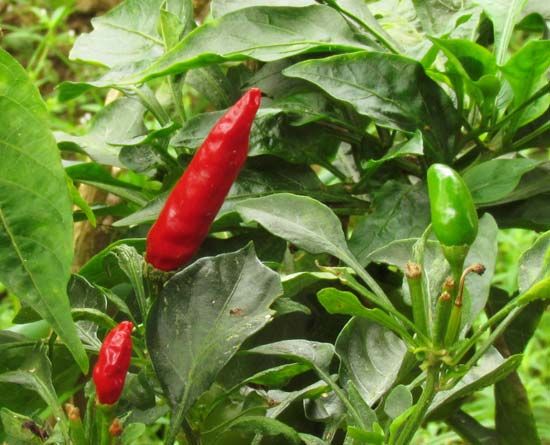
Peppers in the genus Capsicum are native to the tropical regions of the Americas. Long before human intervention, the plants were dispersed by birds, which are unaffected by the chemical capsaicin that gives peppers their heat; the seeds pass unharmed through avian digestive systems and are excreted in new locations.152
Human domestication began thousands of years ago, with archaeological evidence showing that Indigenous peoples in present-day Mexico domesticated Capsicum annuum approximately 6,000–7,000 years ago, while other species were independently cultivated by Native peoples throughout Central and South America.12
The global spread of peppers was accelerated by the Columbian Exchange. Christopher Columbus is credited with introducing pepper seeds to Spain in 1493. Initially mistaken for a form of black pepper, these plants spread rapidly throughout Europe, Asia, and Africa, eventually becoming integral ingredients in cuisines worldwide.152
How are peppers used in various cuisines and cultures around the world?
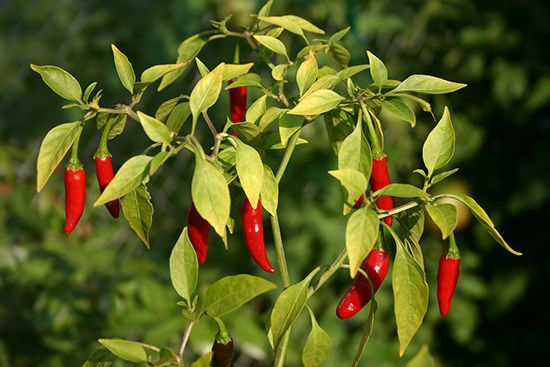
Peppers in the genus Capsicum are versatile ingredients that have become essential to culinary traditions worldwide. Their uses vary significantly based on the species, the level of heat provided by capsaicin, and regional cultural preferences.16
Culinary Applications
- Fresh and Dried: Many peppers are consumed fresh or dried to add flavor and heat to dishes. They are foundational in creating curry, barbecue sauces, and various spicy condiments.16
- Spices and Powders: Dried peppers are frequently ground into powders. In culinary circles, “chili powder” often refers to a blend of ground peppers and other spices, while “chile powder” typically denotes pure ground dried peppers.7
- Preservation: Peppers are commonly pickled or used to create chili sauce, a staple in many global cuisines.67
- Vegetable Use: Mild varieties, such as bell peppers, are widely used as vegetables in salads, stir-fries, and cooked dishes.6
Cultural Significance
The use of peppers is deeply embedded in regional identities. In the United States, cayenne is a hallmark of Creole and Cajun cooking. In Mexico and the southwestern United States, peppers are central to authentic dishes like chile relleno and enchiladas. Furthermore, peppers are vital to the flavor profiles of many cuisines across Italy, China, and Southeast Asia.87
How is the heat of a pepper measured on the Scoville scale?
The Scoville scale is a system developed in the early 1900s by American pharmacist Wilbur Scoville to quantify the heat of chili peppers based on their concentration of capsaicin, the chemical responsible for their spiciness.1011
To determine a pepper’s rating, researchers follow this process:
- Extraction: A precise amount of dried, ground pepper is mixed with alcohol to extract the capsaicinoids.1011
- Dilution: The resulting spicy solution is methodically diluted with sugar water.1011
- Testing: A panel of trained testers tastes the solution at various levels of dilution. The process continues until the testers can no longer perceive any heat.1011
The number of dilutions required to reach this point determines the Scoville Heat Units (SHU). Because this method relies on human sensory perception, it is inherently subjective and can be influenced by sensory fatigue or individual sensitivity. Despite this, the scale remains a standard tool for comparing the relative heat of different cultivars.10
We could dive deeper into the specific SHU ratings of various peppers or discuss how modern laboratory methods compare to the traditional Scoville test.
Sources
- chili pepper — Encyclopædia Britannica
- black pepper — Encyclopædia Britannica
- Solanales - Pepper — Encyclopædia Britannica
- Capsicum annuum — Encyclopædia Britannica
- Columbian Exchange - Plants — Encyclopædia Britannica
- Pepper — Encyclopædia Britannica
- cayenne pepper — Encyclopædia Britannica
- food: Top Questions — Encyclopædia Britannica
- Where In the World to Use 'Chili,' 'Chilli,' and 'Chile' — Merriam-Webster
- Scoville scale — Encyclopædia Britannica
- Scoville scale: Top Questions — Encyclopædia Britannica
Published on · 4 min read