Phillipsia
Phillipsia is a genus of trilobites, which were an extinct group of aquatic arthropods. These fossils are uncommonly found in Carboniferous and Permian…
What is Phillipsia?
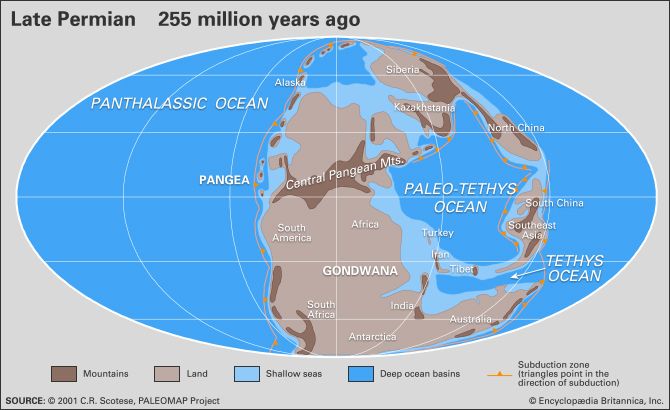
Phillipsia is a genus of trilobites, which were an extinct group of aquatic arthropods. These fossils are uncommonly found in Carboniferous and Permian rocks, dating back approximately 251 million to 359 million years, across regions including Europe, North America, and the Far East.1
As one of the final known trilobite genera, Phillipsia is distinguished by a relatively large head and a large posterior region. Additionally, some specimens exhibit an unusual development of small surface nodes.1
What are trilobites?
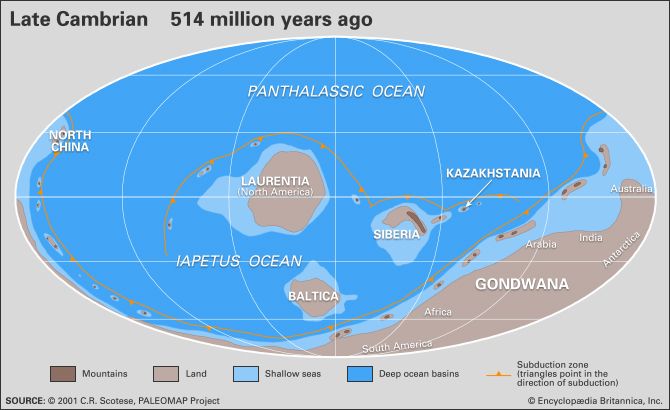
Trilobites are a group of extinct, exclusively marine arthropods characterized by a distinctive three-lobed, three-segmented body structure. They first appeared approximately 521 million years ago during the Cambrian Period, where they dominated ancient seas before eventually declining and going extinct by the end of the Permian Period.3
Their anatomy consisted of an exoskeleton made of chitin, which they shed to grow, leaving behind the fossils commonly found today. The body was divided into three regions: the cephalon (head), the thorax, and the pygidium (tail). Each segment featured jointed appendages, with the front ones serving as sensory or feeding organs. While many possessed compound eyes, some were eyeless. Depending on the species, they functioned as predators, scavengers, or plankton feeders, ranging significantly in size from small forms to large specimens like Paradoxides harlani.3
Why did trilobites go extinct?
Trilobites went extinct at the end of the Permian Period during the Permian-Triassic mass extinction event, which eliminated 85 to 95 percent of marine invertebrate species. While trilobites had been in a long-term decline prior to this crisis, the final extinction was part of a broader collapse of marine life.4
Scientists have proposed several potential causes for this event, though no single factor is universally accepted. Key theories include:
- Oceanic Anoxia: Evidence from pyritic shales suggests a widespread lack of dissolved oxygen in the oceans, likely caused by weakened oceanic circulation, which would have been devastating to bottom-dwelling organisms like trilobites.4
- Temperature Extremes: Studies of oxygen isotopes indicate significant fluctuations in ocean temperatures. Some hypotheses suggest that rising temperatures may have exceeded the tolerance of many invertebrates or disrupted the survival of photosynthetic symbionts within marine hosts.5
- Environmental Shifts: Other proposed factors include intense volcanic activity, changes in sea levels, and fluctuations in carbon dioxide levels.4
How do scientists use fossils to date rocks?
Scientists use fossils to date rocks primarily through the principle of faunal succession, which observes that different rock layers contain unique, predictable assemblages of fossils that reflect the specific time interval in which they were deposited.7
The primary tool for this process is the index fossil (or guide fossil). To be effective, an index fossil must meet several criteria:87
- Short temporal range: The species existed for a relatively brief period of geologic time.
- Wide distribution: It is found across large geographic areas.
- Abundance: It is common enough to be easily discovered.
- Distinctiveness: It is easily recognizable to prevent misidentification.
By identifying these fossils in separated rock outcrops, geologists can correlate strata, establishing that they formed during the same time period. While fossils provide a relative age, they are often calibrated using absolute dating—a technique that measures the decay of radioactive isotopes in minerals to determine a precise numerical age. This integration of biostratigraphy and geochronology allows scientists to build a consistent and high-resolution geologic time scale.87910
Sources
- Phillipsia — Encyclopædia Britannica
- Pezizales — Merriam-Webster
- trilobite — Encyclopædia Britannica
- Triassic Period - Permian-Triassic extinctions — Encyclopædia Britannica
- Permian Period - Temperature crises — Encyclopædia Britannica
- Cambrian Period - Extinction events — Encyclopædia Britannica
- index fossil — Encyclopædia Britannica
- dating - Principles and techniques — Encyclopædia Britannica
- dating - Distinctions between relative-age and absolute-age measurements — Encyclopædia Britannica
- Tertiary Period - Correlation of Tertiary strata — Encyclopædia Britannica
- Cambrian Period - Correlation of Cambrian strata — Encyclopædia Britannica
Published on · 2 min read