Polynya
Polynyas—semipermanent areas of open water within sea ice—play a critical role in regulating global climate and ocean dynamics through intense heat and mass…
How do polynyas influence global ocean circulation and climate?
Polynyas—semipermanent areas of open water within sea ice—play a critical role in regulating global climate and ocean dynamics through intense heat and mass exchange.12
During winter, these open areas facilitate significant turbulent heat transfer from the relatively warm ocean to the colder atmosphere. This process, which creates frost smoke through evaporation and condensation, influences atmospheric conditions hundreds of kilometers away.2
Furthermore, polynyas are vital to global ocean circulation. As new ice forms within these openings, it rejects brine, which increases the salt concentration of the surrounding water. This process drives deep ocean mixing and contributes to the ventilation of the deep ocean, a fundamental component of the global thermohaline circulation. By altering the density and salt content of polar waters, polynyas help maintain the movement of water masses that regulate the Earth’s climate.21
How are scientists studying polynyas, and what technologies are they using?
Scientists study polynyas to better understand their complex formation and their influence on the Earth’s atmosphere and ocean circulation. Because these areas are often remote and difficult to access, researchers rely on advanced remote sensing technologies to monitor them.1
Since the 1970s, satellites equipped with microwave sensors have been the primary tool for observing changes in polar ice cover. These instruments allow scientists to track the size, duration, and frequency of polynyas over time, providing data that helps test hypotheses regarding their formation. Researchers investigate various contributing factors, including:
- Atmospheric conditions: The role of persistent offshore winds, such as katabatic or foehn winds, and the impact of cyclones on ice distribution.1
- Oceanographic processes: The influence of upwelling deep, warmer water, as well as the effects of local gyres, eddies, and surface currents.1
By integrating satellite observations with these environmental variables, scientists continue to refine their understanding of how these “inland seas” of open water function within the broader climate system.1
How do polynyas affect local marine ecosystems and wildlife?
Polynyas serve as vital biological hotspots in polar regions, acting as essential feeding grounds and overwintering areas for a wide variety of marine life. By providing persistent access to open water, these areas support complex food webs that would otherwise be inaccessible in ice-covered environments.1
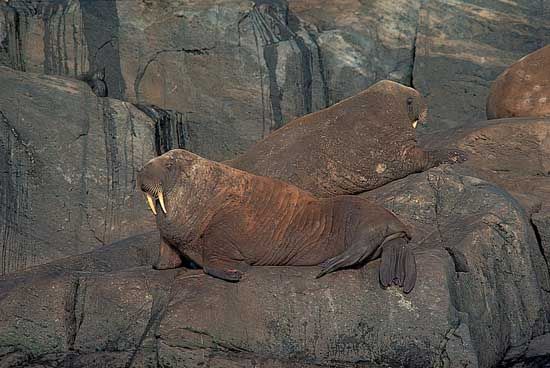
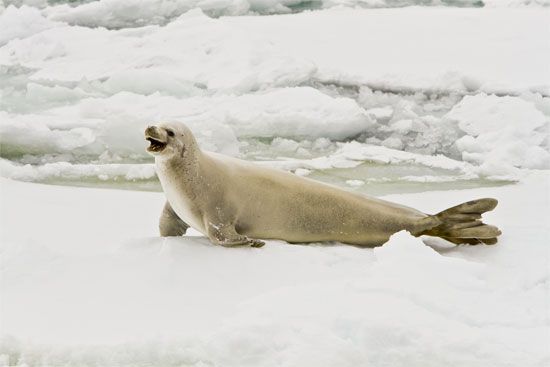
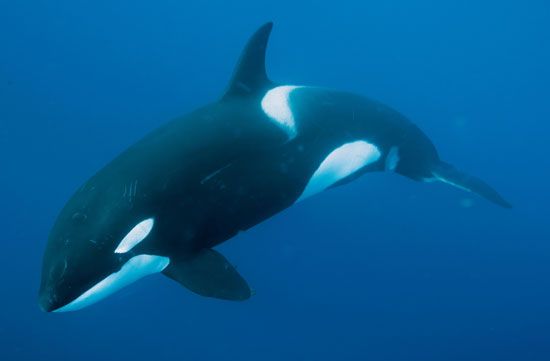
In the Arctic, polynyas are primary sources of plankton, krill, and cod, which form the foundation of the local ecosystem. These resources sustain large colonies of seabirds—such as murres, kittiwakes, black guillemots, and Ross’s gulls—that breed nearby and rely on these openings for winter feeding. Furthermore, marine mammals including walruses, seals, whales, and polar bears depend on these polynyas to survive the harsh winter months.13
Similarly, Antarctic polynyas support diverse populations of plankton, krill, squid, fish—such as the Antarctic cod—as well as seals and whales. These regions are critical for maintaining the biodiversity of the polar ocean by offering refuge and sustenance in an otherwise frozen landscape.1
What are some of the most well-known polynya regions in the world?
Polynyas are semipermanent areas of open water within sea ice, categorized primarily as coastal or open-ocean types. Several notable regions are recognized for these phenomena:
- North Water Polynya: Located at the northern end of Baffin Bay on the Greenland coast, this is one of the largest Arctic polynyas. Centered on Smith Sound, it covers an area of approximately 85,000 square kilometers (33,000 square miles).1
- Weddell Polynya: Found in the Weddell Sea of Antarctica, this is a prime example of an open-ocean polynya. These are typically larger and longer-lasting than coastal variants, with some measured at 350 by 1,000 kilometers (215 by 620 miles).1
Coastal polynyas are also frequently observed off the coasts of Greenland and Antarctica, where they are primarily driven by persistent offshore winds, such as katabatic or foehn winds.1
Sources
- polynya — Encyclopædia Britannica
- sea ice - Interactions with the oceans , atmosphere , and climate — Encyclopædia Britannica
- Arctic - Marine fauna — Encyclopædia Britannica
- polar region — Encyclopædia Britannica
- Marine ecosystem - Upwelling — Encyclopædia Britannica
Published on · 3 min read