Weddell Sea
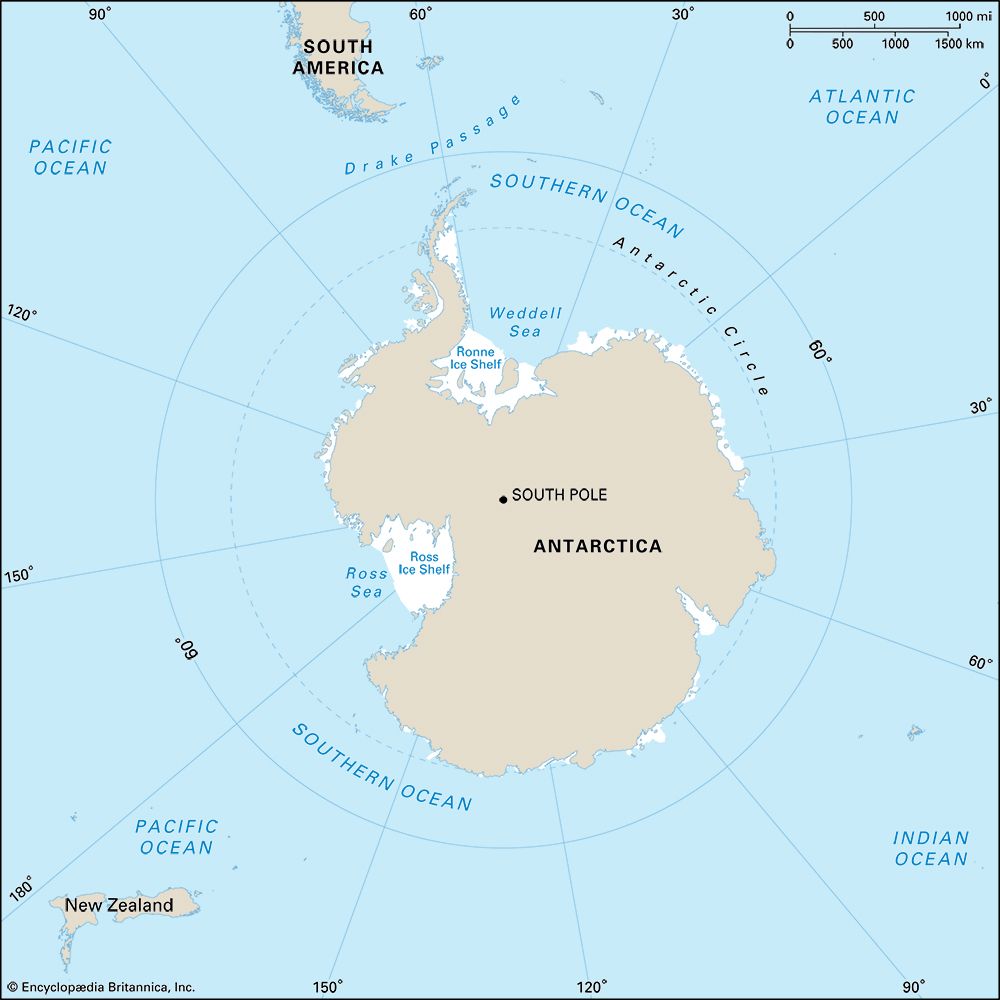
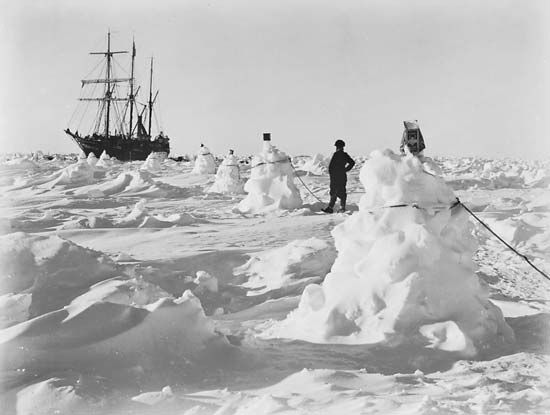
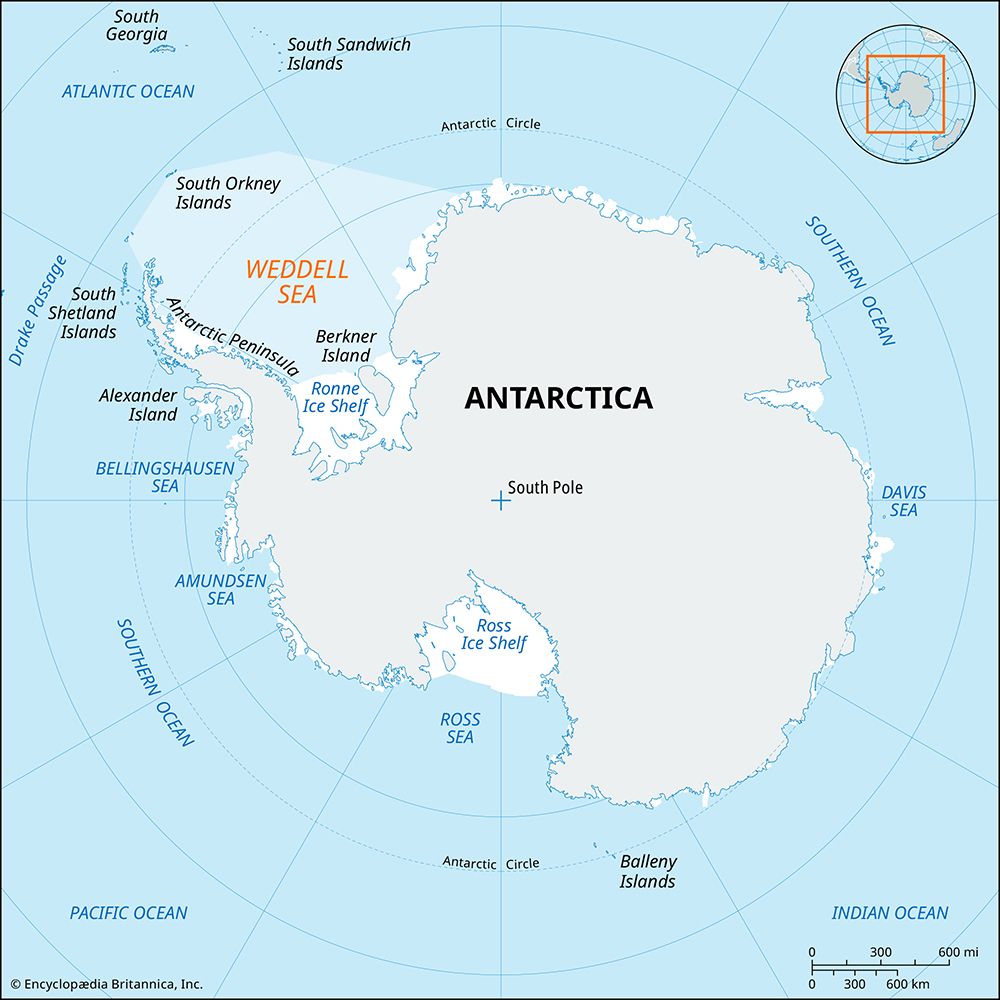
The Weddell Sea is a large embayment of the Southern Ocean located off the coast of Antarctica. While the provided search results do not detail the specific…
How was the Weddell Sea formed, and what are its unique physical characteristics?
The Weddell Sea is a large embayment of the Southern Ocean located off the coast of Antarctica. While the provided search results do not detail the specific tectonic formation of the sea basin itself, they highlight that the region’s unique physical characteristics are heavily influenced by the massive ice sheets of Antarctica.
Physical Characteristics
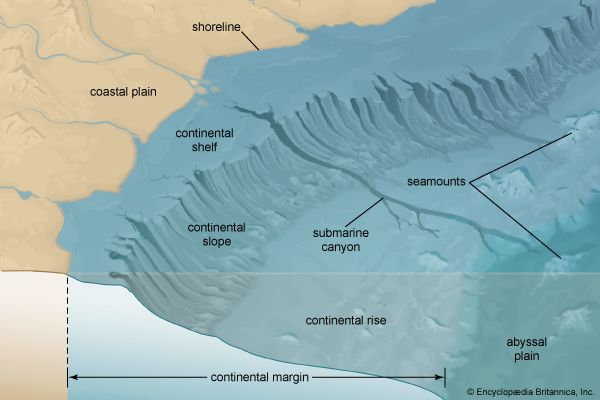
- Continental Margin: The continental shelf is unusually wide, extending up to 300 miles (480 km) along the southern edge. The break between the shelf and the continental slope occurs at a depth of approximately 1,600 feet (500 meters), a depth scientists believe may result from the immense weight of the ice load on the Antarctic crust.1
- Water Formation: The Weddell Sea is a critical site for the production of Antarctic Bottom Water. As sea ice forms, salt is excluded from the ice, increasing the salinity of the underlying water. This cold, dense, and salty water sinks to the deepest parts of the world’s oceans.2
- Circulation: The sea hosts the Weddell Gyre, a cyclonic circulation pattern that moves water in a clockwise direction.13
What types of marine life can be found in the Weddell Sea?
The Weddell Sea hosts a diverse array of marine life typical of the broader Antarctic region, supported by highly productive waters rich in upwelled nutrients.56
Marine Mammals
The sea is home to several species of pinnipeds and cetaceans:
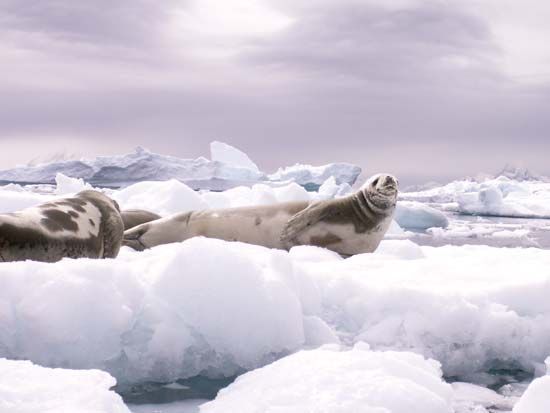
- Seals: The Weddell seal is particularly notable for its ability to survive under fast ice during winter by using its teeth to maintain breathing holes. Other species include the crabeater seal, the predatory leopard seal, and the Ross seal.5
- Whales: Various baleen whales, such as the blue whale, humpback whale, and minke whale, frequent these waters to feed on krill. Toothed whales, including the killer whale and sperm whale, are also present.5
Fish and Invertebrates
- Fish: The region contains specialized species such as the Notothenioidea (Antarctic perches), eel-pouts, and sea snails, which are highly adapted to cold, deep-sea environments.5
- Invertebrates: The sea floor supports a variety of organisms, including sponges, corals, mollusks, sea stars, and crustaceans.5
Birds
The area is frequented by various seabirds, including penguins and petrels, which rely on the abundant zooplankton and phytoplankton that form the foundation of the Antarctic food chain.56
How deep is the Weddell Sea, and how does its depth compare to other seas?
The Weddell Sea is characterized by an unusually deep continental shelf, where the break between the shelf and the continental slope occurs at a depth of approximately 1,600 feet (500 meters). This depth is notably greater than that of typical continental margins, a feature scientists attribute to the immense weight of the Antarctic ice load pressing down on the crust.1
In comparison to the broader Southern Ocean, which has an average depth of 10,728 feet (3,270 meters) and reaches maximum depths of 24,383 feet (7,432 meters) in features like the South Sandwich Trench, the Weddell Sea serves as a critical, deep-reaching embayment. While the shelf area is relatively shallow, the sea floor in other parts of the region drops sharply into deep channels, such as the one extending beneath the Filchner Ice Shelf. These deep areas are significant because they are primary sites for the formation of Antarctic Bottom Water, which sinks to the deepest parts of the world’s oceans.127
How do icebergs form in the Weddell Sea, and why are they significant?
Icebergs in the Weddell Sea originate from the calving of massive ice shelves, such as the Filchner and Ronne ice shelves, which fringe the Antarctic coastline. As ice flows seaward from the continental ice sheet, the exposed front of these shelves experiences stress from ocean currents, tides, and moving pack ice. These stresses cause the ice to fracture along existing crevasses, resulting in the release of large, flat “tabular” icebergs.89
These icebergs are significant for several reasons:
- Oceanic Stability: As they melt, icebergs release fresh water, which helps maintain the Southern Ocean pycnocline and keeps surface salinity at low levels.10
- Sediment Transport: Icebergs act as vehicles for ice-rafted debris, transporting rocks, pebbles, and organic matter far from their source, which provides scientists with a record of past glacial conditions.11
- Seabed Impact: When icebergs run aground, they can plow deep furrows into the seabed, significantly altering the local ecosystem by scraping it clear of life.11
- Navigation Hazards: Their presence and drift patterns, influenced by the Coriolis force, have historically posed major risks to maritime exploration and shipping.129
Sources
- Weddell Sea — Encyclopædia Britannica
- seawater - Density of seawater and pressure — Encyclopædia Britannica
- ocean current - The subpolar gyres — Encyclopædia Britannica
- paleoceanography — Encyclopædia Britannica
- Weddell seal — Encyclopædia Britannica
- Antarctica - Sea life — Encyclopædia Britannica
- Southern Ocean — Encyclopædia Britannica
- iceberg - Antarctic icebergs — Encyclopædia Britannica
- ocean current - Thermohaline circulation — Encyclopædia Britannica
- iceberg - Impact on ocean structure — Encyclopædia Britannica
- iceberg - Iceberg distribution and drift trajectories — Encyclopædia Britannica
- iceberg - Iceberg scour and sediment transport — Encyclopædia Britannica
Published on · 4 min read