Baffin Bay
Baffin Bay is a biologically rich environment that supports a diverse array of wildlife, ranging from microscopic algae to large marine mammals. The…
What are some of the major wildlife species that inhabit Baffin Bay and its surrounding areas?
Baffin Bay is a biologically rich environment that supports a diverse array of wildlife, ranging from microscopic algae to large marine mammals. The ecosystem is anchored by single-cell algae and small invertebrates, such as euphausiids, which serve as the foundation for the local food web.1
Marine Life
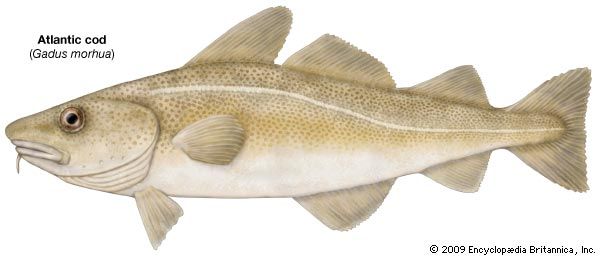
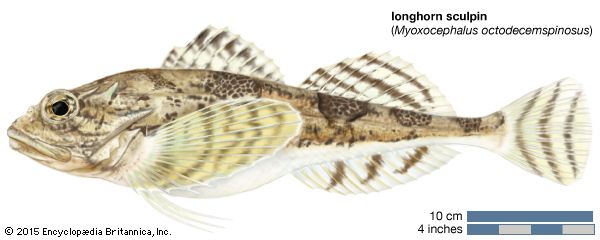
The bay’s fish population includes native species like the polar cod, capelin, Arctic flounder, and four-horned sculpin. Migrant species from Atlantic waters, such as cod, haddock, herring, halibut, and grenadier, are also present.1
Marine mammals are prominent in the region, including:
- Whales: Beluga, narwhal, killer whales, and the depleted bowhead whale.12
- Seals and Walruses: Ringed, bearded, and harp seals are common, while walruses inhabit the northern sectors.12
Terrestrial and Avian Species
The surrounding lands support various birds, including gulls, ducks, geese, eiders, snowy owls, snow buntings, ravens, gyrfalcons, and sea eagles. Terrestrial wildlife includes caribou and Arctic foxes, while polar bears are frequently found on the sea ice and coastal areas.12
How does the presence of sea ice affect the climate and ecosystem of Baffin Bay?
The presence of sea ice is a defining feature of Baffin Bay, profoundly influencing both its physical environment and its biological productivity.
Climate and Physical Dynamics
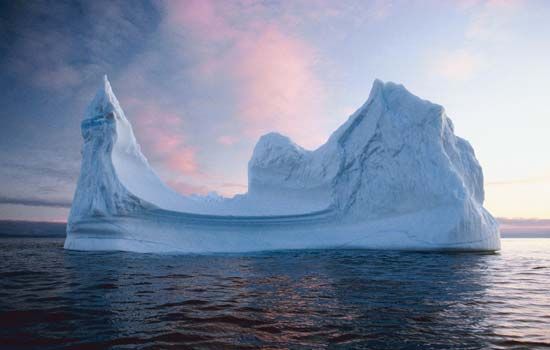
The bay’s climate is characterized by severe winters and heavy ice cover, which is formed by a combination of Arctic pack ice entering from the north, local sea ice, and icebergs from adjacent glaciers. This ice cover creates significant navigational hazards, which have historically limited large-scale commercial fishing in the region.1
Tidal forces further complicate the physical environment by creating unequal pressure on floating ice fields, leading to the constant churning and crushing of ice. Interestingly, the northern sector of the bay features a permanent ice-free area known as the “northern water,” which is believed to be maintained by the warming influence of the West Greenland Current.1
Ecological Significance
Sea ice serves as a vital habitat and a foundation for the bay’s ecosystem. The ice is porous and contains brine pockets that harbor complex communities of microorganisms, including algae, bacteria, and fungi. These ice-dwelling algae are a crucial food source for zooplankton and krill, and their release during the spring melt helps seed phytoplankton blooms, which support the entire marine food web.5
While the ice provides essential habitat, its presence and seasonal extent are critical to the survival of larger species, such as polar bears, which rely on the ice for hunting and movement. Reductions in ice cover can negatively impact the reproductive success and physical condition of these predators.16
How do ocean currents influence the waters of Baffin Bay?
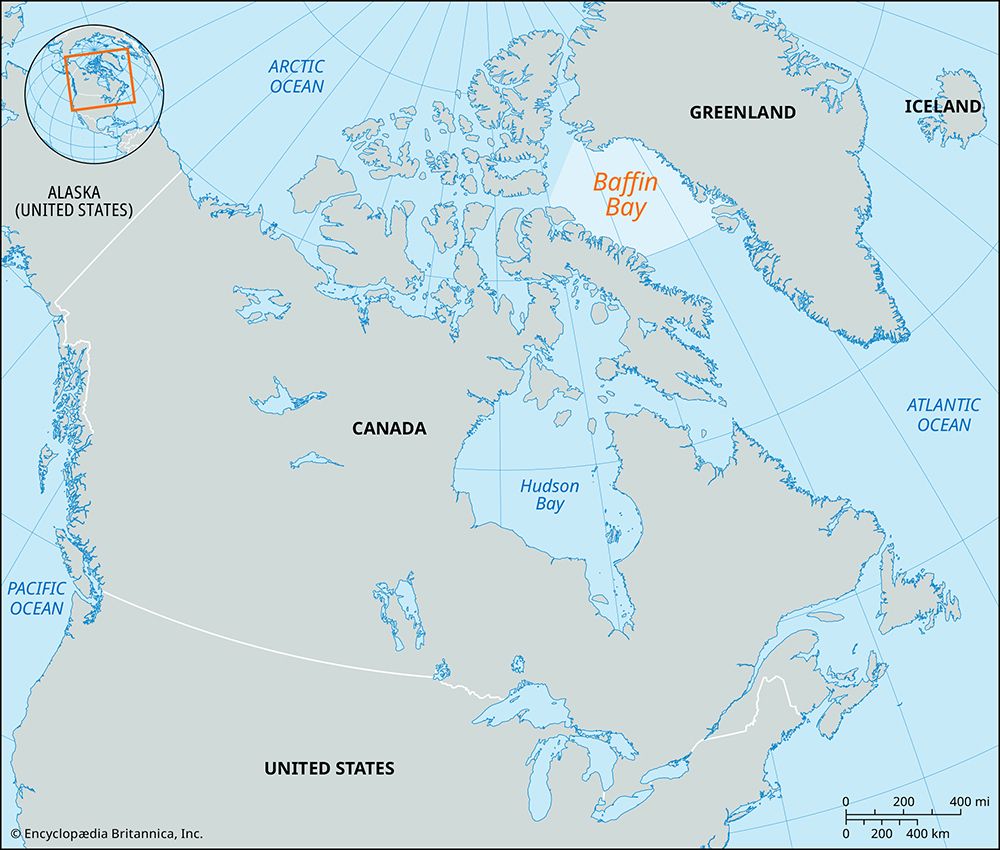
Ocean currents play a critical role in shaping the physical and biological environment of Baffin Bay. The bay’s circulation is primarily defined by two major systems:
- West Greenland Current: This current flows northward along the west coast of Greenland. It brings warmer North Atlantic waters into the region, which helps keep the west coast of Greenland relatively free of ice and is believed to contribute to the maintenance of the “northern water,” a permanent ice-free area in the northern sector of the bay.781
- Baffin Island Current: Moving southward along the west side of the bay, this current is a combination of the West Greenland Current inflow and cold water outflow from the Canadian Arctic Archipelago. It flows at a rate of approximately 11 miles (17 km) per day.9
These currents, combined with the dissolution of salts and the warming influence of southerly waters, create a nutrient-rich environment that supports a diverse marine ecosystem, including various species of algae, invertebrates, fish, and marine mammals.8
How has Baffin Bay been historically significant for human exploration and trade?
Historically, Baffin Bay has been significant primarily as a focal point in the centuries-long European search for the Northwest Passage, a potential maritime trade route to Asia.112
Exploration and Mapping
The bay was first explored by the English navigator William Baffin and captain Robert Bylot in 1616. Although Baffin successfully mapped the region and identified key straits—including Smith, Jones, and Lancaster sounds—his findings were met with skepticism for 200 years, and the very existence of the bay was periodically doubted until confirmed by later expeditions, such as that of John Ross in 1818.131
Trade and Economic Activity
While the bay itself remained largely unexploited for large-scale commercial trade due to its hostile environment and heavy sea ice, it served as a gateway to regional economic activities. By the late 19th century, areas like Cumberland Sound became noted for whaling stations. Today, the region remains home to Inuit communities who continue traditional hunting and fishing practices, while modern economic interests have shifted toward resource extraction, such as the mining of silver, lead, and zinc on Baffin Island.21314
Sources
- Baffin Bay — Encyclopædia Britannica
- Baffin Island — Encyclopædia Britannica
- What Is a Marine Mammal? — Encyclopædia Britannica
- Arctic - Marine fauna — Encyclopædia Britannica
- sea ice - The emerging impacts of recent changes to sea ice — Encyclopædia Britannica
- sea ice - Ice salinity , temperature, and ecological interactions — Encyclopædia Britannica
- Baffin Island Current — Encyclopædia Britannica
- Greenland Current — Encyclopædia Britannica
- Bering Sea and Strait - Hydrology — Encyclopædia Britannica
- Marine ecosystem - Ocean currents — Encyclopædia Britannica
- polynya — Encyclopædia Britannica
- Arctic - Early voyages of exploration — Encyclopædia Britannica
- William Baffin — Encyclopædia Britannica
- Cumberland Sound — Encyclopædia Britannica
- Arctic - The Russian Arctic — Encyclopædia Britannica
Published on · 4 min read