Procyonid
Procyonids are found exclusively in the Western Hemisphereprocyonid) are found exclusively in the Western Hemisphere. While they are most concentrated in…
Where are procyonids primarily found in the world?
Procyonids are found exclusively in the Western Hemisphereprocyonid) are found exclusively in the Western Hemisphere. While they are most concentrated in Central America, their distribution extends across various regions of the Americas:21
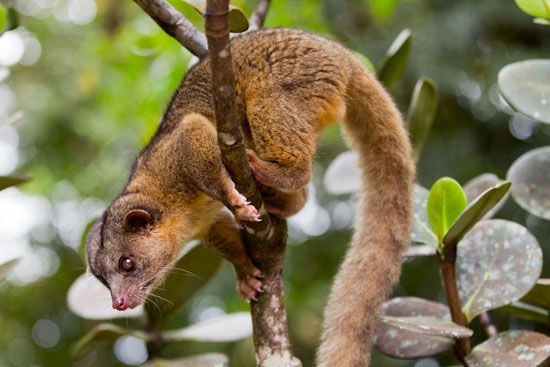
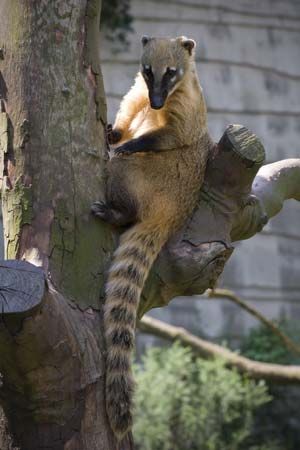
- Central and South America: This region serves as the primary habitat for the majority of the 18 species, including olingos, kinkajous, and various coati species.1
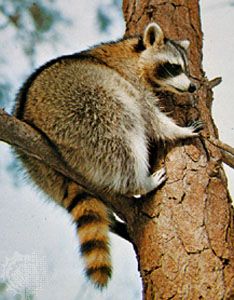
- North America: The raccoon is the only procyonid widely distributed north of the tropics, with some populations reaching high densities in urban areas of the United States and Canada. Additionally, the ringtail and certain coati species have ranges that extend into North America.1
These tree-climbing mammals evolved in the tropics and are closely related to bears.1
How do procyonids communicate with each other?
Procyonids utilize a variety of methods to communicate, though specific behaviors vary significantly between species depending on their social structure.
- Vocalizations: The kinkajou is known to be highly vocal, emitting a range of sounds including barks, screams, and softer noises described as “sneezes” to interact with others in their stable groups.3
- Physical Interaction: Within stable groups, such as those formed by kinkajous, members—particularly males—engage in grooming one another, which serves as a vital social behavior.3
- Chemical Signaling: Many carnivores use scent to communicate information about their presence or territory. For example, kinkajous possess anal glands that produce a distinct musky odor, which is released when the animal feels frightened or angered.43
- Social Dynamics: While some procyonids like coatis live in large bands of 5 to 40 individuals, others are more solitary. Because most procyonids—with the exception of the kinkajou—do not actively defend territories, their communication is often less focused on territorial marking and more on maintaining group cohesion or navigating social encounters within their shared environments.52
What role do procyonids play in their ecosystems?
Procyonids, which include raccoons, coatis, and kinkajous, play a significant role in their ecosystems primarily as opportunistic omnivores and seed dispersers.123
Their ecological contributions include:
- Seed Dispersal: By consuming a wide variety of fruits and seeds, procyonids help transport plant materials across their habitats. For instance, species like coatis and kinkajous are among the many animals that feed on the fruits of trees such as the almendro, assisting in the movement of seeds away from parent trees, which is a critical step for forest regeneration.3
- Dietary Versatility: As omnivores, they consume a diverse diet ranging from invertebrates and small animals to fruits, grains, and seeds. This broad diet allows them to occupy various niches and helps regulate populations of the small animals and insects they consume.12
- Ecosystem Integration: Their presence and foraging behaviors contribute to the complex interactions within tropical and temperate forests, where they often work alongside other species to facilitate plant growth and maintain ecological balance.3
How do procyonids differ from other carnivorous mammals?
Procyonids (family Procyonidae) are a group of tree-climbing mammals that, while classified within the order Carnivora, differ from many other carnivorous mammals in several key ways:
- Dietary Habits: Unlike highly carnivorous species such as cats or weasels, procyonids are primarily omnivorous. Their diet includes a mix of animal flesh, invertebrates, fruits, and grains.12
- Dentition: Because of their omnivorous diet, procyonids possess 40 teeth, a higher number than many meat-dependent carnivores, which often have 30–34. Furthermore, they lack the specialized shearing teeth known as carnassials, which are well-developed in more predatory carnivores for slicing meat.2
- Locomotion: Procyonids exhibit plantigrade locomotion, meaning they walk on the soles of their feet like bears, leaving clear imprints of the paw pad and all digits.1
- Physical Adaptations: They are highly adapted for climbing, featuring long, dexterous fingers and claws that are either nonretractile or semiretractile. Some species, such as the kinkajou, possess a prehensile tail, while others have semiprehensile tails used for balance.1
Sources
- list of procyonids — Encyclopædia Britannica
- procyonid — Encyclopædia Britannica
- coati — Encyclopædia Britannica
- Chemoreception - Territorial behavior — Encyclopædia Britannica
- kinkajou — Encyclopædia Britannica
- Hitching a ride — Encyclopædia Britannica
- carnivore - Form and function — Encyclopædia Britannica
- procyonid — Merriam-Webster
Published on · 3 min read