Gavial
The gavial (or gharial, Gavialis gangeticus) is a large, critically endangered crocodilian native to the river systems of South Asia, particularly in India…
What is a gavial and how does it differ from other crocodilians?
The gavial (or gharial, Gavialis gangeticus) is a large, critically endangered crocodilian native to the river systems of South Asia, particularly in India, Nepal, and Bangladesh.12
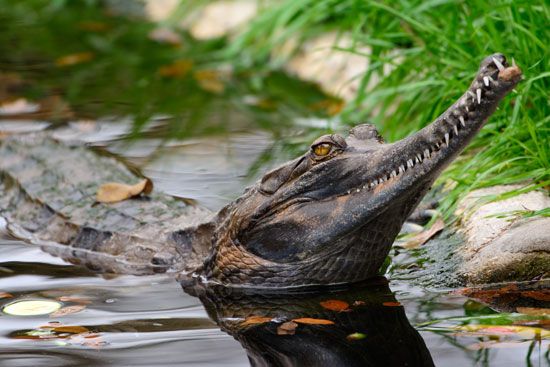
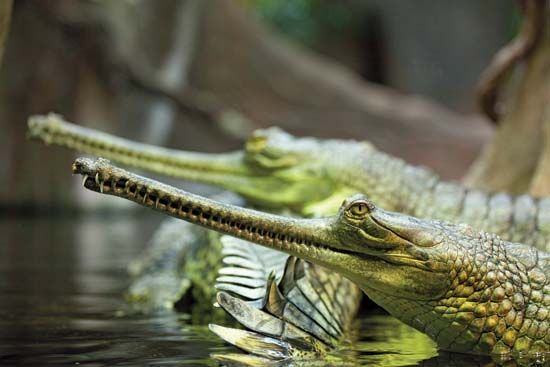
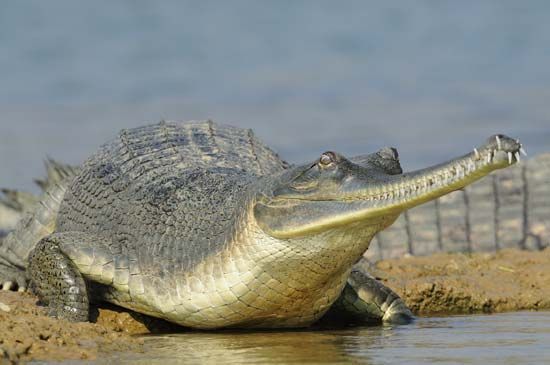
It is distinguished from other crocodilians by its exceptionally long, narrow snout, which is specialized for catching fish—its primary prey—by sweeping its sharp-toothed jaws sideways through the water. Adult males are further identified by a bulbous, pot-like growth on the tip of the snout called a ghara, which serves as a resonator for vocalizations and a visual display for attracting mates.21
While the gavial is often compared to the false gharial, the two are distinct species within the family Gavialidae. The false gharial has a thicker, more gradually tapering snout and lacks the male’s ghara structure. Additionally, the gavial possesses 110 interlocking teeth, significantly more than the false gharial. Unlike many other crocodilians, the gavial has smoother scales and is not known to attack humans.23
What are the unique physical characteristics of gavials, especially their snout?
The gavial, also known as the gharial, possesses highly specialized physical characteristics that distinguish it from other crocodilians.
The Unique Snout
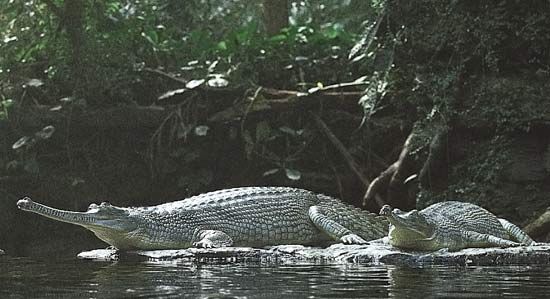
The most defining feature of the gavial is its exceptionally long, slender, and narrow snout. This specialized anatomy is perfectly adapted for its role as an aquatic ambush predator that feeds primarily on fish ambush predator that feeds primarily on fish. To capture prey, the gavial utilizes its sharp-toothed jaws, which it sweeps sideways through the water to snatch fish.31
The snout also houses a significant number of teeth; the gavial possesses 110 interlocking teeth, a count that exceeds that of the false gavial. Furthermore, in the family Gavialidae, the nasal bones are uniquely separated from the premaxillaries.35
The Ghara
Adult males are further distinguished by a hollow, bulbous growth at the tip of the snout known as a ghara. Named after an Indian mud pot, this structure serves two primary functions:31
- Acoustic Resonator: It likely amplifies the male’s vocalizations.31
- Visual Display: It acts as a signal to attract potential mates.31
What is the conservation status of gavials and what threats do they face?
The gavial (Gavialis gangeticus) is currently classified as a critically endangered species by the International Union for Conservation of Nature (IUCN). Population studies indicate that there are fewer than 1,000 adults remaining in the wild, with some estimates suggesting the number could be as low as 200 individuals.3
The species faces several severe threats to its survival:
- Habitat Loss and Modification: The construction of dams, barrages, and the interlinking of river channels have significantly altered water flow and destroyed critical nesting sites.34
- Human Activity and Pollution: Sandbars and riverbanks essential for nesting have been modified by human activity. Furthermore, water pollution from mining waste contaminates their environment.34
- Entanglement: Gavials frequently face the risk of accidental entanglement in fishing gear.34
- Exploitation: While direct hunting has largely ceased, the collection of eggs for use in traditional medicine remains a persistent issue.3
How do gavials hunt and what is their primary diet?
The gavial is an aquatic ambush predator that primarily hunts by lurking below the water’s surface. To detect prey, it utilizes specialized sensory organs located in its scales, which allow the animal to sense vibrations in the water and accurately gauge the position of its target before striking.3
When attacking, the gavial uses its long, slender, and sharp-toothed jaws to snap out at prey. A key hunting technique involves sweeping its jaws sideways through the water to snatch fish, which serve as the primary diet for adults.3
Dietary habits change as the animal matures:
- Young gavials: Primarily feed on insects, amphibians, and crustaceans.3
- Adults: Prefer fish, though they have also been observed scavenging on corpses in the Ganges River.3
Sources
- 10 Critically Endangered Animals of India - Gharial ( Gavialis gangeticus ) — Encyclopædia Britannica
- gharial — Merriam-Webster
- gavial — Encyclopædia Britannica
- false gharial — Encyclopædia Britannica
- crocodile - Annotated classification — Encyclopædia Britannica
Published on · 3 min read