River Dolphin
River dolphins have evolved several specialized adaptations to thrive in their freshwater environments, which are often murky and complex compared to open…
How have river dolphins adapted to their freshwater habitats?
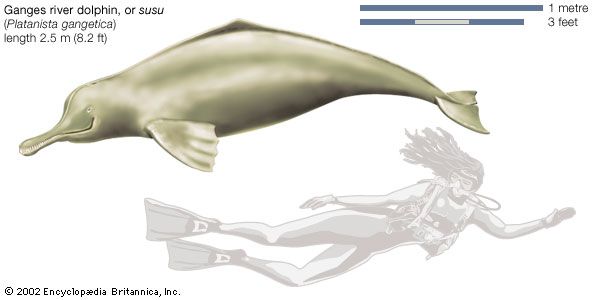
River dolphins have evolved several specialized adaptations to thrive in their freshwater environments, which are often murky and complex compared to open marine habitats.1
- Enhanced Sonar: Because many river dolphins inhabit turbid, muddy waters where visibility is poor, they have developed an exquisite sonar system for navigation and hunting. This echolocation is considered among the best of all cetaceans, allowing them to detect prey and obstacles with ease.12
- Sensory Adjustments: To compensate for low-visibility conditions, some species have significantly reduced eyesight. For example, the Ganges and Indus river dolphins have eyes that lack a lens and can only distinguish between light and dark. Conversely, they utilize sensitive snouts to probe river bottoms for fish and crustaceans1.13
- Physical Flexibility: Species like the Amazon river dolphin are extremely flexible, enabling them to navigate through submerged forest branches during seasonal flooding.1
What do river dolphins typically eat, and how do they hunt for food?
River dolphins primarily feed on a variety of aquatic organisms, including fish, crustaceans, shrimp, and mollusks.7
To locate and capture their prey, these dolphins rely on several specialized hunting behaviors:
- Bottom Probing: Because they spend much of their time near the riverbed, they use their long, sensitive snouts to probe the mud for hidden prey. Species such as the Ganges river dolphin often swim on their sides, trailing a flipper along the bottom to assist in this search.7
- Echolocation: In the often murky, turbid waters of their habitats, river dolphins utilize an exquisite sonar system to navigate and detect prey. This process, known as echolocation, involves emitting high-frequency sound pulses that reflect off objects, allowing the dolphins to identify and track food even when visibility is extremely poor.718
- Cooperative and Opportunistic Feeding: Some populations exhibit complex interactions with humans; for instance, certain Amazon river dolphins have been observed herding fish into fishermen’s nets, while others may raid nets to secure an easy meal.7
In which river systems around the world can river dolphins be found?
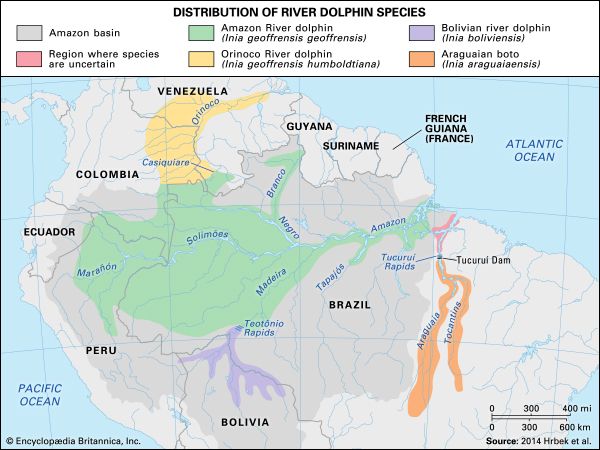
River dolphins are found in various river systems across South America and Asia, as well as in certain coastal waters. Their primary habitats include:
- South America: The Amazon river dolphin inhabits the Amazon and Orinoco river basins. The Araguaian boto is found in the Araguaia-Tocantins river system in Brazil, while the Bolivian river dolphin resides in remote streams of the Bolivian Amazon. Additionally, the La Plata river dolphin inhabits the coastal waters of Brazil, Uruguay, and Argentina.1
- Asia: The Ganges river dolphin is found in the Ganges, Brahmaputra, Karnaphuli, and Meghna rivers. The Indus river dolphin is restricted to the Indus River in Pakistan. The baiji was native to China’s Yangtze River, though it is now considered functionally extinct.1
- Africa: The Atlantic humpback dolphin inhabits rivers, estuaries, and nearshore waters along the African coast between Morocco and Angola.1
What are the main characteristics that distinguish river dolphins from other dolphin species?
River dolphins are distinguished from more familiar oceanic dolphins (family Delphinidae) by several key physical and behavioral characteristics:
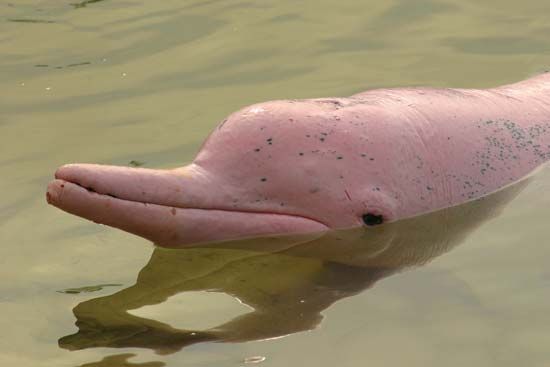
- Physical Appearance: River dolphins typically possess long, slender beaks and rounded foreheads, which contrast with the more streamlined, “silver bullet” appearance of many marine species.71
- Locomotion and Agility: Unlike oceanic dolphins, which are known for their speed and acrobatic leaps, river dolphins are generally less athletic. They are often described as corpulent but extremely flexible, allowing them to navigate complex environments like submerged forests.7
- Sensory Adaptations: Because they often inhabit murky, turbid river waters, river dolphins have evolved an exquisite sonar system for echolocation, which is considered among the best of all cetaceans. This system compensates for their small, often poorly developed eyes; some species, such as the Ganges and Indus river dolphins, even lack a functional lens.71
- Foraging Behavior: They spend much of their time at river bottoms, using their sensitive snouts to probe the mud for fish and crustaceans.7
Sources
- river dolphin — Encyclopædia Britannica
- dolphin: Top Questions — Encyclopædia Britannica
- A Dose of Dolphin-Induced Dopamine: 8 Species of Adorable Cetacean — Encyclopædia Britannica
- cetacean - Taste — Encyclopædia Britannica
- cetacean - Sight — Encyclopædia Britannica
- How intelligent are dolphins? — Encyclopædia Britannica
- river dolphin — Merriam-Webster
- sound reception - Echolocation in other mammals — Encyclopædia Britannica
- Echolocation — Encyclopædia Britannica
- porpoise — Encyclopædia Britannica
- dolphin — Encyclopædia Britannica
Published on · 3 min read