Ross Island
Ross Island is a volcanic formation in Antarctica located in the western Ross Sea. It was formed by four distinct volcanoes—Mount Erebus, Mount Terror, Mount…
How was Ross Island formed geologically, and what makes it unique in Antarctica?
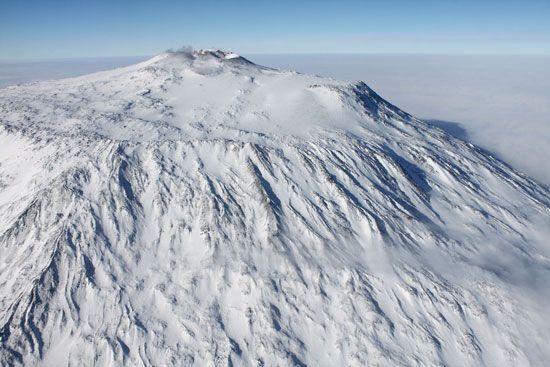
Ross Island is a volcanic formation in Antarctica located in the western Ross Sea. It was formed by four distinct volcanoes—Mount Erebus, Mount Terror, Mount Bird, and Mount Terra Nova—situated within a rift zone known as the Terror Rift, which is part of the West Antarctic Rift System. In this region, the Earth’s crust has thinned, allowing magma to rise through faults to the surface; Mount Erebus itself was likely formed by a hotspot.123
Ross Island is unique for several reasons:
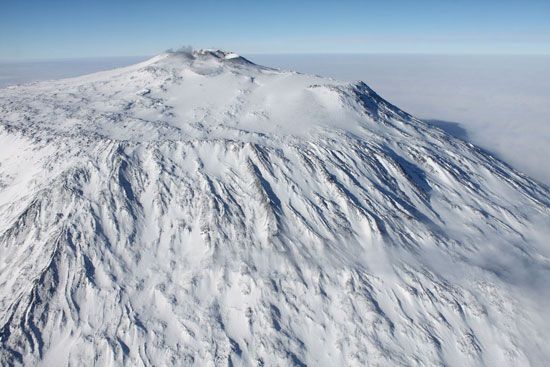
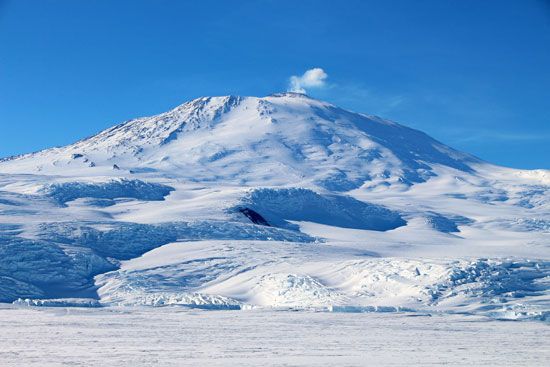
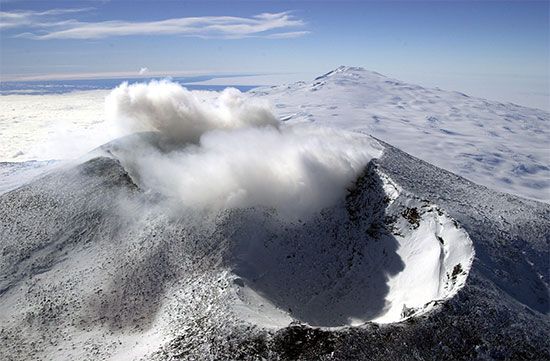
- Active Volcanism: It hosts Mount Erebus, the world’s southernmost active volcano, which is one of only a few globally to contain a persistent, active lava lake.3
- Scientific Significance: The island serves as a major hub for Antarctic research, housing the United States’ McMurdo Station and New Zealand’s Scott Base.13
- Historical Legacy: It contains sites of significant historical importance from early 20th-century expeditions, including camps established by Ernest Shackleton and Robert Falcon Scott.1
What scientific research stations are located on Ross Island, and what kind of studies do they conduct?
Ross Island is home to two primary research stations that serve as critical hubs for Antarctic operations and scientific inquiry:
- McMurdo Station: Operated by the National Science Foundation, this is the largest research station on the continent. It functions primarily as a logistics hub, facilitating the movement of supplies and personnel to other Antarctic locations. Beyond its logistical role, researchers at McMurdo conduct extensive studies in fields related to Earth, atmospheric, and environmental sciences.
- Scott Base: Located approximately one mile south of McMurdo Station, this facility is operated by New Zealand. While it functions as a distinct research base, it also collaborates with neighboring operations, notably through the use of wind turbines that provide electric power to the area.
These stations are situated on the Hut Point Peninsula, a site with a long history of exploration dating back to the early 20th-century expeditions of Ernest Shackleton and Robert Falcon Scott.
Where is Ross Island located in Antarctica, and what are its main geographical features?
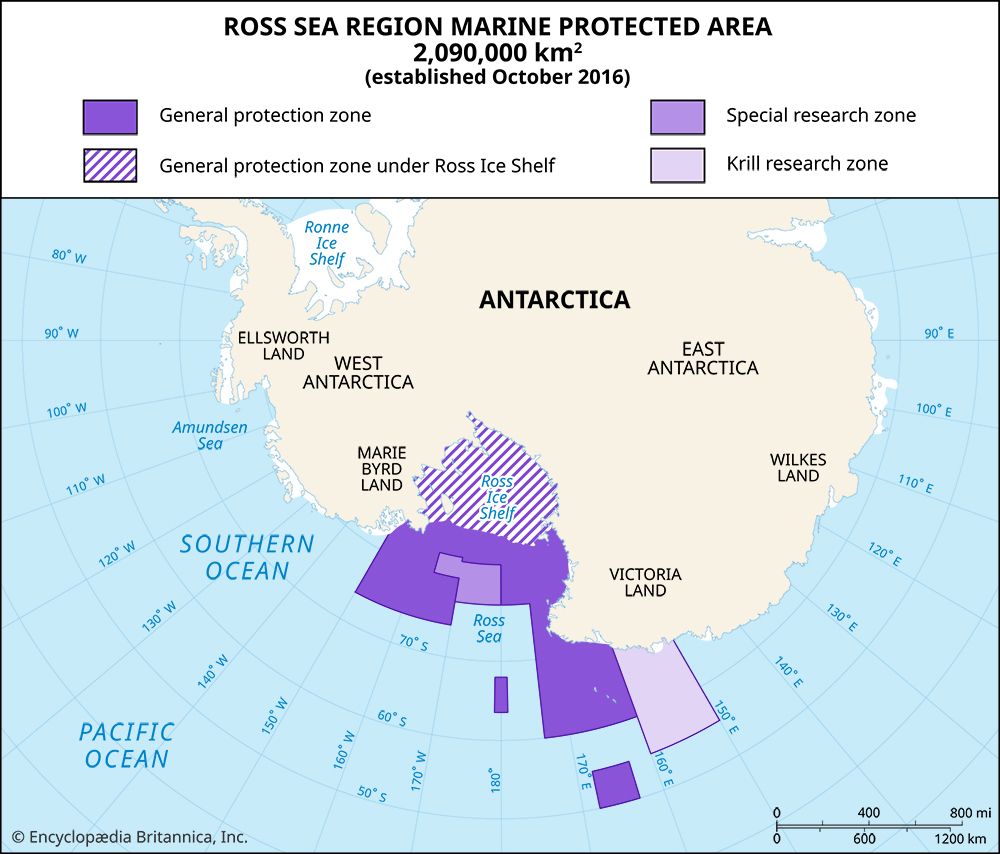
Ross Island is a volcanic formation located in the western Ross Sea off the coast of Victoria Land, Antarctica. Situated at the northern margin of the Ross Ice Shelf, the island measures approximately 43 miles (69 km) long and 45 miles wide.1
Its primary geographical features include:
- Volcanic Peaks: The island is formed by four volcanoes: Mount Erebus, Mount Terror, Mount Bird, and Mount Terra Nova. Mount Erebus is the world’s southernmost active volcano and stands 12,450 feet (3,800 meters) high, while Mount Terror reaches 10,750 feet.21
- Terrain: The landscape consists of mountain ranges intersected by deep valleys. While the highest slopes feature hanging glaciers, the ranges are generally free of snow.1
- Notable Landmarks: A steep rock formation known as Observation Hill is located between the island’s two research stations, McMurdo Station and Scott Base.1
What is the historical significance of Ross Island in Antarctic exploration?
Ross Island holds immense historical significance as a primary gateway for the “heroic era” of Antarctic exploration during the early 20th century. Its strategic location on McMurdo Sound made it a vital base for expeditions seeking to reach the South Pole and expand scientific knowledge of the continent8.1
Key historical milestones on the island include:
- Exploration Hub: The island served as the headquarters for Robert Falcon Scott, who established a camp at Cape Evans in 1910.81
- Technological Innovation: During the Nimrod expedition (1907–1909), Ernest Shackleton established a camp at Cape Royds and pioneered the use of motorized transport in Antarctica.89
- Preservation: The original camps established by Shackleton and Scott are preserved today as historic monuments, serving as tangible links to the early efforts to map and understand the Antarctic interior.8
Since the 1950s, the island has transitioned from an exploration base to a center for modern scientific research, hosting major stations for the United States and New Zealand.1
Sources
- Ross Island — Encyclopædia Britannica
- Mount Erebus — Encyclopædia Britannica
- Ross Island — Merriam-Webster
- Rossel Island — Encyclopædia Britannica
- McMurdo Station — Encyclopædia Britannica
- Ross Sea — Encyclopædia Britannica
- Ross Ice Shelf — Encyclopædia Britannica
- Antarctica - The “ heroic era ” of exploration — Encyclopædia Britannica
- McMurdo Sound — Encyclopædia Britannica
Published on · 3 min read