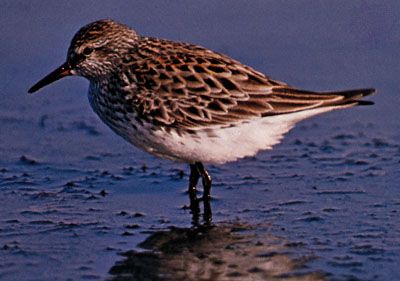
Ruff
The ruff (Philomachus pugnax) primarily communicates through elaborate visual displays rather than vocalizations during its breeding season. Males gather on…
How do ruff birds communicate with each other?
The ruff (Philomachus pugnax) primarily communicates through elaborate visual displays rather than vocalizations during its breeding season. Males gather on a traditional display area known as a lek, where they engage in a silent courtship dance to attract females, or reeves.1
Key elements of their communication include:
- Visual Displays: Males perform short rushes with their distinctive neck collars (ruffs) and head crests (capes) erect, often accompanied by drooping wings.1
- Physical Posturing: During the dance, males may leap into the air, bow, crouch, or stand tall to signal their status.1
- Submissive/Mating Signals: When a female approaches, males may collapse and quiver with their bills pressed into the ground.1
- Tactile Interaction: Before mating, the female communicates her choice by nibbling at the male’s ruff.1
While many birds utilize birdsong and various vocalizations to establish territories or warn of danger, the ruff’s specific courtship behavior is notably silent.12
What is unique about the ruff bird’s mating behavior and appearance?
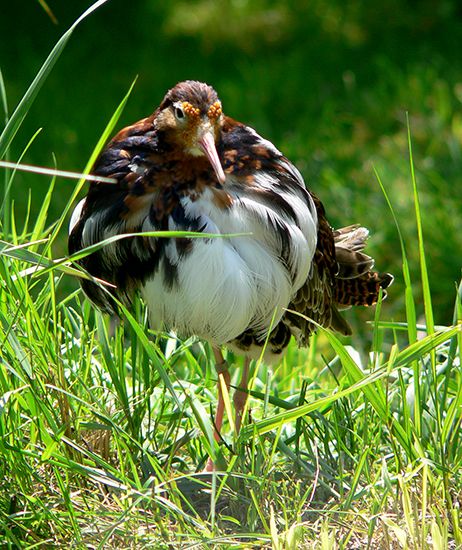
The ruff (Philomachus pugnax) is unique for exhibiting the most extreme case of polymorphism known among birds. During the spring breeding season, males develop a distinctive collar, or “ruff,” and a double crest, or “cape.” These features display a wide variety of reddish, brown, black, and white patterns that vary significantly between individuals.1
Their mating behavior is equally distinct:
- Lek Breeding: Males gather on a lek to perform a silent courtship dance, involving leaps, bows, and crouches while displaying their erect plumage.1
- Social Classes: Two genetically inherited male types exist. Resident males defend specific territories, while subordinate males with white ruffs help attract females to these territories. Subordinate males often “steal” copulations while residents are occupied with defense.1
- Extreme Dimorphism: The species is highly dimorphic; females (reeves) are smaller and plain grayish-brown, and the sexes remain separate even when in flocks.1
What are the physical characteristics of the ruff bird?
The ruff (Philomachus pugnax) is a sandpiper characterized by significant sexual dimorphism and extreme polymorphism in its breeding plumage.1
Physical Characteristics
- Size: The male reaches approximately 30 cm (12 inches) in length, while the female, known as a reeve, is smaller at about 25 cm (10 inches).1
- Breeding Plumage (Males): During the spring, males develop a double crest, or “cape,” and a large collar known as a “ruff.” These features display a wide variety of reddish, brown, black, and white feather patterns that are unique to each individual.1
- Non-breeding and Female Appearance: In winter, males lose their elaborate plumage and resemble the female, which remains a plain grayish-brown throughout the year.1
The species is highly dimorphic, meaning the sexes maintain distinct appearances and often remain separate even when gathered in flocks.1
What is the diet of ruff birds and how do they forage for food?
The diet of the ruff (Philomachus pugnax) is varied and shifts depending on the season and the bird’s location.
Dietary Composition
The ruff is an opportunistic feeder that consumes a wide range of animal and plant matter:
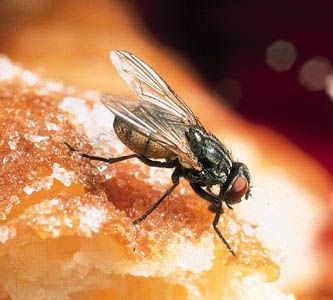
- Animal Prey: Their diet includes insects, specifically flies and beetles, as well as mollusks, worms, small fish, and frogs.1
- Plant Matter: During the winter months and throughout migration, the ruff relies heavily on seeds to sustain its energy needs.1
Foraging Habits
Ruffs typically forage in wetland environments, such as river meadows, coastal marshes, and broad mud flats. While the provided information details their dietary preferences, it does not specify the exact mechanical techniques they use to extract food from these environments, such as probing or surface-gleaning.1
Sources
- Ruff — Encyclopædia Britannica
- Bird - Sound — Encyclopædia Britannica
Published on · 3 min read