Sakmarian Stage
Geologists use biostratigraphy—the study of fossils within sedimentary strata—to identify and correlate the Sakmarian Stage by relying on the principle of…
How do geologists use biostratigraphy to identify and correlate Sakmarian Stage rocks across different regions?
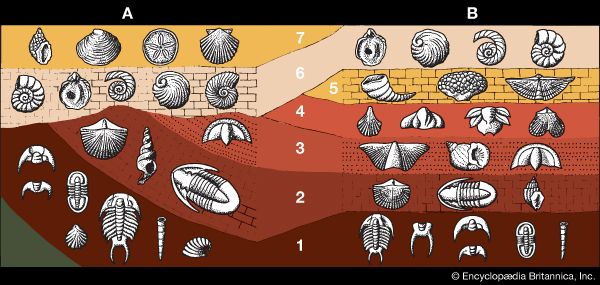
Geologists use biostratigraphy—the study of fossils within sedimentary strata—to identify and correlate the Sakmarian Stage by relying on the principle of faunal succession. This principle posits that specific intervals of geologic time are characterized by unique fossil assemblages, allowing researchers to link separated rock outcrops that contain similar biological remains.1
To define the base of the Sakmarian Stage specifically, geologists utilize the first appearance of the conodont species Sweetognathus merrilli. Because index fossils like conodonts are often widespread and evolved rapidly, they serve as reliable markers for synchroneity across different regions. Additionally, geologists use other significant fossil groups, such as fusulinids (specifically the genera Sphaeroschwagerina and Pseudoschwagerina) and ammonites (genus Properrinites), to assist in the global correlation of Lower Permian strata.23415
While these fossils are essential, correlation can be challenging due to the endemic nature of many marine invertebrate faunas, which may vary significantly between different paleobiotic provinces.3
How do scientists determine the absolute age range of the Sakmarian Stage?
Scientists determine the absolute age range of the Sakmarian Stage—which spans from approximately 295.5 million to 290.1 million years ago—by integrating multiple geochronological methodologies.
While biostratigraphy provides the framework for relative dating through the identification of index fossils like the conodont Sweetognathus merrilli, absolute ages are derived through radioisotopic dating. This process involves measuring the decay of radioactive isotopes within minerals found in rock samples. A primary method used for high-precision dating is uranium-lead dating, which often utilizes the mineral zircon. Because zircon is highly resistant to chemical change and incorporates uranium while excluding lead during crystallization, it serves as an excellent “clock” for determining the timing of rock formation.
Modern geochronology relies on an integrated approach, combining these isotopic ages with magnetostratigraphy and biostratigraphic data to create a high-resolution, internally consistent geologic time scale.
How does the Sakmarian Stage relate to the other stages of the Cisuralian epoch?
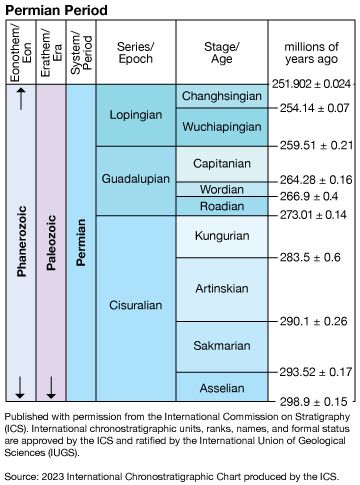
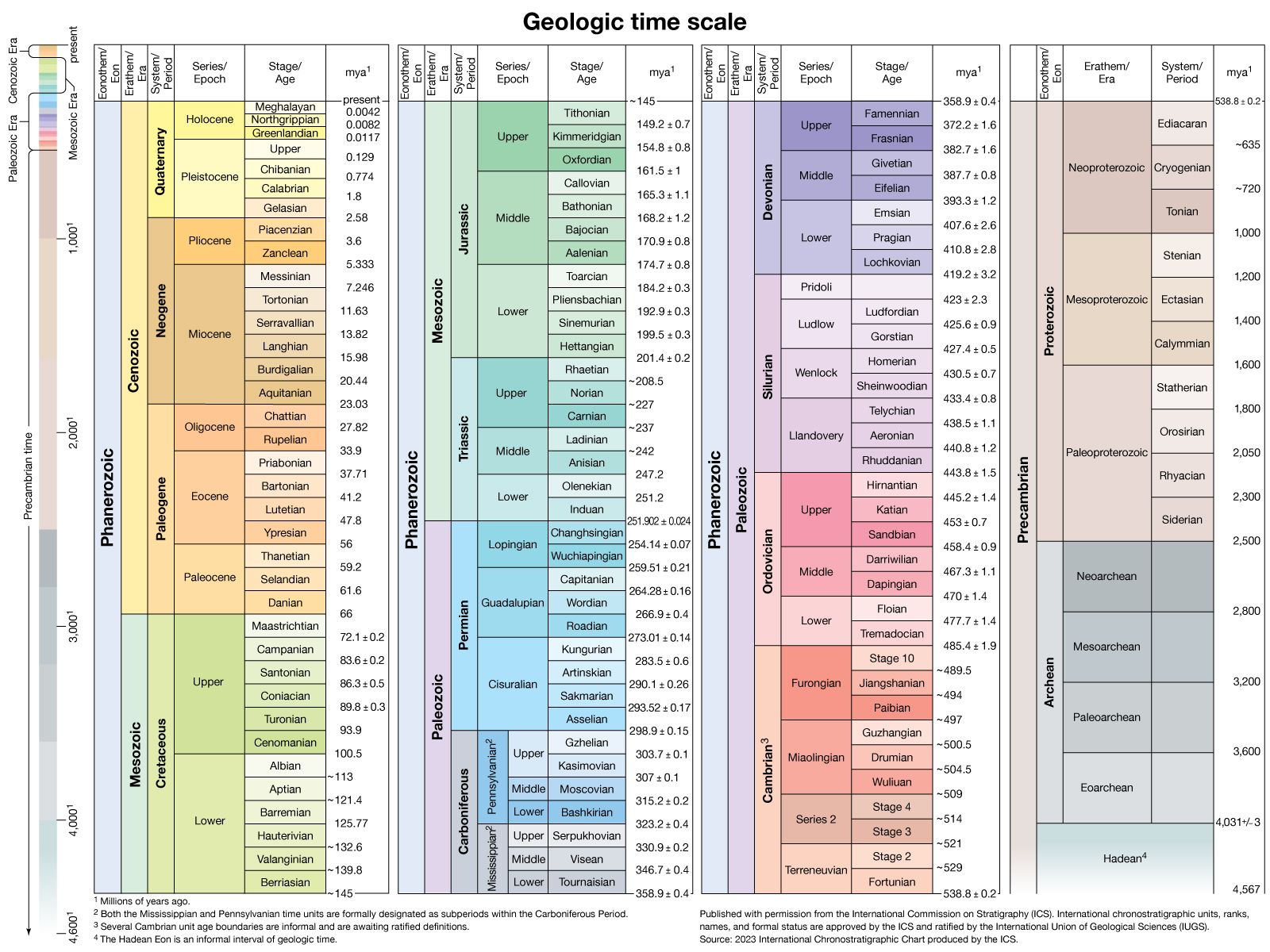
The Sakmarian Stage is the second of four internationally recognized stages within the Cisuralian Epoch (Early Permian) of the Permian Period. It occupies a specific temporal position in the stratigraphic sequence, occurring between the Asselian Stage and the Artinskian Stage.15
The chronological and stratigraphic relationship of these stages is defined as follows:
- Asselian Stage (298.9–295.5 million years ago): The oldest stage of the Cisuralian, marked at its base by the first appearance of the conodont Streptognathodus isolatus.59
- Sakmarian Stage (295.5–290.1 million years ago): Overlies the Asselian. Its base is defined by the first appearance of the conodont Sweetognathus merrilli.15
- Artinskian Stage (290.1–279.3 million years ago): Overlies the Sakmarian. Its base is marked by the first appearance of the conodonts Sweetognathus whitei and Mesogondolella bisselli.56
- Kungurian Stage (279.3–272.3 million years ago): The final stage of the Cisuralian, which overlies the Artinskian.56
Together, these stages form the Cisuralian Series, representing the early phase of the Permian Period.5
What major geological or climatic events occurred during the Sakmarian Stage?
During the Sakmarian Stage (295.5 million to 290.1 million years ago), the geological record is primarily characterized by the deposition of marine sediments along the western flanks of the Ural Mountains in central Russia. These deposits, which can reach thicknesses exceeding 1,000 meters, consist of sandstones, siltstones, shales, and limestones, often interbedded with thin conglomerates.1
While the provided search results do not detail specific global climatic events unique to the Sakmarian, the stage is defined stratigraphically by the first appearance of the conodont Sweetognathus merrilli. The era is also associated with the presence of fusulinids and ammonites, which serve as critical index fossils for correlating these strata worldwide. The geological environment of the time was largely shaped by the ongoing development of the Uralian geosyncline, where these shallow marine sediments accumulated.156
Sources
- Sakmarian Stage — Encyclopædia Britannica
- index fossil — Encyclopædia Britannica
- biostratigraphy — Merriam-Webster
- dating - Principles and techniques — Encyclopædia Britannica
- Permian Period - Major subdivisions — Encyclopædia Britannica
- Asselian Stage — Encyclopædia Britannica
- Tertiary Period - Correlation of Tertiary strata — Encyclopædia Britannica
- dating - Importance of zircon in uranium-lead dating — Encyclopædia Britannica
- Artinskian Stage — Encyclopædia Britannica
- Precambrian - Glacial sediments — Encyclopædia Britannica
Published on · 3 min read